The Perfect Prime Rib Roast (And Why I Almost Ruined Christmas Dinner)
I still think about that Christmas seven years ago. Thirty-dollar-a-pound standing rib roast, twelve people sitting at the table, and me panicking in the kitchen because I pulled it out too early and had to shove it back in the oven. My mother-in-law was watching. It was not my finest hour.
But here’s what that disaster taught me: prime rib is not actually hard. It’s just unforgiving when you skip the fundamentals. Once you understand a few core things about how this cut works, you’ll never stress about it again. I’ve made it probably twenty times since that holiday nightmare, and now it’s the dish my family requests every single year.
So let me walk you through everything I know.
What Is Prime Rib, Exactly?
Prime rib is a standing beef rib roast, typically 2 to 7 bones, cut from the primal rib section of the cow. You’re working with incredible marbling in this cut, which is why it’s so rich and juicy when done right. “Prime” in the name refers to the cut itself, not necessarily the USDA grade, though buying USDA Prime or Choice makes a real difference here. Don’t go for Select if you can avoid it. The marbling matters.
Ask your butcher to dry-age it if you can swing it, or grab one that’s been sitting in the case for a few days. That’s not a problem, that’s flavor developing.
Essential Ingredients
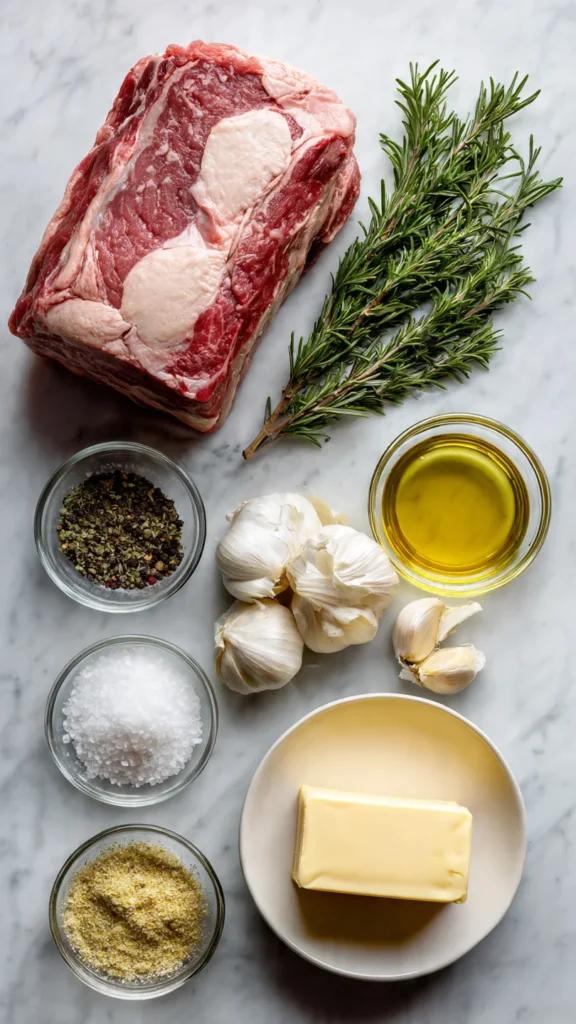
- 1 standing rib roast (3 to 4 ribs, about 6 to 8 lbs)
- 3 tablespoons kosher salt
- 2 tablespoons freshly cracked black pepper
- 1 tablespoon garlic powder
- 1 tablespoon dried rosemary (or 2 tablespoons fresh, chopped)
- 2 tablespoons unsalted butter, softened
- 4 garlic cloves, minced
- 1 tablespoon olive oil
- 1 teaspoon onion powder
That’s it. Seriously. The meat is the star here, and the job of your seasoning is to support it, not take over.
Alternative Ingredients
No fresh rosemary? Thyme works just as well, and some people prefer it. You can swap the garlic powder for more fresh minced garlic if you want a stronger, sharper bite. Avocado oil works in place of olive oil at high heat. And if you want a little heat in the crust, a pinch of cayenne mixed into the butter rub is genuinely good. I do it sometimes when I’m feeling bold.
Step-by-Step Directions
The day before (this matters more than anything): Pat the roast completely dry with paper towels. Mix your salt, pepper, garlic powder, and onion powder together. Rub the entire roast generously, including the bones and the bottom. Set it on a rack over a sheet pan and refrigerate uncovered overnight. This dry brine is the single biggest upgrade you can make. The salt draws moisture out and then it gets reabsorbed, seasoning the meat all the way through.
About two hours before cooking: Pull the roast out of the fridge and let it sit at room temperature. Cold meat going into a hot oven is one of the main reasons roasts cook unevenly.
Preheat your oven to 450°F. Mix your softened butter, minced garlic, and rosemary into a paste. Rub it all over the fat cap and sides of the roast. Place it bone-side down in a roasting pan. The bones act as a natural rack and add flavor to your drippings.
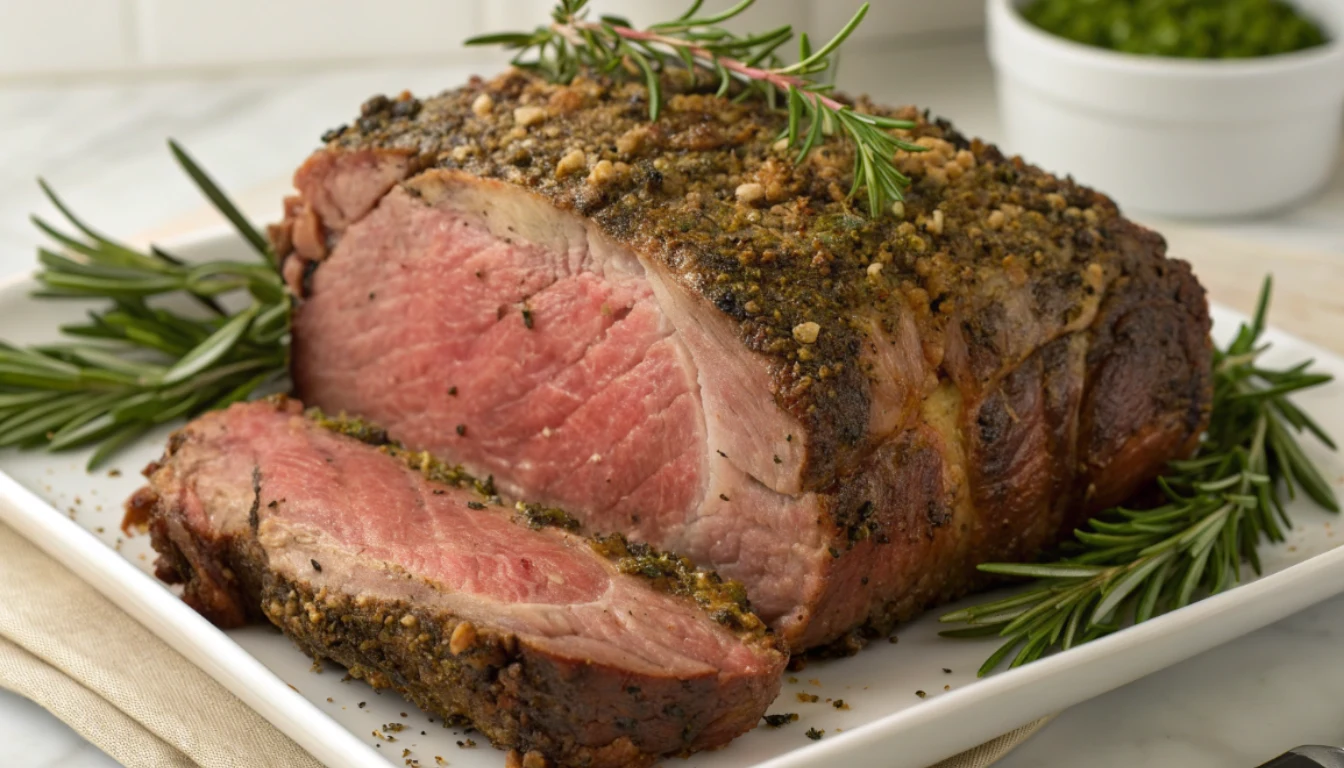
Roast at 450°F for 20 minutes. This high-heat start builds a proper crust and gives you that gorgeous brown exterior. After 20 minutes, drop the temperature to 325°F and continue roasting until your internal thermometer reads 120°F for rare, 125°F to 130°F for medium-rare. For a 6 to 7 pound roast, that’s usually around 1 hour 45 minutes to 2 hours total, but go by temperature, not time.
Rest it. This is where people mess up. Pull it out, tent it loosely with foil, and let it rest for at least 20 to 30 minutes. The temperature will climb another 5 to 10 degrees. Don’t skip this.
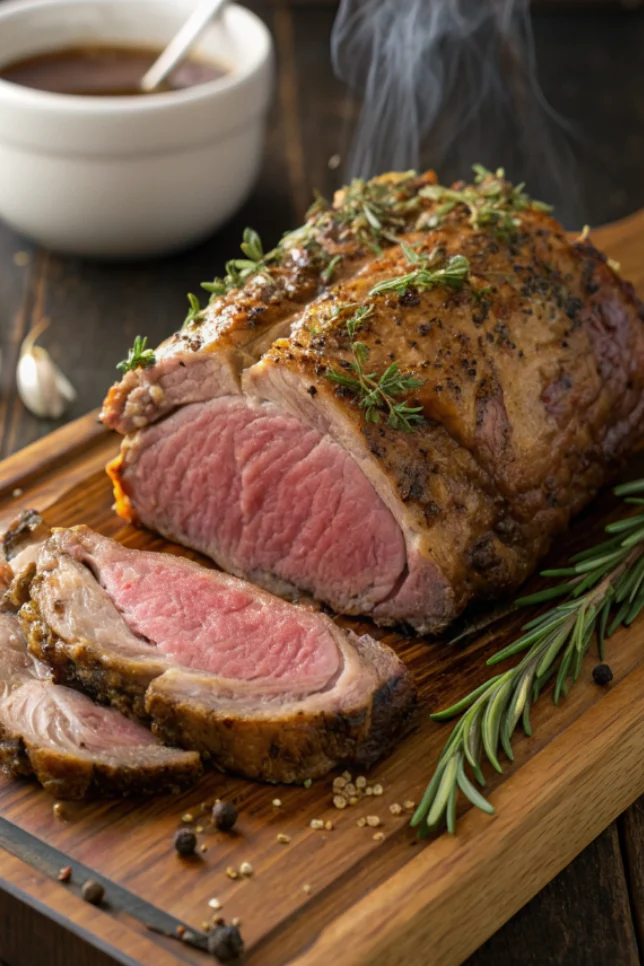
Slice against the bone, carve off each rib, and serve with the pan drippings or a quick au jus made from those drippings.
Pro Tips
Temperature is everything. Get a good instant-read thermometer. I use a Thermapen and it’s worth every penny. Guessing doneness on a roast this expensive is not a gamble worth taking. Also, fat side up always. The fat bastes the meat as it renders down. And if your crust isn’t as dark as you want after resting, a quick 2-minute blast under the broiler fixes that.
A Mistake I Used to Make
I used to season it right before cooking. Big mistake. The salt pulls moisture to the surface, and if you don’t give it time to reabsorb, you’re essentially steaming that moisture off in the oven instead of building a crust. Overnight dry brining changed everything for me. Even a few hours is better than nothing.
FAQs
Do I need to sear prime rib on the stovetop first?
No. The high-heat oven start creates a deeply browned crust without extra stovetop work.
How long do I cook prime rib per pound?
Use 15 minutes per pound at 325°F as a rough guide, but rely on a thermometer for accuracy.
Bone-in or boneless prime rib?
Bone-in is preferred for flavor, presentation, and even cooking.
Can I reheat leftover prime rib?
Yes. Warm slices gently in a low oven with a little broth to prevent drying out.
Why You’ll Love This Recipe
It’s genuinely impressive without being complicated. The work is mostly hands-off once it’s in the oven, which means you’re not stuck in the kitchen while your guests are having fun. The leftovers make the best beef sandwiches you’ve ever had. And honestly, there’s something deeply satisfying about putting a beautiful roast on the table. It never gets old.
What Makes This Recipe Unique
The overnight dry brine and the reverse-logic high-heat start (rather than ending with high heat, which some recipes do) gives you both a proper crust and an evenly cooked interior. A lot of recipes skip the overnight step because it requires planning ahead, but that’s the step that separates a good prime rib from a great one.
Nutrition Facts (Per Serving, Approx.)
| Nutrient | Amount |
|---|---|
| Calories | 620 |
| Protein | 52g |
| Total Fat | 44g |
| Saturated Fat | 18g |
| Carbohydrates | 1g |
| Sodium | 780mg |
| Cholesterol | 160mg |
Values are approximate and will vary based on roast size and trimming.
You’ll Also Love
- Garlic Butter Beef Tenderloin
- Slow-Roasted Leg of Lamb
- Herb-Crusted Rack of Lamb
- Classic Beef Wellington
- Sunday Pot Roast with Vegetables
Conclusion
Prime rib earned its reputation as a special-occasion centerpiece for a reason. It’s rich, deeply flavored, and genuinely hard to replicate with any other cut. But the secret is that it’s more about patience and a thermometer than any complicated technique. Do the overnight salt, respect the rest time, and pull it at the right temperature. That’s it.
I spent years overcomplicating this dish before I figured out that simplicity is the whole point. The beef is good. Your job is just to not get in its way.
If you make this for your next holiday dinner or Sunday roast, I’d love to hear how it goes. And if something goes sideways (it happens to all of us), drop a comment and we’ll troubleshoot it together.
The Perfect Prime Rib Roast
Dry-brined overnight and roasted with a high-heat start for a deeply flavorful, perfectly crusted holiday centerpiece.
Ingredients
- 1 standing rib roast (3 to 4 ribs, 6 to 8 lbs)
- 3 tbsp kosher salt
- 2 tbsp freshly cracked black pepper
- 1 tbsp garlic powder
- 1 tsp onion powder
- 1 tbsp dried rosemary
- 2 tbsp unsalted butter, softened
- 4 garlic cloves, minced
- 1 tbsp olive oil
Instructions
- Pat roast dry and rub with salt and seasonings. Refrigerate uncovered overnight.
- Remove from fridge 2 hours before roasting.
- Preheat oven to 450°F. Mix butter, garlic, rosemary, and oil. Rub over roast.
- Roast at 450°F for 20 minutes.
- Lower heat to 325°F and roast until internal temperature reaches desired doneness.
- Rest 20 to 30 minutes before slicing.
- Carve and serve with pan drippings or au jus.