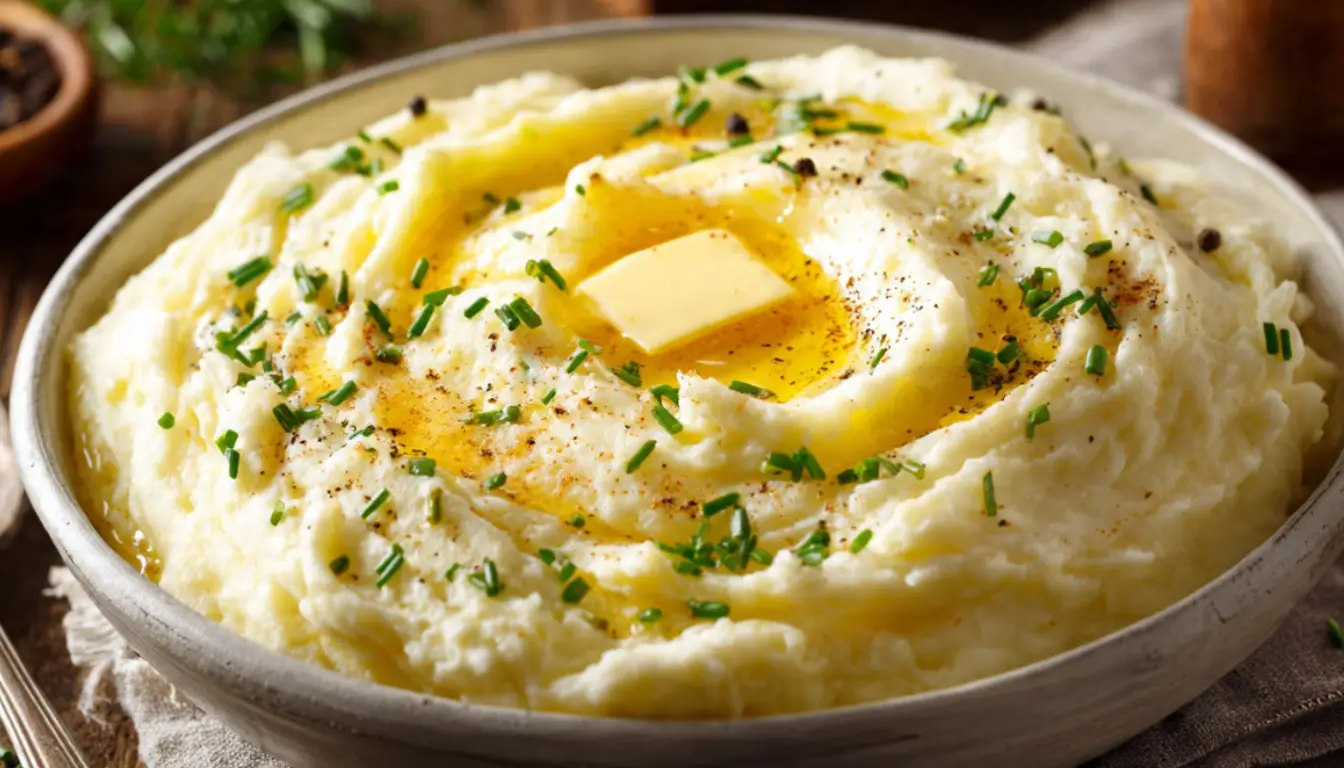
Perfect Creamy Buttery Mashed Potatoes Recipe
Introduction
You know what’s funny? I spent the first three years of my cooking journey absolutely butchering mashed potatoes. And I mean that literally. They’d come out gluey, lumpy, or somehow both at the same time. My family would smile politely and reach for extra gravy to mask the disaster on their plates.
Then one Thanksgiving, I watched my grandmother make her legendary mashed potatoes, and everything clicked. She wasn’t doing anything fancy. No truffle oil, no fancy potato ricer (though I’ve since fallen in love with mine). Just simple technique, the right potatoes, and honest-to-goodness butter. Lots of it.
Here’s the thing about perfect mashed potatoes: they’re not about following a rigid recipe. They’re about understanding what makes them creamy versus gummy, fluffy versus dense. Once you get that, you can make stellar mashed potatoes with your eyes closed. Well, almost.
I’ve made these potatoes for countless dinner parties, holiday gatherings, and Tuesday night dinners when I just needed comfort food. They work whether you’re using a basic hand mixer or a fancy KitchenAid stand mixer (I’ll tell you when each makes sense). And honestly? They’re stupid-easy once you know the tricks.
Essential Ingredients
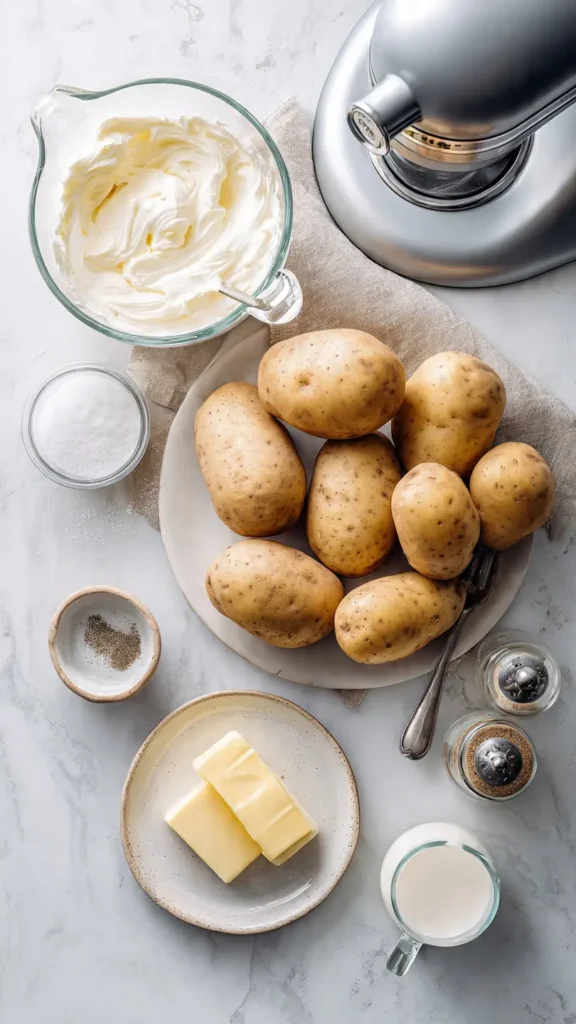
Let me break down what you actually need. I’m not going to give you twenty ingredients because that’s not real life. Here’s the core lineup:
- Russet potatoes (3 pounds) – These starchy beauties are your best friend for fluffy mashed potatoes
- Unsalted butter (1 stick/8 tablespoons) – I use Kerrygold when I’m feeling fancy, but regular unsalted butter works perfectly
- Heavy cream (3/4 cup) – This is where the magic happens
- Whole milk (1/4 cup) – Helps thin things out without diluting flavor
- Salt (to taste) – Start with 1 teaspoon, adjust from there
- Black pepper (1/2 teaspoon) – Freshly ground if you’ve got it
- Garlic powder (1/2 teaspoon, optional) – Controversial, I know, but trust me
That’s it. Seven ingredients. If someone’s trying to sell you on adding cream cheese, sour cream, and ranch dressing powder, they’re making loaded mashed potatoes, which is a different (also delicious) thing entirely.
Alternative Ingredients
Real talk: not everyone has heavy cream sitting around, and maybe you’re trying to lighten things up a bit. I get it. Here’s what actually works:
For the cream: You can swap heavy cream for half-and-half or even whole milk, though you’ll lose some richness. I’ve done it when I forgot to buy cream (happens more than I’d like to admit). Still good, just not quite as luxurious.
For the butter: I tested this with olive oil once after reading some health blog. It was… fine. Not terrible, not amazing. If you’re dairy-free, go for it. But if you can do butter, do butter. This isn’t the recipe to make virtuous.
For the potatoes: Yukon Golds work beautifully if you want a creamier, slightly denser texture. Some folks swear by them. I bounce between Russets and Yukons depending on my mood. Red potatoes? Those are better for roasting. They’ll make your mashed potatoes gummy because they’re too waxy. Learn from my mistakes.
Budget option: Store-brand butter and regular milk still make excellent mashed potatoes. You’re already putting in the time and love. Don’t let ingredient snobbery stop you.
Step-by-Step Directions
Okay, here’s where we get into the actual cooking. I’m going to walk you through this like I’m standing in your kitchen with you.
Step 1: Prep your potatoes (10 minutes)
Peel those Russets. I use a standard Y-peeler because I’m not fancy like that. Cut them into roughly equal chunks, about 1.5-2 inches. Don’t stress about perfection here. You want them similar in size so they cook evenly, but this isn’t surgery.
Toss them in a large pot and cover with cold water by about an inch. This is important. Starting with cold water means they heat gradually and cook evenly. Drop them into boiling water and you’ll get mushy outsides with hard centers. Been there, done that, 0/10 would not recommend.
Step 2: Salt that water (seriously)
Add a tablespoon of salt to your pot. Your water should taste like the ocean. This is when you’re seasoning the potatoes themselves, not just the final dish. I skipped this for years and wondered why my potatoes always tasted flat. This was the missing piece.
Step 3: Boil until tender (15-20 minutes)
Bring everything to a boil over high heat, then reduce to a steady simmer. You’ll know they’re done when you can easily pierce them with a fork but they’re not falling apart. Usually takes about 18 minutes for me, but ovens and stovetops vary.
Pro move: set a timer for 15 minutes, then start checking. Better to test early than end up with potato soup.
Step 4: Drain thoroughly (this matters more than you think)
Drain those potatoes in a colander. Then, and this is the trick my grandmother taught me, put them back in the hot pot for 30 seconds. Let that residual heat evaporate extra moisture. Watery potatoes = gluey mashed potatoes. Science!
Step 5: Heat your dairy
While the potatoes are draining, heat your butter, cream, and milk together in a small saucepan or even the microwave. Warm is good. Hot is fine. Cold will cool down your potatoes and make them harder to mash smoothly.
Step 6: Mash time
Here’s where people get opinionated. I’ll give you options:
Hand masher method (my go-to for rustic texture): Just mash them right in the pot. Add half the warm dairy mixture, mash, add the rest, mash some more. Keep it chunky if you want, or go smooth. This gives you the most control.
Hand mixer method (for ultra-smooth): Use a hand mixer on low speed. Add dairy gradually. Stop when they look creamy. DO NOT OVERMIX or you’ll activate the starch and get wallpaper paste. Seriously, stop before you think you’re done.
Food processor or stand mixer method: I don’t do this anymore. Tried it once with my KitchenAid stand mixer, and they turned into glue in about 10 seconds. The motor is too powerful and works the potatoes too aggressively. Hard pass.
Potato ricer method (the fancy way): If you’ve got a ricer, use it. Push the potatoes through, then fold in your dairy by hand. You’ll get the smoothest, fluffiest potatoes of your life. I bought one three years ago and now I’m one of those annoying people who won’t shut up about their potato ricer.
Step 7: Season and adjust
Taste them. Add salt, pepper, garlic powder if you’re into that. Need more cream? Add a splash. Too thick? Thin with milk. Too thin? Let them hang out in the warm pot for a minute. You’re in charge here.
Pro Tips
Let me share the mistakes I’ve made so you don’t have to:
Temperature is everything: Cold dairy in hot potatoes = lumpy disaster. Warm everything first. Every time. No exceptions.
Don’t overmix: I cannot stress this enough. The second your potatoes start looking gluey or stringy, stop. You’ve gone too far. This happened to me on Christmas once. We ate gravy on bread that year.
Save your potato water: This sounds weird, but if your mashed potatoes get too thick, that starchy potato water is better for thinning than plain milk. Adds flavor and the right consistency.
Make ahead trick: You can actually make these a few hours early. Spread them in a buttered baking dish, cover with foil, and keep warm in a 200°F oven. Stir before serving. I do this for Thanksgiving every year because I only have so many burners.
For meal prep: These store in airtight containers in the fridge for 3-4 days. Reheat gently with a splash of milk. They won’t be quite as fluffy as fresh, but they’re still solid. Way better than boxed instant mashed potatoes, which I ate way too much of in college.
FAQs
Can I freeze mashed potatoes? Technically yes, but they lose their texture. The dairy separates and they get grainy. I’ve tried it with meal prep containers thinking I’d be clever. It was not clever. Make them fresh or keep them refrigerated for a few days max.
Why are my mashed potatoes gluey? You overmixed them. The moment you start working potatoes too hard, you break down the starch molecules and release the gluten. It’s a chemical thing. Be gentle, stop early.
Can I use an Instant Pot? Absolutely! Steam your potatoes on high pressure for 8 minutes with 1 cup of water in the pot. Quick release, drain, then proceed with mashing as normal. Honestly, this is super convenient for meal prep Sunday situations.
What about garlic mashed potatoes? Two options: roast whole garlic cloves in a cast iron skillet with olive oil until soft (about 30 minutes at 400°F), then mash them in. Or, simmer peeled garlic cloves with your dairy before adding to potatoes. Both are phenomenal. The roasted version has more depth, the simmered version integrates better.
Are leftovers any good? They’re different but still tasty. I turn leftovers into potato cakes (form into patties, pan-fry) or add them to soup. As-is reheated? Still good with extra butter stirred in, just not quite as fluffy as day one.
Recipe Info Table
| Measurement | Time/Amount |
|---|---|
| Prep Time | 10 minutes |
| Cook Time | 20 minutes |
| Total Time | 30 minutes |
| Servings | 6-8 people |
| Yield | About 6 cups |
Why You’ll Love This Recipe
This isn’t some fussy chef recipe that requires special equipment or ingredients you can’t pronounce. It’s honest, straightforward mashed potatoes that taste like your grandmother made them (or should have, if she was holding out on you).
They’re rich without being heavy. Creamy without being gluey. And they come together in 30 minutes, which means they’re totally doable on a weeknight when you need comfort food fast.
Plus, once you nail the technique, you can riff on these forever. Add roasted garlic, fold in some herbs, mix in caramelized onions. The base recipe is your foundation. Build whatever you want on top of it.
What Makes This Recipe Unique
Most mashed potato recipes are either too complicated or too vague. “Mash until smooth.” Cool, thanks for nothing.
This recipe gives you the why behind everything. Why start with cold water. Why warm your dairy. Why certain potatoes work and others don’t. Once you understand the science (without needing a degree), you can make these without looking at a recipe again.
Also, I’m not precious about equipment. Don’t have a potato ricer? No problem. Only got a hand masher? That works too. I tested this with every tool in my kitchen because I wanted it to work for everyone, not just people with fully-stocked kitchens.
FAQs
Can I freeze mashed potatoes?
Technically yes, but the texture will suffer as the dairy separates. Best to enjoy fresh or keep refrigerated for a few days.
Why are my mashed potatoes gluey?
Overmixing releases too much starch. Mash gently and stop as soon as potatoes are creamy to avoid gluey texture.
Can I use an Instant Pot?
Yes! Steam potatoes on high pressure for 8 minutes with 1 cup of water. Quick release, drain, and mash as usual.
Can I make garlic mashed potatoes?
Absolutely. Roast whole garlic cloves or simmer peeled cloves in your dairy before mashing for rich garlic flavor.
Are leftovers any good?
Yes. Reheat gently with milk and butter. You can also transform leftovers into potato cakes or add to soups.
Key Features
- Simple ingredient list: No weird additions or fussy ingredients
- Flexible method: Works with whatever tools you have on hand
- Make-ahead friendly: Prep hours before serving without stress
- Crowd-tested: I’ve served these to hundreds of people (literally). They work.
- Budget-friendly: Potatoes are cheap. Even with good butter and cream, you’re looking at maybe $8 to feed 8 people.
- Time-efficient: Truly 30 minutes start to finish
- Dietary adaptable: Easy to adjust for dairy-free or lower-fat versions
Nutrition Facts Table (per serving, based on 8 servings)
| Nutrient | Amount |
|---|---|
| Calories | 285 |
| Total Fat | 16g |
| Saturated Fat | 10g |
| Cholesterol | 47mg |
| Sodium | 320mg (varies with added salt) |
| Total Carbohydrates | 32g |
| Dietary Fiber | 2g |
| Sugars | 2g |
| Protein | 4g |
| Potassium | 620mg |
Note: These are estimates based on standard ingredients. If you add extra butter (and let’s be honest, who doesn’t), adjust accordingly.
You’ll Also Love
If these mashed potatoes are your thing, you’ll probably dig these other recipes on the site:
- Roasted Garlic Butter: Takes mashed potatoes to another level
- Brown Butter Gravy: Because mashed potatoes need friends
- Herb-Roasted Chicken: The perfect main to pair with these
- Caramelized Onion & Gruyere Mashed Potatoes: Fancy version for holidays
- Slow Cooker Pot Roast: Classic comfort food pairing
Conclusion
Here’s what I want you to take away from this: mashed potatoes are one of those foundational recipes that seem simple but have real technique behind them. Once you nail it, you’ll make them without thinking. They’ll be the dish people remember from your dinner parties.
Start with good potatoes. Warm your dairy. Don’t overmix. That’s 90% of it right there.
The rest? That’s just you finding your own style. Maybe you like yours a little chunky. Maybe you’re all about that ultra-smooth texture. Maybe you add roasted garlic every single time (I do). Whatever works for you.
Make these a few times. Figure out what you like. Then make them your own. And if you mess up the first time, join the club. I’ve made mashed potato mistakes you wouldn’t believe. We all have. That’s how you learn.
Now go make some mashed potatoes. Your family will thank you.
Creamy Buttery Mashed Potato
Rich, fluffy, and creamy mashed potatoes made with butter and cream for the ultimate comfort food.
Ingredients
- 3 pounds Russet potatoes, peeled and cut into chunks
- 1 stick (8 tablespoons) unsalted butter
- 3/4 cup heavy cream
- 1/4 cup whole milk
- 1 teaspoon salt, adjust to taste
- 1/2 teaspoon black pepper, freshly ground if possible
- 1/2 teaspoon garlic powder (optional)
Instructions
- Prep the potatoesPeel and cut potatoes into 1.5-2 inch chunks. Place in a large pot and cover with cold water by about an inch.
- Salt the waterAdd 1 tablespoon salt to the water. Bring to a boil and then reduce to a simmer.
- Boil until tenderSimmer for 15-20 minutes until potatoes are fork-tender but not falling apart.
- Drain thoroughlyDrain potatoes and return to hot pot for 30 seconds to let extra moisture evaporate.
- Heat the dairyWarm butter, heavy cream, and milk together before adding to potatoes.
- Mash potatoesMash using a hand masher or hand mixer, gradually adding warmed dairy until desired creaminess is reached. Avoid overmixing.
- Season and adjustAdd black pepper, garlic powder if using, and adjust salt. Thin with milk if too thick or let rest if too thin.
Notes
Warm your dairy before adding, do not overmix to avoid gluey potatoes, save potato water to adjust consistency, and leftovers keep in the fridge 3-4 days. Reheat gently with a splash of milk.