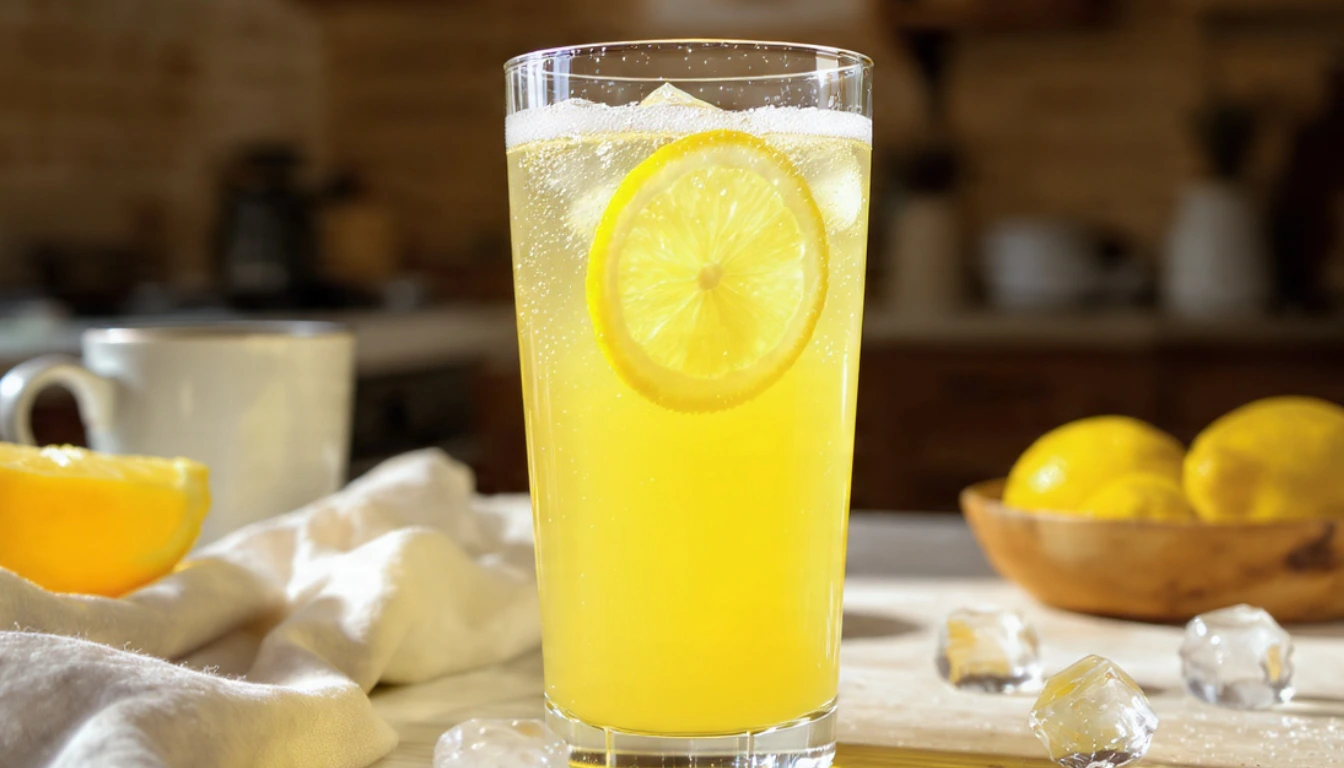
German Lemonade Recipe: Authentic Sparkling Zitronenlimonade
I’ll never forget the first time I tasted real German lemonade at a street festival in Munich. It wasn’t the overly sweet, flat stuff we’re used to here. This was bright, fizzy, and perfectly balanced with just the right amount of tartness. I came home determined to recreate it, and after years of tweaking (and probably going through way too many lemons), I finally nailed it.
Here’s the thing about German lemonade, or Zitronenlimonade as they call it. It’s not just lemon juice mixed with water. The Germans have this brilliant technique of making a concentrated lemon syrup first, then mixing it with sparkling mineral water right before serving. This means you can make a big batch of the syrup ahead of time, which honestly changed my whole approach to summer entertaining.
The first few times I tried making this, I made every mistake in the book. I’d squeeze the lemons by hand until my wrists ached (before I finally invested in a decent citrus juuicer), I’d add the sugar at the wrong time and end up with grainy syrup, and don’t even get me started on the time I accidentally used flat water instead of sparkling. Total disaster.
But once you get the method down, this recipe becomes ridiculously easy. And trust me, your friends will think you’re some kind of beverage genius when you serve this at your next cookout.
Essential Ingredients
You really don’t need much for authentic German lemonade. Quality matters more than quantity here:
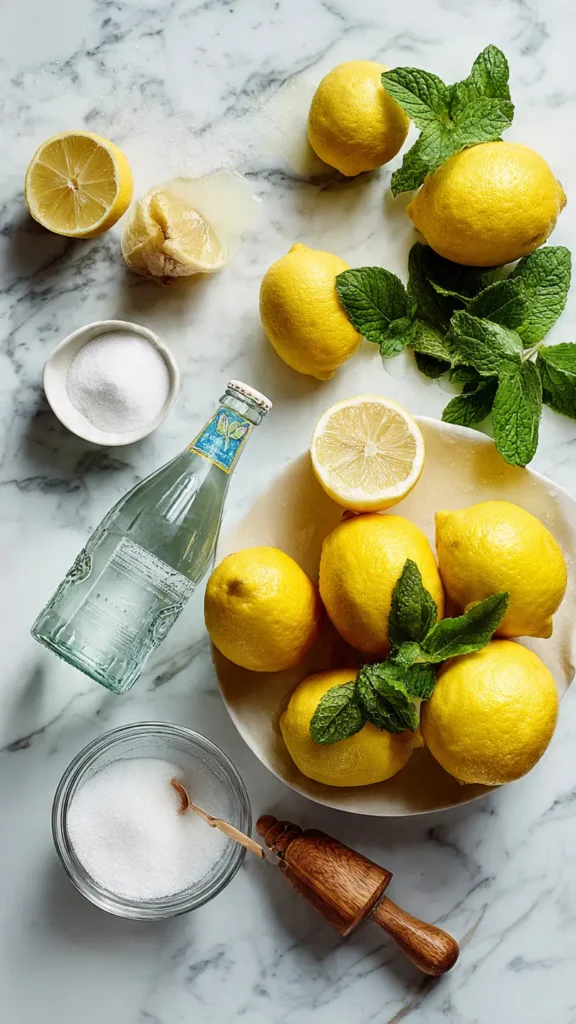
- 8-10 large lemons (preferably organic, unwaxed)
- 1½ cups granulated sugar
- 1 cup water
- Sparkling mineral water (about 1 liter per serving batch)
- Fresh mint leaves (optional, but traditional)
- Ice cubes
The key is getting unwaxed lemons if you can find them. Most conventional lemons have a waxy coating that can make your syrup taste a bit off. I usually grab mine from the organic section, or honestly, I’ve had good luck at farmer’s markets where they don’t coat their citrus.
Alternative Ingredients
Look, I get it. Sometimes you can’t find exactly what you need, or you want to switch things up. Here’s what works:
Instead of regular sugar: You can use honey or agave syrup, but reduce the amount to about 1 cup since they’re sweeter. Raw sugar works great too and adds a subtle caramel note that’s actually pretty nice.
Instead of lemons: Meyer lemons make this insanely good if you can find them. They’re sweeter and less acidic, so you might want to add a regular lemon or two for balance. In a pinch, you can use 1 cup of bottled lemon juice, but fresh is really worth it here.
Instead of sparkling water: If you absolutely must, you can use club soda, but genuine sparkling mineral water gives you that authentic German taste. Brands like San Pellegrino or even a good quality seltzer work fine.
Flavor variations: Sometimes I’ll add a sprig of rosemary or a few slices of ginger to the syrup while it cools. Lavender is gorgeous too if you’re into floral flavors, just don’t overdo it (learned that one the hard way when I made lavender lemonade that tasted like drinking perfume).
Step-by-Step Directions
Alright, let’s make this happen. The whole process takes maybe 30 minutes, plus cooling time.
Step 1: Prep your lemons
Wash those lemons really well, especially if they’re not organic. I use a vegetable brush and run them under warm water. Then zest about 4 of them before you juice. You want long strips of zest, not the fine stuff. The zest has so much flavor, and we’re going to steep it in the syrup.
Step 2: Juice the lemons
This is where a good citrus juicer saves your life. I use a handheld electric one (nothing fancy, maybe 20 bucks), but even a basic reamer works if you’ve got strong hands. You’re aiming for about 1½ cups of fresh lemon juice. Roll the lemons on your counter first with some pressure. It breaks down the membranes inside and you’ll get way more juice.
Step 3: Make the simple syrup
In a medium saucepan, combine 1 cup of water with 1½ cups of sugar. Add your lemon zest strips too. Heat it over medium, stirring occasionally until the sugar completely dissolves. Don’t let it boil hard, just a gentle simmer. Once the sugar’s dissolved (the liquid will go from cloudy to clear), turn off the heat.
I used to think I needed a candy thermometer or something complicated here, but you really don’t. Just watch for the sugar to dissolve and you’re golden.
Step 4: Combine and steep
Pour your fresh lemon juice into the hot syrup. Stir it together and let it sit for at least 20 minutes. This is when all the flavors really meld together. The longer it sits, the more intense the lemon flavor gets. I usually let mine go for about an hour if I’ve got time.
Step 5: Strain and chill
Strain out the lemon zest pieces. I use a fine mesh strainer, but even a regular strainer lined with cheesecloth works. Pour the syrup into a glass bottle or jar and stick it in the fridge. It needs to be completely cold before you mix it with sparkling water, otherwise you’ll lose all the bubbles. If you’re in a hurry, I’ve definitely put the bottle in an ice bath to speed things up.
Step 6: Mix and serve
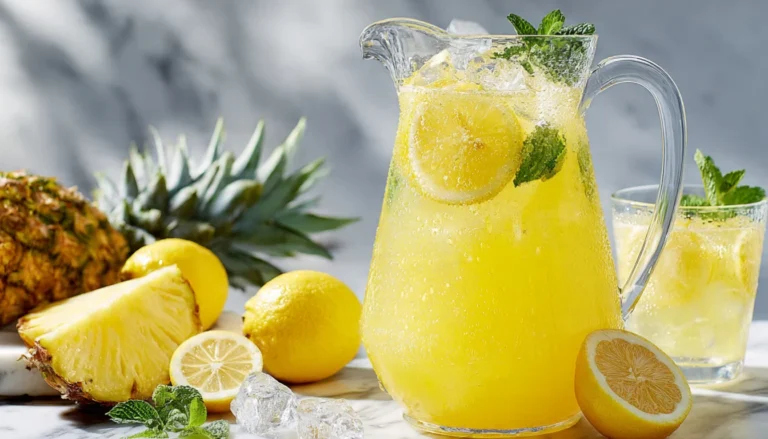
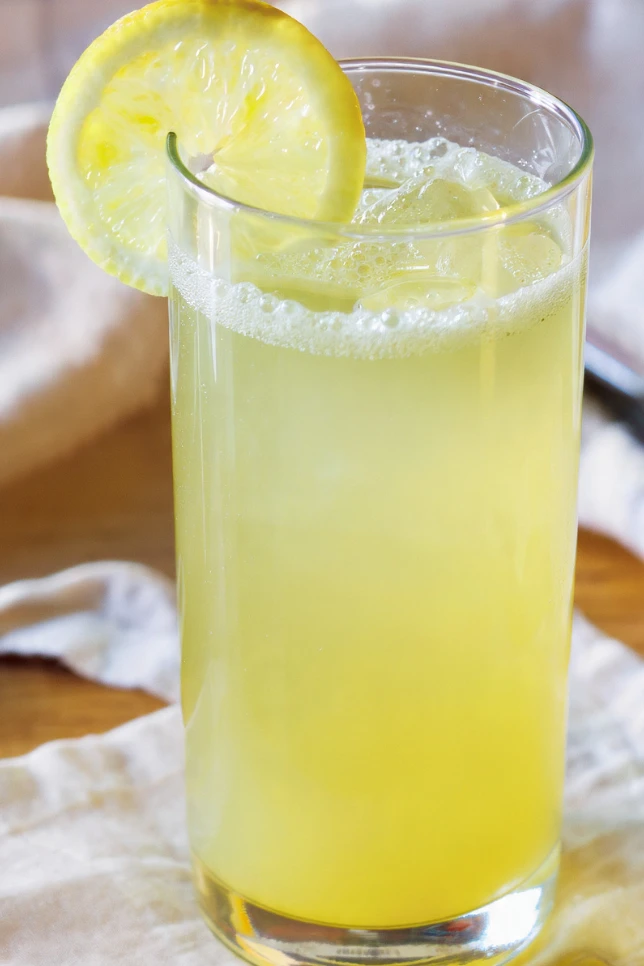
Here’s the fun part. For each serving, put about 3-4 tablespoons of the lemon syrup in a tall glass. Add ice, then top with sparkling mineral water (usually about 6-8 ounces depending on how strong you like it). Stir gently so you don’t kill all the carbonation. Garnish with a lemon slice and fresh mint if you’re feeling fancy.
The syrup keeps in the fridge for about 2 weeks, so you can make drinks on demand all summer long.
Pro Tips
After making this probably hundreds of times, here’s what I’ve learned:
Temperature matters: Cold syrup plus cold sparkling water equals maximum fizz. If either one is warm, you’ll end up with flat lemonade, and nobody wants that.
Adjust the ratio: Some people like their lemonade stronger, some like it lighter. Start with 3 tablespoons of syrup per glass and adjust from there. I like mine pretty tart, so I usually go with 4 tablespoons.
Fresh is best: I know I keep saying this, but really, fresh lemon juice makes such a difference. Bottled juice just doesn’t have that bright, zingy flavor.
The zest trick: Don’t skip zesting some of the lemons. The oils in the zest add so much depth to the syrup. But make sure you’re only getting the yellow part, not the white pith underneath. The pith is bitter and will make your lemonade taste weird.
Serving style: In Germany, they often serve this in tall glasses with long spoons so people can stir it themselves. It’s a nice touch if you’re entertaining.
Make it boozy: Not traditional, but a shot of vodka or gin in this is absolutely delicious. I’ve also made it with prosecco instead of sparkling water for brunch, and it’s fantastic.
Storage containers: I keep my syrup in those glass bottles with the swing-top lids. They look nice in the fridge and they’re easy to pour from. Any airtight glass container works though. Just don’t use plastic because it can absorb the lemon smell over time.
Frequently Asked Questions
What is German lemonade?
German lemonade, called Zitronenlimonade, is a sparkling lemonade made with homemade lemon syrup mixed with mineral water for a refreshing fizzy drink.
How long does lemon syrup last?
The syrup keeps for about two weeks in the refrigerator when stored in a sealed bottle or jar.
Can I freeze lemon syrup?
Yes. Freeze the syrup in ice cube trays and drop the cubes into sparkling water whenever you want fresh lemonade.
Can I use bottled lemon juice?
Bottled juice works in a pinch, but fresh lemon juice produces the brightest and most authentic flavor.
What sparkling water works best?
Mineral water gives the most authentic taste, but club soda or seltzer also work well.
Recipe Info Table
| Detail | Time/Amount |
|---|---|
| Prep Time | 15 minutes |
| Cook Time | 10 minutes |
| Cooling Time | 1-2 hours |
| Total Time | 1 hour 25 minutes (active time: 25 min) |
| Servings | Makes about 2 cups syrup (8-10 servings) |
| Yield | Approximately 8-10 glasses of lemonade |
Why You’ll Love This Recipe
This isn’t your basic lemonade recipe. It’s the kind of drink that makes people ask for the recipe. I’ve served it at backyard parties, brought it to potlucks, and even made big batches for my kid’s soccer games. Every single time, people want to know what makes it taste so good.
The make-ahead aspect is huge for me. I can whip up a batch of syrup on Sunday and have fresh, fizzy lemonade ready to go all week long. No more squeezing lemons every time someone wants a drink. Just mix, pour, and you’re done.
It’s also way less sweet than most commercial lemonades. You actually taste the lemon, not just a sugar bomb. My dentist probably appreciates that too.
What Makes This Recipe Unique
The German method of making a concentrated syrup first is brilliant for a few reasons. First, you can control exactly how strong you want each glass to be. Second, the syrup captures all the lemon flavor at its peak, so even a week later, you’re getting that fresh lemon taste. Third, and this is a big one, you’re not destroying the carbonation by trying to mix everything at once.
Most lemonade recipes have you add sugar to cold liquid and stir forever trying to dissolve it. This method dissolves the sugar in hot water first, which is way more efficient. Plus steeping the zest in the hot syrup extracts those essential oils that give this drink its complexity.
The use of sparkling mineral water instead of just carbonated tap water adds minerals that actually enhance the flavor. Germans take their mineral water seriously, and there’s a reason why.
Key Features
- Make-ahead friendly: Syrup keeps for 2 weeks, freeze for 3 months
- Customizable sweetness: Control how sweet each glass is
- Refreshing and not too sweet: Perfect balance of tart and sweet
- No special equipment needed: Just basic kitchen tools
- Authentic German taste: The real deal, not an Americanized version
- Perfect for entertaining: Impress guests with homemade “fancy” lemonade
- Kid-friendly: No alcohol (unless you add it!)
- Budget-friendly: Costs way less than buying fancy bottled lemonade
Nutrition Facts Table (Per Serving – Based on 10 servings)
| Nutrient | Amount |
|---|---|
| Calories | 120 |
| Total Fat | 0g |
| Sodium | 5mg |
| Total Carbohydrates | 32g |
| Sugars | 30g |
| Protein | 0g |
| Vitamin C | 25% DV |
Note: Nutrition facts are approximate and based on using the full amount of syrup with sparkling water. Adjust based on how much syrup you use per serving.
You’ll Also Love
If you’re into this German lemonade, you’ve got to try these other refreshing summer drinks:
- Homemade Ginger Beer: Similar make-ahead syrup method, but with fresh ginger
- Italian Soda Bar: Using fruit syrups with sparkling water
- Mint Limeade: A Mexican-inspired twist with fresh mint
- Strawberry Lemonade: Adding muddled strawberries to the basic syrup
- Arnold Palmer: Half iced tea, half lemonade using this syrup
Conclusion
I’ve been making this German lemonade for years now, and it never gets old. There’s something about that first sip on a hot day, all fizzy and tart and cold, that just hits different. It’s one of those recipes that seems fancy but is actually super simple once you’ve done it once.
The best part? You can absolutely customize it to your taste. Like it sweeter? Add more syrup. Want it more tart? Use less. Feeling adventurous? Throw in some herbs or fruit. The basic technique stays the same, but the variations are endless.
Give it a try this weekend. Make a batch of syrup, grab some good sparkling water, and see what you think. I bet you’ll be hooked after the first glass. And when your friends ask for the recipe (because they will), just smile and tell them it’s a secret family recipe you learned in Munich. I won’t tell if you don’t.
Cheers to homemade refreshment that actually tastes like something!
Linda
German Lemonade (Authentic Zitronenlimonade)
A bright and refreshing sparkling lemonade made with homemade lemon syrup and mineral water. Perfect for hot summer days.
Ingredients
- 8–10 large lemons
- 1½ cups granulated sugar
- 1 cup water
- 1 liter sparkling mineral water
- Fresh mint leaves (optional)
- Ice cubes
Instructions
- Wash lemons thoroughly and zest about 4 lemons using long strips of peel.
- Juice the lemons until you have about 1½ cups fresh lemon juice.
- In a saucepan combine water, sugar, and lemon zest. Heat gently until the sugar dissolves.
- Remove from heat and stir in the fresh lemon juice. Let steep 20 minutes.
- Strain out zest and chill the lemon syrup completely.
- To serve, add 3–4 tablespoons syrup to a glass with ice and top with sparkling mineral water.