Meal Prep Sunday for 9-to-5 Workers: Your No-Stress Guide to Actually Getting Through the Week
There was a Tuesday, a few years back, where I ate vending machine peanut butter crackers for lunch at my desk while answering emails. Not because I was too busy to step away. Because I genuinely had nothing else. I’d meant to pack a lunch. I just… hadn’t. Again.
That was the moment I finally got serious about Sunday meal prep.
If you’re a 9-to-5 worker, you already know how the week goes. Monday you’re motivated. By Wednesday you’re exhausted. By Friday you’re just surviving. And somewhere in that stretch, food becomes this stressful afterthought you’re throwing money at through delivery apps or fast food drive-throughs. It adds up fast, both in dollars and in how you feel by 3 PM every day.
But here’s the thing about meal prep: it doesn’t have to be this military operation with color-coded charts and 47 matching containers. I’ve tried that version. It burned me out by week three. What actually works is a much simpler approach, and I want to walk you through exactly what I do on Sunday afternoons to make my entire work week easier.
Why Sunday Changes Everything (When You Do It Right)
Most people who “try” meal prep give up because they make it too complicated. They find an ambitious plan online, spend four hours cooking an overwhelming variety of dishes, and then either get bored eating the same thing by Wednesday or forget half of what they made at the back of the fridge.
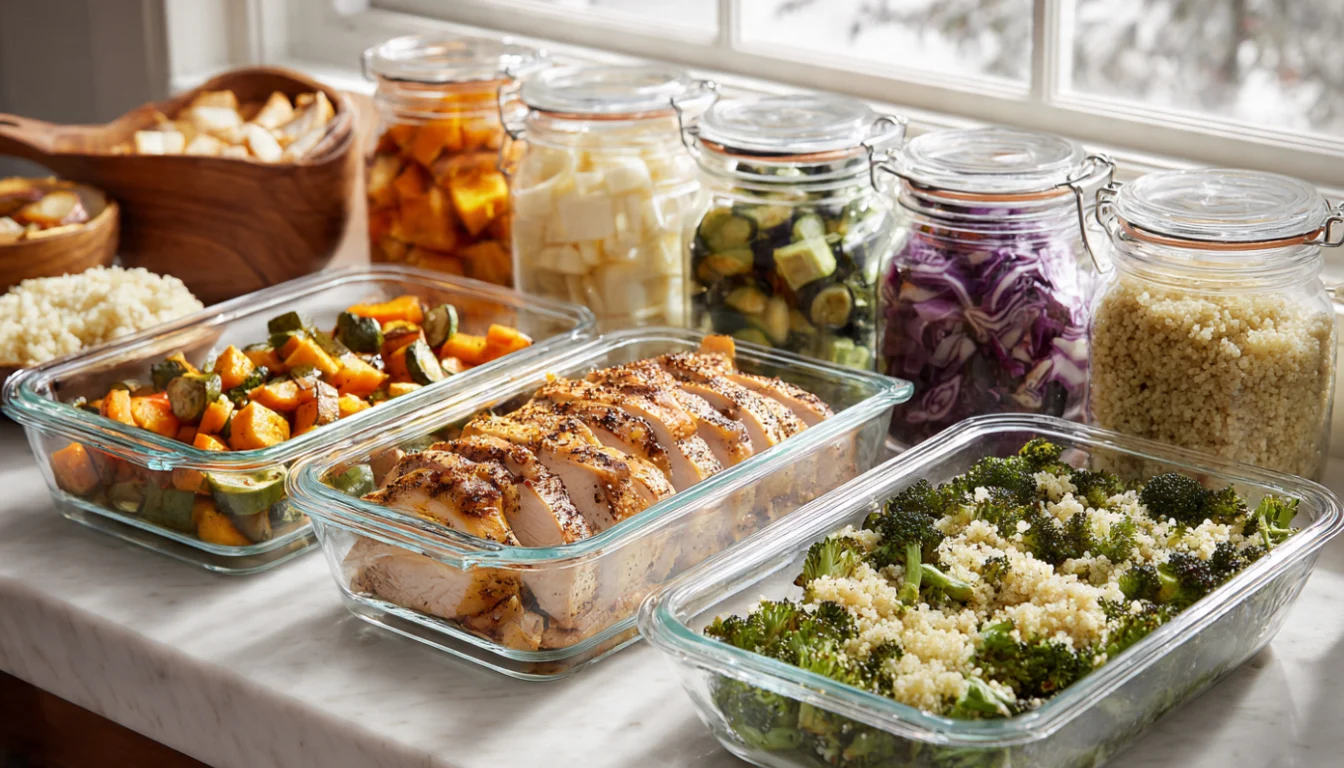
The version that actually sticks? You’re only making three to four components, not five different full meals. Think of it as building blocks rather than finished plates. A big batch of grains. A protein or two. Some roasted vegetables. A sauce. From those four things, you can mix and match all week without feeling like you’re eating the same lunch five days in a row.
I learned this the hard way after about six months of the “prep twelve full meals” approach. My fridge looked impressive on Sunday night and completely depressing by Thursday. Once I switched to component cooking, everything clicked.
What You Actually Need Before You Start
Let me talk about containers for a second because this matters more than people realize.
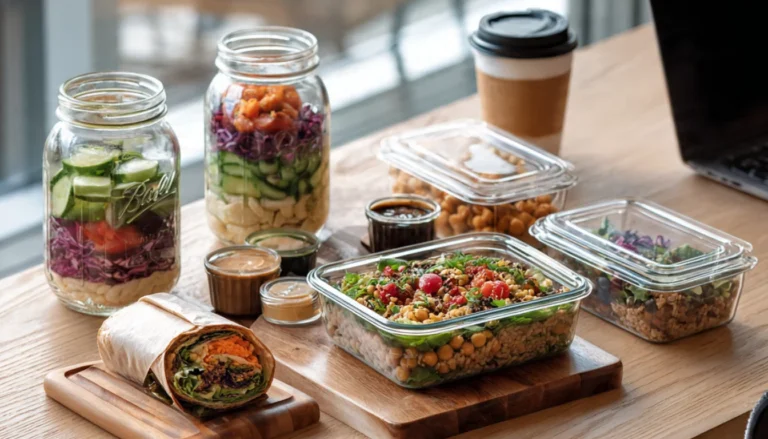
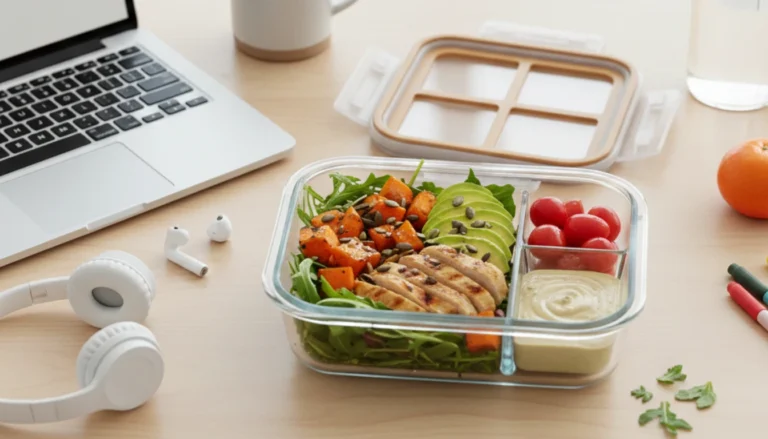
For years I used whatever plastic containers I had lying around, and my meals were fine but not great. They’d get waterlogged, or the food would absorb weird smells, or I’d microwave something and the lid would warp. I eventually switched to glass meal prep containers and it genuinely changed things. Glass keeps food fresher longer, it doesn’t stain from tomato-based sauces, and you can go straight from fridge to microwave without worrying. I use a set of rectangular glass containers in two sizes, one for mains and one smaller size for snacks and sides.
If you’re not ready to invest in glass right now, airtight plastic containers absolutely work. Just make sure they’re actually airtight. The flimsy lids that just sit on top are a disaster waiting to happen in your work bag.
Beyond containers, the other tool that seriously speeds up Sunday prep is a good Instant Pot or pressure cooker. I resisted this for ages because it seemed like another appliance taking up counter space. But cooking a full batch of brown rice, or a pot of chicken thighs, in a fraction of the normal time genuinely changes how much you can get done in one Sunday session. If you don’t have one, no problem. A regular pot works. It just takes longer.
The Actual Sunday Routine (Realistic, Not Pinterest-Perfect)
Here’s roughly how a good prep Sunday looks for me. This takes about two hours total, including cleanup, and most of that time I’m just waiting for things to cook while I watch something on my laptop.
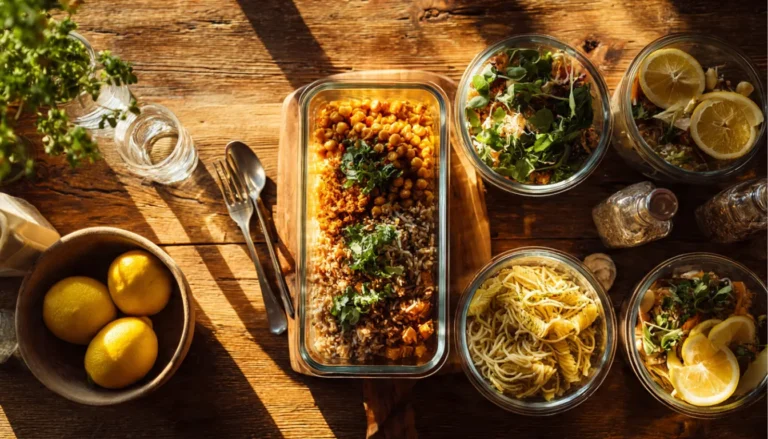
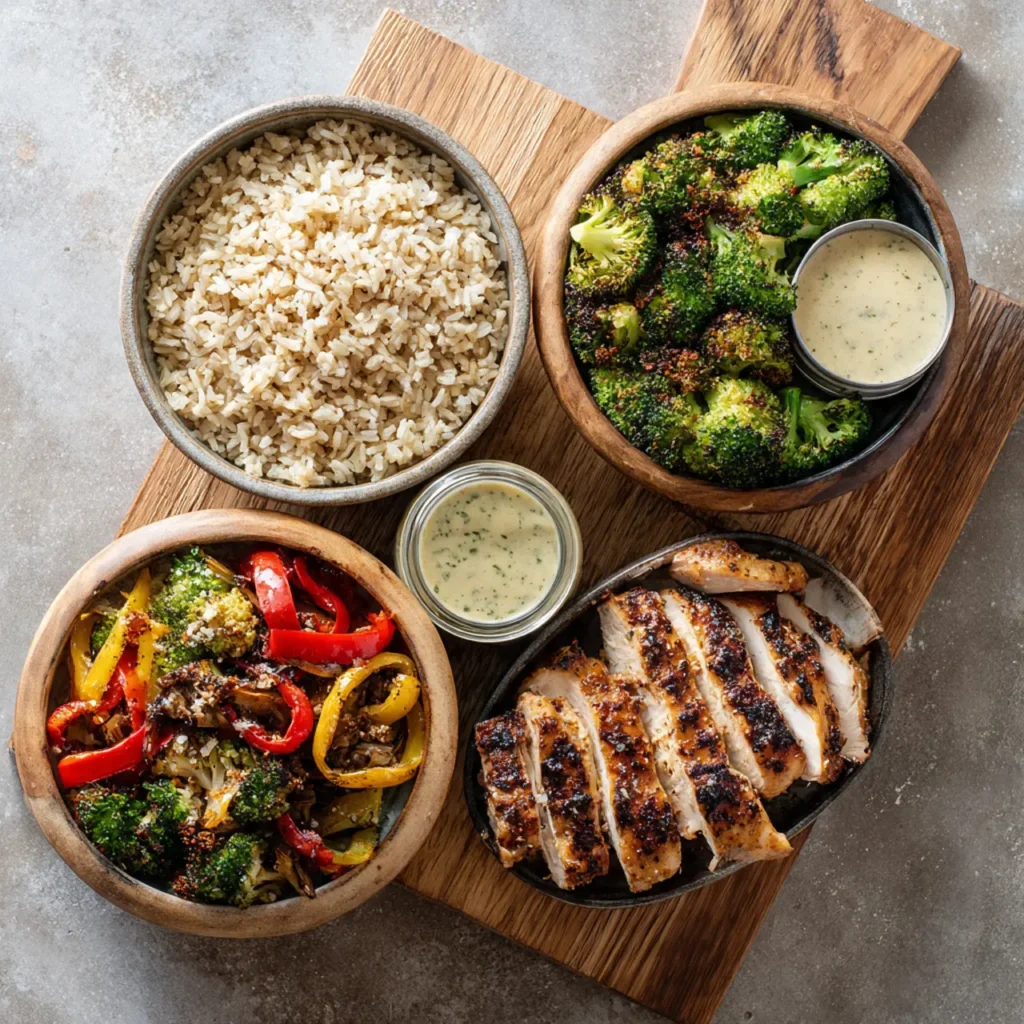
I start with whatever takes the longest. Usually that’s grains. A big pot of rice, quinoa, or farro goes on first. While that cooks, I chop whatever vegetables I’m roasting that week. Sheet pan roasting is your best friend here. Everything goes on one (or two) pans, gets tossed with olive oil, salt, and pepper, and goes into the oven at 400 degrees for 25 to 30 minutes. I’ll do things like broccoli, bell peppers, zucchini, cherry tomatoes, whatever was on sale or looks good.
While the veggies roast, I handle protein. I usually do two kinds, because variety is the thing that keeps meal prep from feeling like a punishment. Something like baked chicken thighs seasoned simply, plus a batch of hard-boiled eggs for quick breakfasts and snacks. Or cooked ground turkey with a simple spice blend that works in multiple contexts (wraps one day, on top of rice another day, mixed into a pasta situation on Friday).
The last thing I put together is a sauce or dressing. This is the actual secret weapon of meal prep that most guides skip. A good sauce can make the exact same components feel like three different meals. My go-to rotation includes a tahini-lemon dressing, a simple soy-ginger glaze, and a Greek-style herb oil. Each one takes five minutes to make and completely transforms how things taste throughout the week.
Building Your Work Week Lunches From These Components
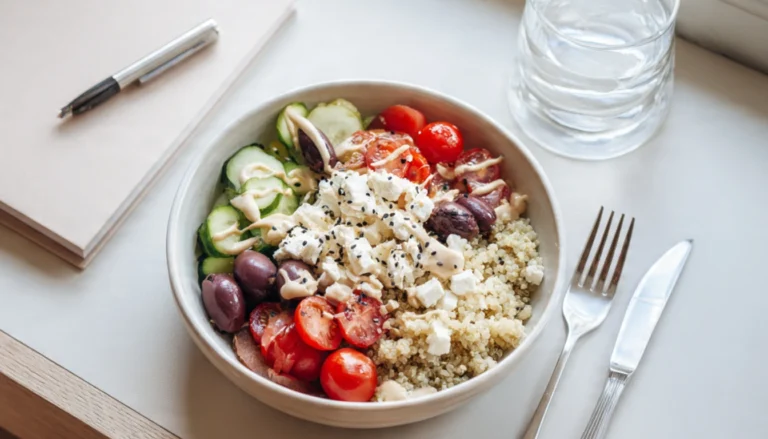
On Monday, everything is fresh and you’re motivated, so I put together a proper grain bowl. Quinoa base, roasted veggies on top, chicken sliced over it, tahini dressing drizzled over everything. Takes three minutes to assemble the night before.
By Wednesday, I’m less interested in anything requiring assembly, so this is when the protein goes into a wrap with whatever’s left of the vegetables. Quick, no thinking required.
Thursday and Friday I honestly get creative with leftovers. Fried rice using the precooked grains and a couple of the hard-boiled eggs. Or the ground turkey gets mixed with some pasta from a quick Tuesday night cook. The components become almost infinitely flexible when you stop thinking of them as specific meals and just see them as ingredients you already prepped.
One mistake I used to make constantly: not labeling things. Sounds obvious but I can’t tell you how many times I opened a container in my work fridge and genuinely couldn’t remember if it was this week’s chicken or last week’s. A simple piece of masking tape and a marker on each container solved this entirely.
The Breakfast Situation
Lunches get all the attention in meal prep content, but honest to goodness, prepping breakfast is what saves me the most time during the work week.
Two things I always make on Sunday: overnight oats in individual jars (five minutes, done) and a batch of egg muffins. Egg muffins are just eggs whisked with whatever vegetables and cheese you like, poured into a muffin tin, baked at 350 for about 18 minutes. They keep in the fridge all week and you can eat them cold or warm them up in 45 seconds. I pack two in my work bag with a piece of fruit and that’s breakfast sorted for nearly nothing.
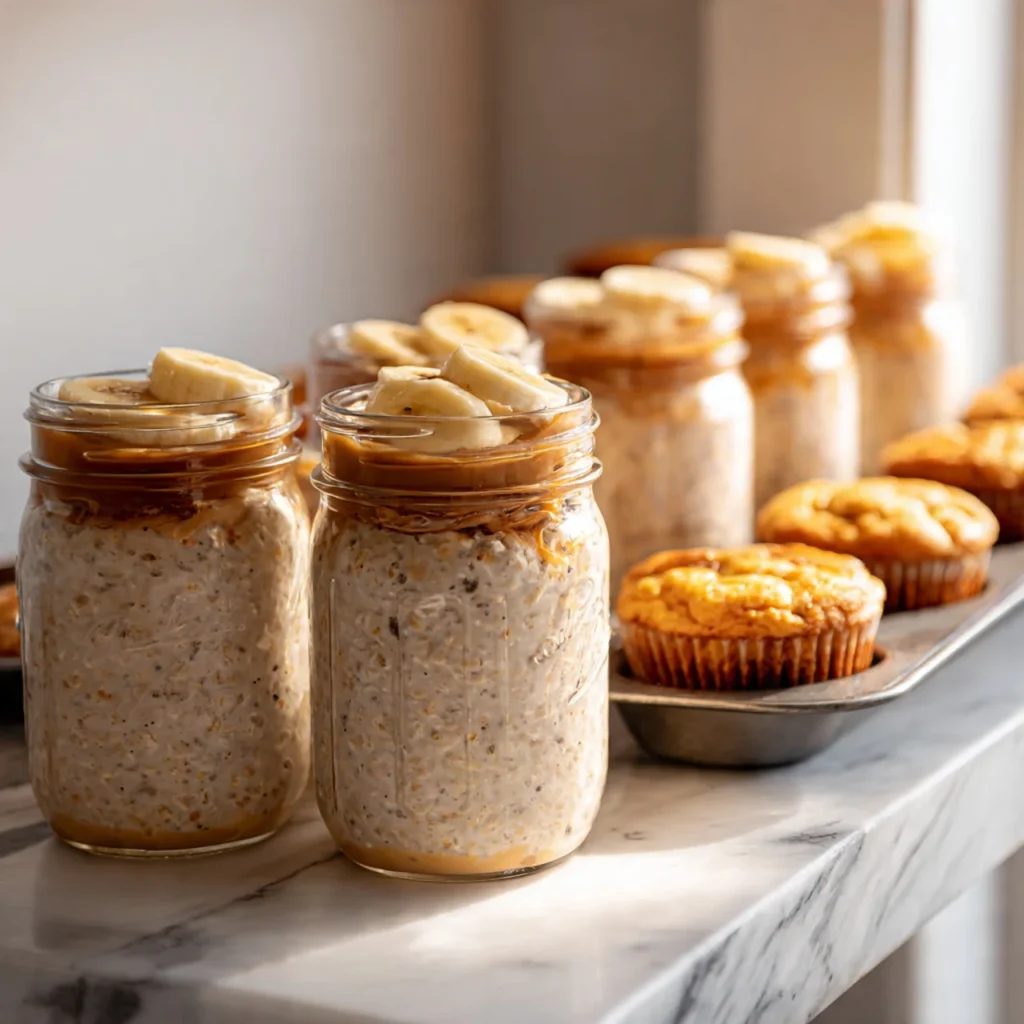
The overnight oats situation works particularly well in wide-mouth mason jars. I make five at once on Sunday, they sit in the fridge, and every morning I just grab one on the way out. Your mileage may vary on flavors (I’m a peanut butter banana person, my coworker thinks that sounds horrifying), but the base formula of oats plus milk plus something sweet plus something interesting works endlessly.
The Money Side of This
Okay, let’s talk about what you actually save. Before I started prepping consistently, I was spending somewhere around $60 to $80 a week on work lunches and breakfasts. Delivery fees, coffee shop pastries, last-minute grocery runs for overpriced salads.
A solid Sunday prep session costs me between $25 and $40 for ingredients that cover every breakfast and lunch for five days. That’s roughly a $200 monthly savings, maybe more if you live somewhere with expensive food delivery. It’s also just less mental load. Not having to think about what you’re going to eat every single morning is genuinely underrated as a quality of life improvement.
When You’re Short on Time (Because Some Sundays That Happens)
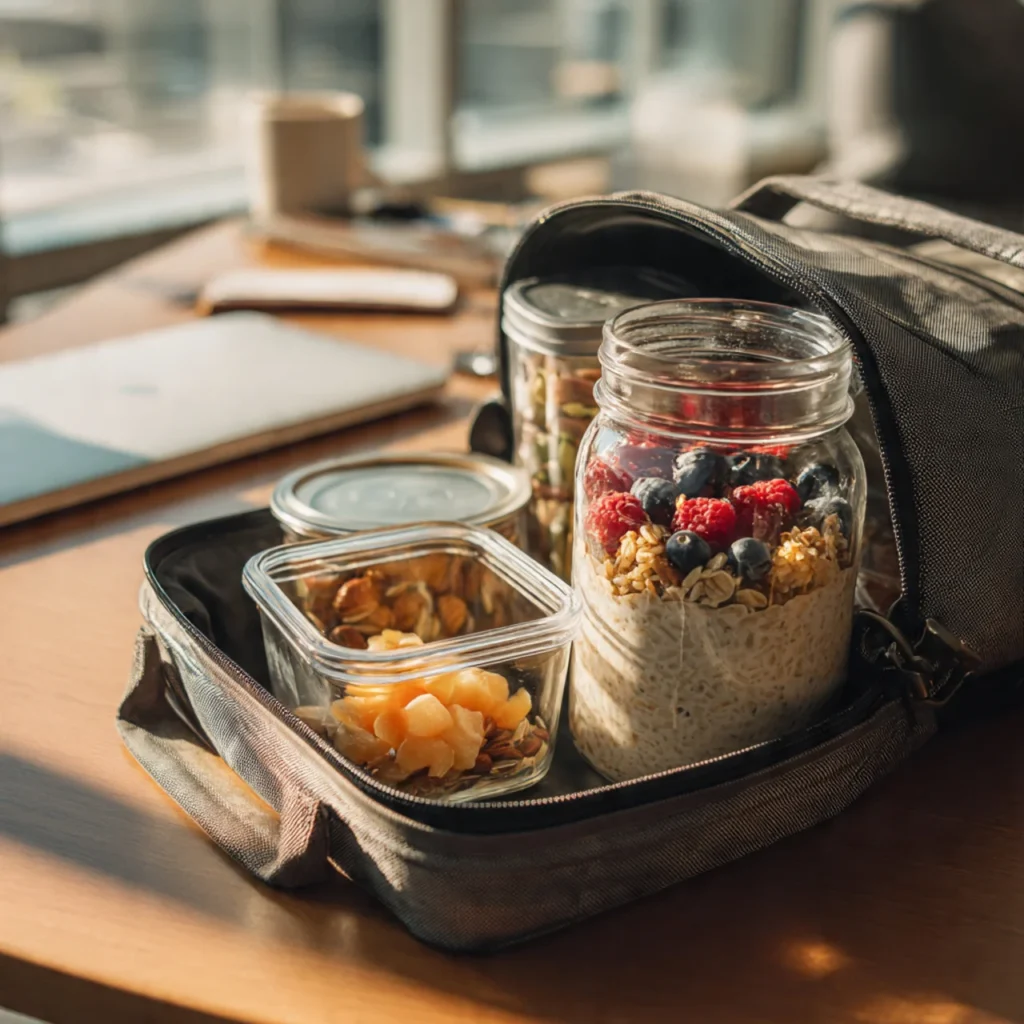
Not every Sunday is going to be a full two-hour prep session and that’s fine. Some Sundays you have zero bandwidth for it. In that case, a 30-minute version still helps more than doing nothing.
Pick one thing. Just one. Hard-boil a dozen eggs. Cook a big pot of rice. Chop your vegetables so they’re ready to cook quickly during the week. Even a single prep task cuts friction out of your work week significantly.
And if you’re in a stretch where meal prep genuinely isn’t happening, there’s no shame in leaning on a meal kit service for a week or two to reset. Plenty of meal kit options deliver pre-portioned ingredients that cut prep time dramatically without the full cost of restaurant food. It’s not a permanent solution but it beats the vending machine crackers.
Trust me on that one. I’ve eaten enough of those to last a lifetime.
A Few Last Things Before You Start
Give yourself three weeks before you judge whether this works for you. The first Sunday usually takes longer and feels chaotic. The second one you start to find your rhythm. By the third, it honestly starts to feel easy.
Also, don’t try to prep food you don’t actually enjoy eating. This sounds obvious but people do it constantly. If you’re not a quinoa person in regular life, prepped quinoa isn’t suddenly going to become exciting on a Wednesday afternoon. Stick to foods you genuinely like. The whole point is making your week better, not more virtuous.
If you try this routine and it saves your Tuesday, I’d genuinely love to hear about it. And if you’ve got a component or sauce that’s become a staple in your own prep rotation, drop it in the comments. I’m always looking for new ideas to steal.