The Best Lemon Bundt Cake Recipe (Moist, Zesty, and Easy)
Introduction
The first lemon bundt cake I ever baked came out of the pan in three pieces. Half of it stayed glued to the ridges, and I stood in my kitchen holding a plate of lemony rubble. That was more than ten years ago, and that cake taught me more than any cookbook did.
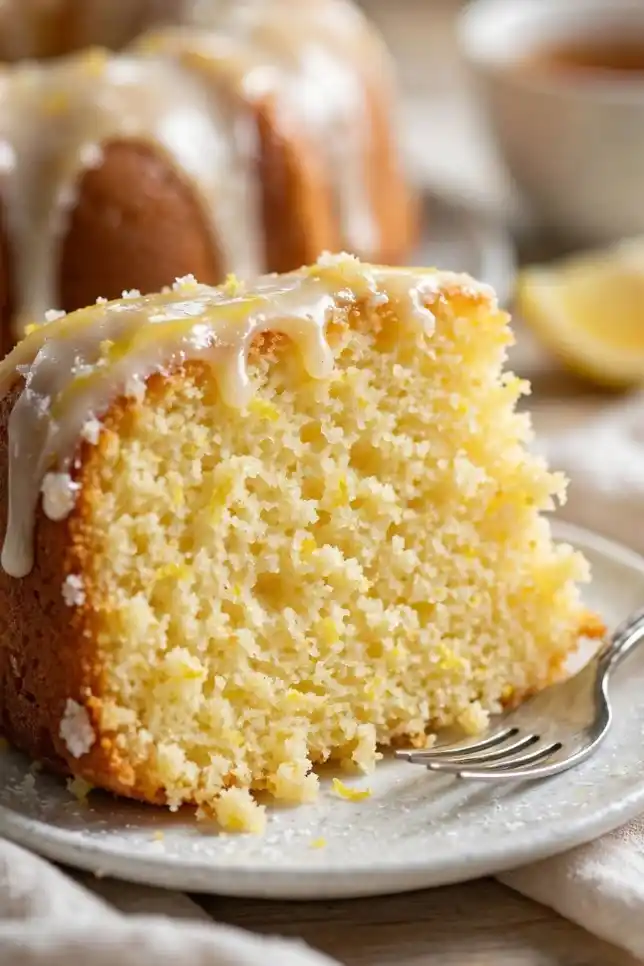
Today this is the cake I bake for birthdays, Sunday brunch, and the weeks when my kitchen just needs some sunshine. It’s soft and moist with a tight, tender crumb. The flavor comes from three places: fresh zest, fresh juice, and a sharp lemon glaze that soaks into the top. If you’ve already tried my classic lemon pound cake, think of this as its prettier cousin. Same buttery comfort, but baked in a bundt pan so it looks great on the table.
Essential Ingredients
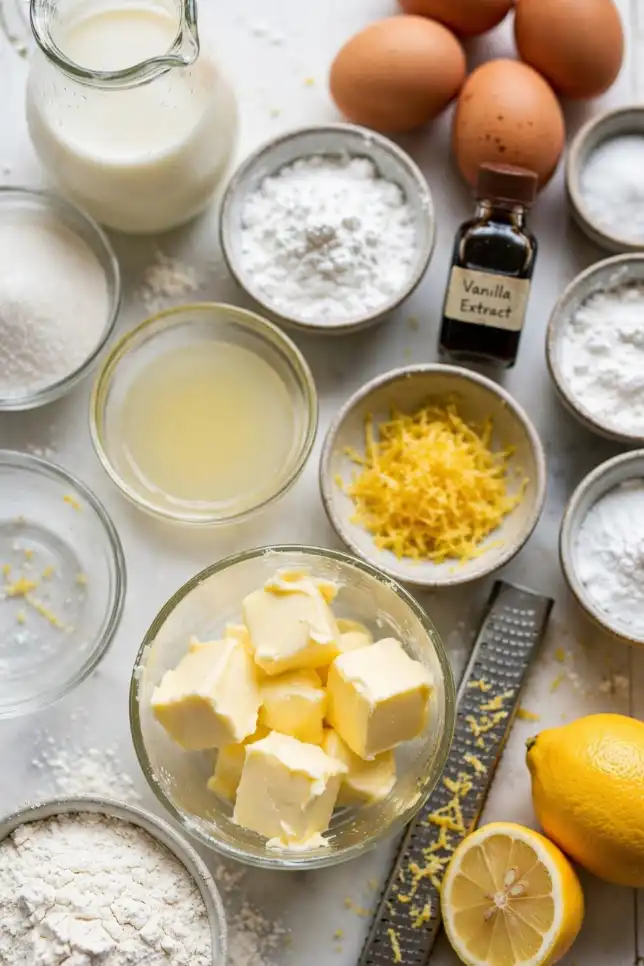
For the cake:
- 3 cups (360 g) all-purpose flour
- 1 teaspoon baking powder
- ½ teaspoon baking soda
- 1 teaspoon fine salt
- 1 cup (226 g) unsalted butter, softened
- 2 cups (400 g) granulated sugar
- 3 tablespoons fresh lemon zest (about 3 large lemons)
- 4 large eggs, room temperature
- 1 cup (240 ml) buttermilk, room temperature
- ⅓ cup (80 ml) fresh lemon juice
- 2 teaspoons pure vanilla extract
For the lemon glaze:
- 2 cups (240 g) powdered sugar
- 3 to 4 tablespoons fresh lemon juice
- 1 teaspoon lemon zest
- Pinch of salt
Alternative Ingredients
No buttermilk? Stir 1 tablespoon of lemon juice into 1 cup of whole milk and let it sit for 5 minutes. Full fat Greek yogurt or sour cream also works, and it makes the crumb a little richer. For a gluten-free lemon bundt cake, use a 1:1 gluten-free baking flour like Bob’s Red Mill or King Arthur Measure for Measure. It holds up well in this recipe. If you want a dairy-free version, use a plant butter in stick form and oat milk mixed with lemon juice.
In winter I like to swap one lemon for a Meyer lemon. It’s softer and a bit floral. In summer, folding in a cup of blueberries gives you something close to my lemon blueberry pound cake, which is a reader favorite.
Step-by-Step Directions
1. Prep the pan. Heat your oven to 350°F (175°C). Brush a 10 to 12 cup bundt pan with melted butter, getting into every ridge. Then dust it with flour and tap out the extra. A baking spray that contains flour, such as Baker’s Joy, works too. (King Arthur Baking has a really helpful guide on how to prevent bundt cakes from sticking if you want to go deeper.)
2. Mix the dry ingredients. Whisk the flour, baking powder, baking soda, and salt together in a bowl. Set it aside.
3. Rub the zest into the sugar. Add the sugar and lemon zest to the bowl of your stand mixer. Rub them together with your fingertips for a minute until the sugar feels damp and smells amazing. This releases the lemon oils, and it’s the secret to a cake that tastes like real lemon.
4. Cream the butter and sugar. Add the softened butter and beat on medium-high for 3 to 4 minutes, until pale and fluffy. Don’t rush this step. The air you beat in now is what makes the cake rise.
5. Add the eggs. Add the eggs one at a time, beating well after each. Scrape down the bowl. Mix in the vanilla.
6. Alternate wet and dry. Stir the buttermilk and lemon juice together. On low speed, add the flour mixture in three parts and the buttermilk in two, starting and ending with flour. Mix only until you can’t see any more flour.
7. Bake. Spread the batter into the pan and smooth the top. Tap the pan on the counter twice to knock out big air bubbles. Bake for 50 to 60 minutes, until a skewer comes out clean and the cake springs back when touched.
8. Cool and release. Let the cake cool in the pan for exactly 10 to 15 minutes, then flip it onto a wire rack. Too soon and it breaks. Too late and the sugars set and it sticks.
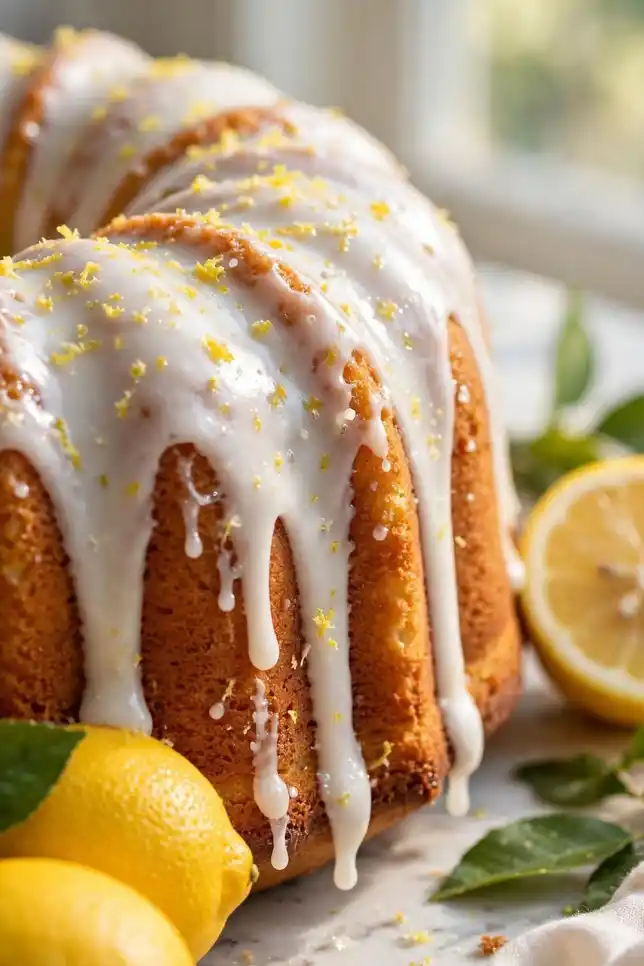
9. Glaze. Whisk the glaze ingredients until thick but pourable. Once the cake is fully cool, spoon the glaze over the top and let it drip down the sides.
Pro Tips
Room temperature ingredients really matter here. Cold eggs and buttermilk make the creamed butter seize, and the batter looks curdled. Sally’s Baking Addiction explains why room temperature ingredients make a difference better than I ever could.
Weigh your flour if you have a kitchen scale. The mistake I used to make was scooping flour straight from the bag, which packs in too much and makes a dry, heavy cake. Spooning and leveling works if you don’t own a scale.
A heavy, light-colored cast aluminum pan (Nordic Ware is my go-to) bakes much more evenly than thin dark pans. Dark pans brown the outside before the middle is done. If yours is dark, drop the oven to 325°F and add a few minutes.
And if your cake sticks anyway? It happens to everyone. Tasting Table has some good tricks for getting a stuck bundt cake out of the pan. Worst case, glaze the broken pieces and call it a trifle. Nobody complains.
FAQs
Can I make lemon bundt cake ahead of time?
Yes. It actually tastes better the next day once the lemon flavor settles in. Wrap it unglazed and keep it at room temperature for up to 2 days, then glaze before serving.
Can I freeze it?
Absolutely. Wrap the unglazed cake in plastic wrap and then foil. It keeps for 3 months. Thaw it overnight on the counter.
Why did my bundt cake sink in the middle?
Usually it’s underbaked, or the oven door was opened too early. An oven thermometer is a cheap fix, since many home ovens run 15 to 25 degrees off.
Can I use bottled lemon juice?
In a pinch, yes for the glaze. For the cake, fresh lemons give you the zest too, and that’s where most of the flavor lives.
Can I bake this in loaf pans?
Yes. Divide the batter between two 9×5 loaf pans and start checking at 45 minutes.
Recipe Info
| Prep Time | Cook Time | Total Time | Servings | Yield |
|---|---|---|---|---|
| 20 minutes | 55 minutes | 1 hour 15 minutes (plus cooling) | 12 to 14 | One 10-inch bundt cake |
Why You’ll Love This Recipe
It uses simple, budget friendly pantry ingredients. It’s moist for days without being heavy. It looks like it came from a bakery but needs nothing fancier than a mixer and a pan. And honestly, the smell of lemon zest and butter in the oven is worth it on its own.
What Makes This Recipe Unique
Most lemon cakes rely on juice alone, which gives you sweetness without much real lemon flavor. Here the lemon comes in three layers: zest rubbed into the sugar, juice mixed into the buttermilk, and a tart glaze on top. Buttermilk keeps the crumb tender, and the slight acidity balances the sugar so the cake never tastes flat.
Key Features
- Moist, tender crumb from buttermilk
- Bold flavor from three layers of lemon
- Easy release with a properly greased bundt pan
- Freezer friendly and great for making ahead
- Easy to adapt for gluten-free or dairy-free baking
Nutrition Facts (per slice, based on 14 servings)
| Nutrient | Amount |
|---|---|
| Calories | 390 kcal |
| Carbohydrates | 60 g |
| Sugar | 42 g |
| Protein | 5 g |
| Fat | 15 g |
| Saturated Fat | 9 g |
| Cholesterol | 88 mg |
| Sodium | 260 mg |
| Fiber | 1 g |
Nutrition values are estimates and will vary with the brands you use.
You’ll Also Love
If lemon desserts make you as happy as they make me, try my easy lemon 7Up cake next. It’s another bundt style cake with a lovely soft crumb and a fizzy lemon lime twist. The lemon pound cake and lemon blueberry pound cake linked above are great too if you want to keep the citrus going.
Conclusion
A good lemon bundt cake doesn’t have to be hard. Grease the pan well, use room temperature ingredients, rub that zest into the sugar, and give it the full 10 minutes before you flip it. Your oven might run a little hot or cold, so your mileage may vary on baking time. Trust the skewer more than the clock.
Bake it, slice it, and let me know in the comments how yours turned out. And if it comes out in three pieces the first time? Welcome to the club. Mine did too.
With love from my kitchen,
Linda
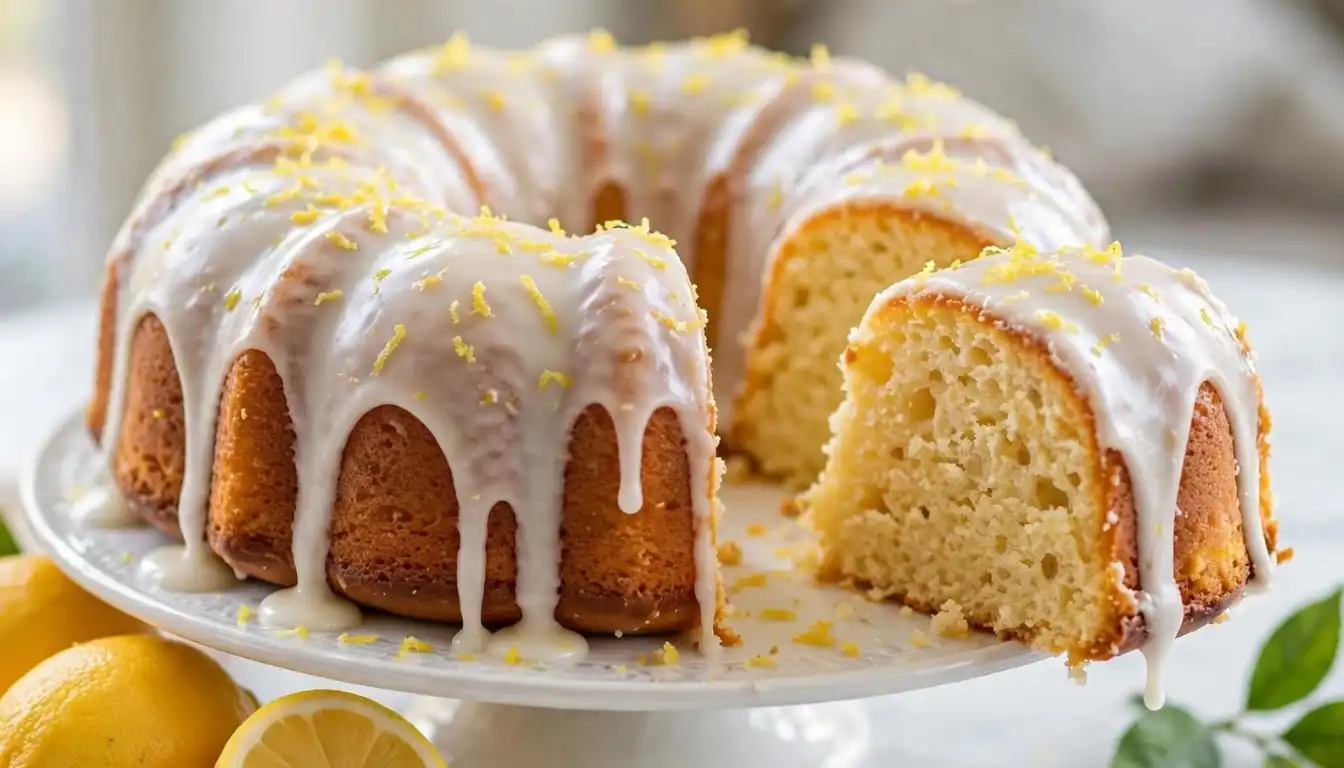
Best Moist Lemon Bundt Cake with Lemon Glaze
A soft, buttery lemon bundt cake with fresh zest, buttermilk and a tangy lemon glaze. Easy to make, moist for days, and perfect for brunch, birthdays and holidays.
Ingredients
For the cake
- 3 cups (360 g) all-purpose flour
- 1 teaspoon baking powder
- ½ teaspoon baking soda
- 1 teaspoon fine salt
- 1 cup (226 g) unsalted butter, softened
- 2 cups (400 g) granulated sugar
- 3 tablespoons fresh lemon zest (about 3 large lemons)
- 4 large eggs, room temperature
- 1 cup (240 ml) buttermilk, room temperature
- ⅓ cup (80 ml) fresh lemon juice
- 2 teaspoons pure vanilla extract
For the lemon glaze
- 2 cups (240 g) powdered sugar
- 3 to 4 tablespoons fresh lemon juice
- 1 teaspoon lemon zest
- Pinch of salt
Instructions
- Heat the oven to 350°F (175°C). Brush a 10 to 12 cup bundt pan with melted butter, getting into every ridge, then dust with flour and tap out the extra.
- Whisk the flour, baking powder, baking soda and salt in a bowl. Set aside.
- In a stand mixer bowl, rub the sugar and lemon zest together with your fingertips for 1 minute until fragrant.
- Add the softened butter and beat on medium-high for 3 to 4 minutes until pale and fluffy.
- Add the eggs one at a time, beating well after each. Scrape the bowl and mix in the vanilla.
- Stir the buttermilk and lemon juice together. On low speed, add the flour mixture in three parts and the buttermilk in two, starting and ending with flour. Mix just until combined.
- Spread the batter into the pan, smooth the top and tap the pan on the counter twice. Bake 50 to 60 minutes, until a skewer comes out clean.
- Cool in the pan for 10 to 15 minutes, then flip onto a wire rack and cool completely.
- Whisk the glaze ingredients until thick but pourable. Spoon over the cooled cake and let it drip down the sides.
Recipe Notes
No buttermilk? Mix 1 tablespoon lemon juice into 1 cup whole milk and let it sit 5 minutes.
Dark pan? Lower the oven to 325°F and add a few minutes to the bake time.
Make ahead: Keeps unglazed at room temperature for 2 days, or frozen for up to 3 months.
Gluten-free: Use a 1:1 gluten-free baking flour.
Nutrition (per slice)
| Calories | 390 kcal |
| Carbohydrates | 60 g |
| Sugar | 42 g |
| Protein | 5 g |
| Fat | 15 g |
| Saturated Fat | 9 g |
| Cholesterol | 88 mg |
| Sodium | 260 mg |
| Fiber | 1 g |