Sizzling Shrimp Panda Express Copycat Recipe (Better Than Takeout!)
You know those nights when you’re craving Panda Express but you’re staring at your delivery app wondering if $18 for shrimp is really worth it? I’ve been there too many times. That’s exactly why I spent three weekends perfecting this copycat recipe for their sizzling shrimp, and honestly, I think mine turned out better than the original.
The first time I tried making this at home, I made every rookie mistake possible. I used frozen shrimp straight from the bag (rookie move), cranked my burner to high thinking that’s how you get that “wok hei” flavor, and ended up with rubbery, sad little shrimp swimming in watery sauce. My husband took one bite and gently suggested we just order takeout next time. Ouch.
But here’s the thing about cooking. Every disaster teaches you something. After studying Chinese cuisine techniques and watching way too many stir-fry videos at 2 AM, I finally cracked the code. The secret isn’t just about the sauce (though that matters). It’s about treating your shrimp right, getting your pan screaming hot, and understanding the order of operations. Trust me, once you nail this recipe, you’ll never waste money on soggy takeout shrimp again.
Essential Ingredients
For the Shrimp:
- 1 pound large shrimp (26-30 count), peeled and deveined
- 2 tablespoons cornstarch
- 1/2 teaspoon salt
- 1/4 teaspoon white pepper
- 1 tablespoon vegetable oil
For the Sauce:
- 3 tablespoons soy sauce (I use Kikkoman)
- 2 tablespoons oyster sauce
- 1 tablespoon rice vinegar
- 1 tablespoon sugar
- 1 tablespoon water
- 1 teaspoon sesame oil
- 1/2 teaspoon red pepper flakes (adjust to taste)
For Stir-Frying:
- 2 tablespoons vegetable oil
- 4 cloves garlic, minced
- 1 tablespoon fresh ginger, minced
- 1 red bell pepper, cut into 1-inch pieces
- 1 green bell pepper, cut into 1-inch pieces
- 4 green onions, cut into 2-inch pieces
- 1 teaspoon cornstarch mixed with 1 tablespoon water (slurry)
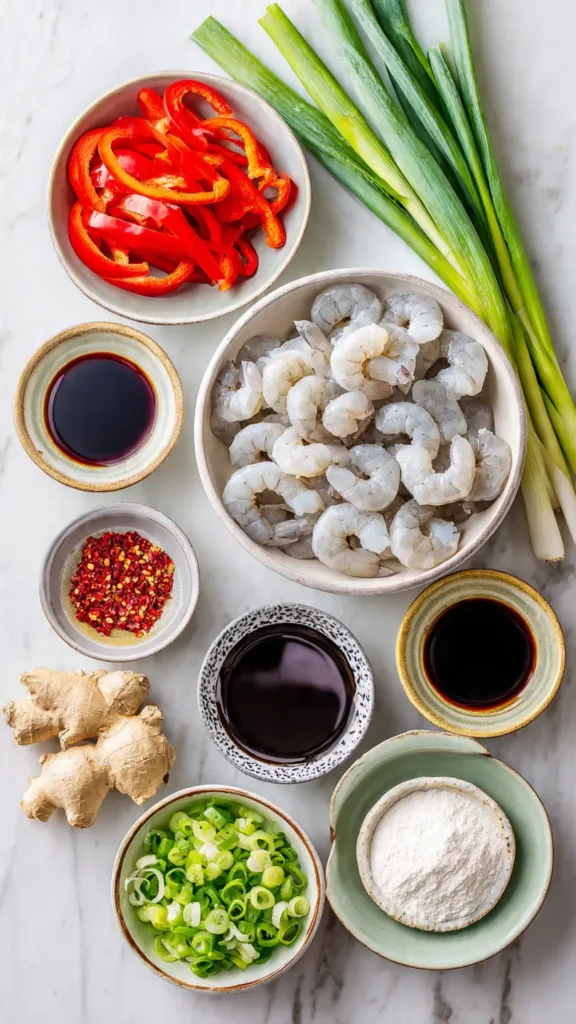
Alternative Ingredients
Look, I get it. Not everyone has access to Asian grocery stores or wants to stock their pantry with specialty ingredients. Here are some swaps that actually work:
If you can’t find rice vinegar, use white vinegar mixed with a tiny pinch of sugar. It’s not identical, but it’ll get you close enough. Don’t have oyster sauce? Mix equal parts soy sauce and hoisin sauce. It changes the flavor profile slightly, but it’s still delicious.
For the shrimp, I always buy them already peeled and deveined because life’s too short to devein shrimp on a Tuesday night. If you can only find smaller shrimp (41-50 count), just reduce your cooking time by about 30 seconds. Bigger shrimp (16-20 count) need an extra minute.
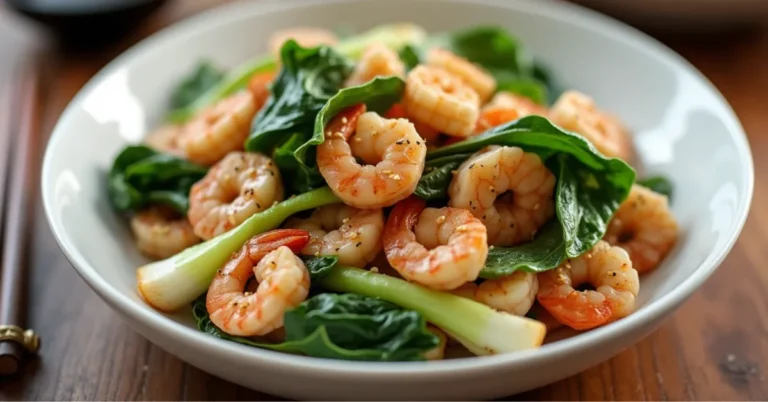
The white pepper gives that authentic Chinese restaurant flavor, but black pepper works if that’s what you have. Just know you’ll lose some of that distinctive taste. As for the vegetables, feel free to add snap peas, baby corn, or water chestnuts. I’ve even thrown in leftover broccoli when I needed to clean out my fridge.
Step-by-Step Directions
Step 1: Prep Your Shrimp Like a Pro
Pat those shrimp completely dry with paper towels. I cannot stress this enough. Wet shrimp = steamed shrimp, and we’re going for that beautiful sear. In a bowl, toss them with cornstarch, salt, and white pepper. The cornstarch creates this amazing velvety texture and helps the sauce cling to every piece. Let them sit for 10 minutes while you prep everything else.
Step 2: Mix Your Sauce
Combine soy sauce, oyster sauce, rice vinegar, sugar, water, sesame oil, and red pepper flakes in a small bowl. Whisk it until the sugar dissolves. This is your flavor bomb, so taste it now. Want it sweeter? Add a bit more sugar. Like it spicier? More red pepper flakes. This is your chance to customize before things get crazy on the stove.
Step 3: Get Everything Ready (Mise en Place)
This is where home cooks mess up. You cannot stop to chop garlic once the wok is hot. Have your garlic minced, ginger ready, peppers cut, green onions sliced, and that cornstarch slurry mixed. Everything should be within arm’s reach of your stove. I learned this lesson the hard way when I burned garlic while frantically slicing peppers.
Step 4: Heat Your Pan (This Is Critical)
I use my carbon steel wok for this, but a large cast iron skillet works beautifully too. Heat it over high heat for 2-3 minutes until a drop of water sizzles and evaporates instantly. Add 1 tablespoon of vegetable oil and swirl to coat. The oil should shimmer but not smoke.
Step 5: Sear the Shrimp
Working in batches (don’t crowd the pan), add half your shrimp in a single layer. Let them sit untouched for 90 seconds. This is harder than it sounds. Your instinct will be to flip them constantly, but resist. You want that golden crust. Flip once, cook another minute, then remove to a plate. Repeat with remaining shrimp.
Step 6: Stir-Fry the Aromatics and Vegetables
Add the remaining tablespoon of oil to your wok. Toss in garlic and ginger, stirring constantly for about 20 seconds until fragrant. If they start to brown too fast, pull the pan off the heat for a second. Add bell peppers and stir-fry for 2 minutes until they’re tender-crisp. The peppers should still have some crunch.
Step 7: Bring It All Together
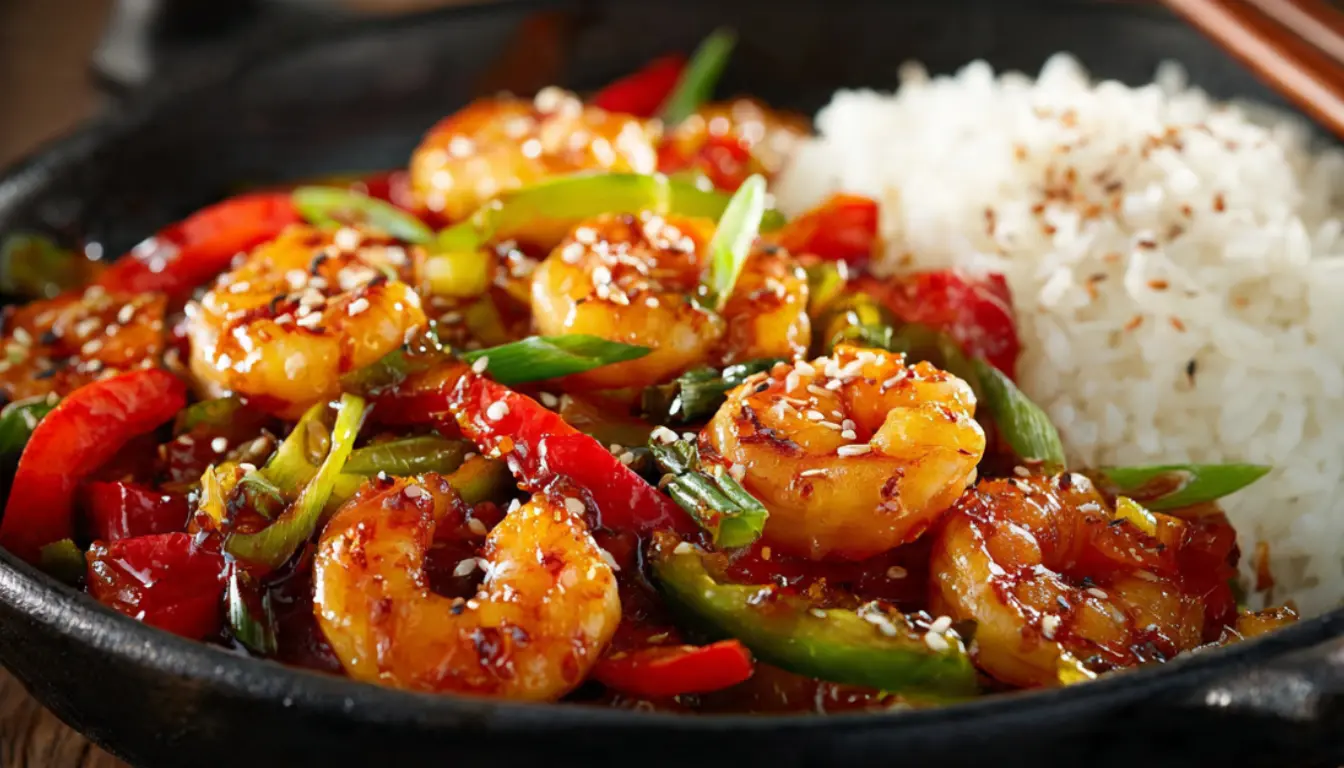
Return the shrimp to the wok along with the green onions. Pour in your sauce and toss everything for about 30 seconds. Add the cornstarch slurry and keep tossing until the sauce thickens and coats everything glossily. This should take maybe 30-45 seconds. Once that sauce goes from thin to thick and clingy, you’re done.
Step 8: Serve Immediately
This dish waits for no one. Serve it straight from the wok over steamed white rice or fried rice. I sometimes meal prep this on Sundays, storing the components separately and combining them when I reheat during the week.
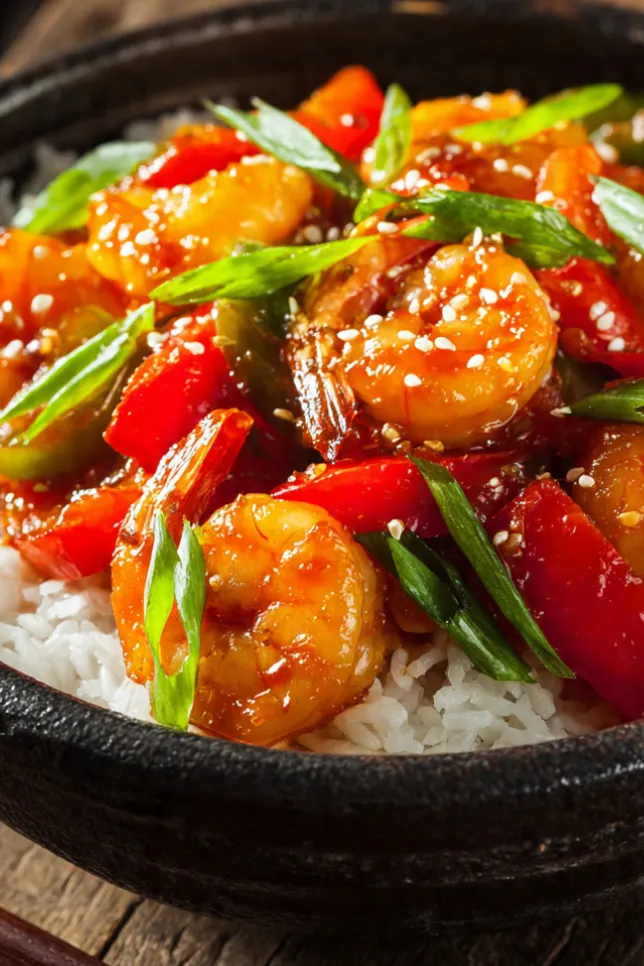
Pro Tips
After making this recipe probably 50 times, here’s what I’ve learned:
The Velveting Technique: That cornstarch coating on the shrimp isn’t just for show. It’s a Chinese cooking technique called velveting that keeps proteins incredibly tender. Don’t skip this step.
Temperature Control: If you have an electric stove like me, preheat your pan for longer (4-5 minutes). Electric burners take forever to heat up but hold their temperature well once hot. Gas stoves heat faster but cool down quicker when you add cold ingredients.
The Right Equipment: A proper wok makes a huge difference. I resisted buying one for years, thinking my regular skillets were fine. But once I got a good carbon steel wok, my stir-fries leveled up overnight. If you’re serious about Asian cooking, it’s worth the investment. That said, a heavy-bottomed cast iron skillet is my second choice and works great.
Sauce Consistency: If your sauce seems too thin after adding it, don’t panic. Keep cooking for another 20-30 seconds. If it’s too thick, add a splash of water or chicken stock. The cornstarch slurry is your insurance policy against watery sauce.
Batch Cooking: When I’m meal prepping for the week, I double this recipe and store everything in glass meal prep containers. The shrimp and vegetables stay good for 3-4 days in the fridge. Just reheat in a hot skillet rather than the microwave to avoid rubbery shrimp.
Frozen Shrimp Strategy: If you’re using frozen shrimp (and honestly, most “fresh” shrimp at the grocery store was previously frozen anyway), thaw them in cold water for 15 minutes. Never use hot water or the microwave. Your shrimp will thank you by staying tender.
FAQs
Can I use frozen shrimp for this recipe?
Yes. Just thaw them in cold water for 15 minutes and dry well before cooking.
How do I avoid rubbery shrimp?
Cook quickly over high heat and remove immediately once pink.
Can I make this less spicy?
Yes, reduce or skip the chili flakes.
What should I serve with it?
Rice or noodles work perfectly.
Can I store leftovers?
Yes, refrigerate for up to 4 days and reheat in a skillet.
Why You’ll Love This Recipe
First off, you’re saving serious money. A Panda Express shrimp order costs around $18 in my area and gives you maybe 8-10 shrimp. This recipe costs about $12-14 to make and feeds four people generously. That’s restaurant quality at home prices.
The flavor is intense but balanced. You get that sweet-savory thing happening with the soy and oyster sauce, a little tang from the rice vinegar, and just enough heat to keep things interesting. It’s one of those dishes where every bite makes you want another.
It’s also stupid fast once you get the hang of it. Total active cooking time is under 10 minutes. I’ve literally made this on weeknights when I got home late from work. As long as you have rice cooking in your rice cooker, dinner is done before you can decide what to watch on Netflix.
And here’s something I really appreciate: this recipe is flexible. Don’t like bell peppers? Use snap peas. Want more vegetables? Throw in some mushrooms or zucchini. Prefer it sweeter? Add honey. It’s forgiving in a way that a lot of Asian recipes aren’t.
What Makes This Recipe Unique
The velveting technique on the shrimp is what sets this apart from most home-cooked versions. That cornstarch coating creates this restaurant-quality texture that you just don’t get when you skip that step. It’s the difference between good shrimp and amazing shrimp.
I also use a higher ratio of vegetables to shrimp than Panda Express does. You’re getting actual nutrition here, not just a pile of protein drowning in sauce. The bell peppers add sweetness and crunch, while the green onions bring that fresh bite at the end.
The sauce itself is my tweaked version after testing about five different recipes. It’s less sweet than the restaurant version but more complex. The sesame oil adds depth, and the rice vinegar cuts through the richness in a way that keeps you coming back for more.
Key Features
- Quick Cooking: Ready in 25 minutes from start to finish
- Restaurant Quality: Tastes just like takeout (actually better)
- Budget Friendly: Costs less than half what you’d pay for delivery
- Meal Prep Ready: Stores well and reheats beautifully
- Customizable Heat Level: Adjust spice to your preference
- Protein-Packed: Each serving has about 24g of protein
- Gluten-Free Option: Use tamari instead of soy sauce
- Fresh Ingredients: No MSG or mystery ingredients
You’ll Also Love
If this recipe hit the spot, you’ll probably love my other Asian-inspired dishes:
- Orange Chicken Copycat – Another Panda Express favorite made healthier at home
- Kung Pao Chicken – Spicy, nutty, and absolutely addictive
- Beef and Broccoli – My kids request this weekly
- Fried Rice Three Ways – Because rice shouldn’t be boring
- General Tso’s Chicken – Crispy, sweet, spicy perfection
- Mongolian Beef – Tender beef in a sticky-sweet sauce
Conclusion
Look, I’m not going to pretend this is authentic Chinese cooking. It’s American Chinese food, which is its own beautiful thing. It’s what we crave when we want bold flavors, quick cooking, and that specific taste of Friday night takeout.
The beauty of this recipe is that once you master the basic technique, you can apply it to pretty much any protein and vegetable combination. I’ve made this with chicken, pork, tofu, and even scallops. The method stays the same.
Give yourself permission to mess it up the first time. I burned garlic, overcooked shrimp, and made watery sauce before I got it right. But now it’s one of my go-to weeknight dinners, and I make it at least twice a month. My kids have stopped asking for takeout because they know mom’s version is better (and they can have extra rice).
So grab that wok or skillet, turn your exhaust fan on high (trust me on this), and make some restaurant-quality shrimp at home. Your wallet and your taste buds will thank you.
Happy cooking, friends. And if you make this recipe, come back and let me know how it turned out. I love hearing about your cooking adventures, disasters and all.
Linda
Sizzling Shrimp Panda Express Copycat
Better than takeout. Quick, bold, and packed with flavor.
Ingredients
- 1 lb shrimp
- 2 tbsp cornstarch
- 3 tbsp soy sauce
- 2 tbsp oyster sauce
- 1 tbsp rice vinegar
- 1 tbsp sugar
- Garlic, ginger, peppers, green onions
Instructions
- Prep and coat shrimp
- Mix sauce
- Sear shrimp
- Cook vegetables
- Add sauce and thicken
- Serve hot