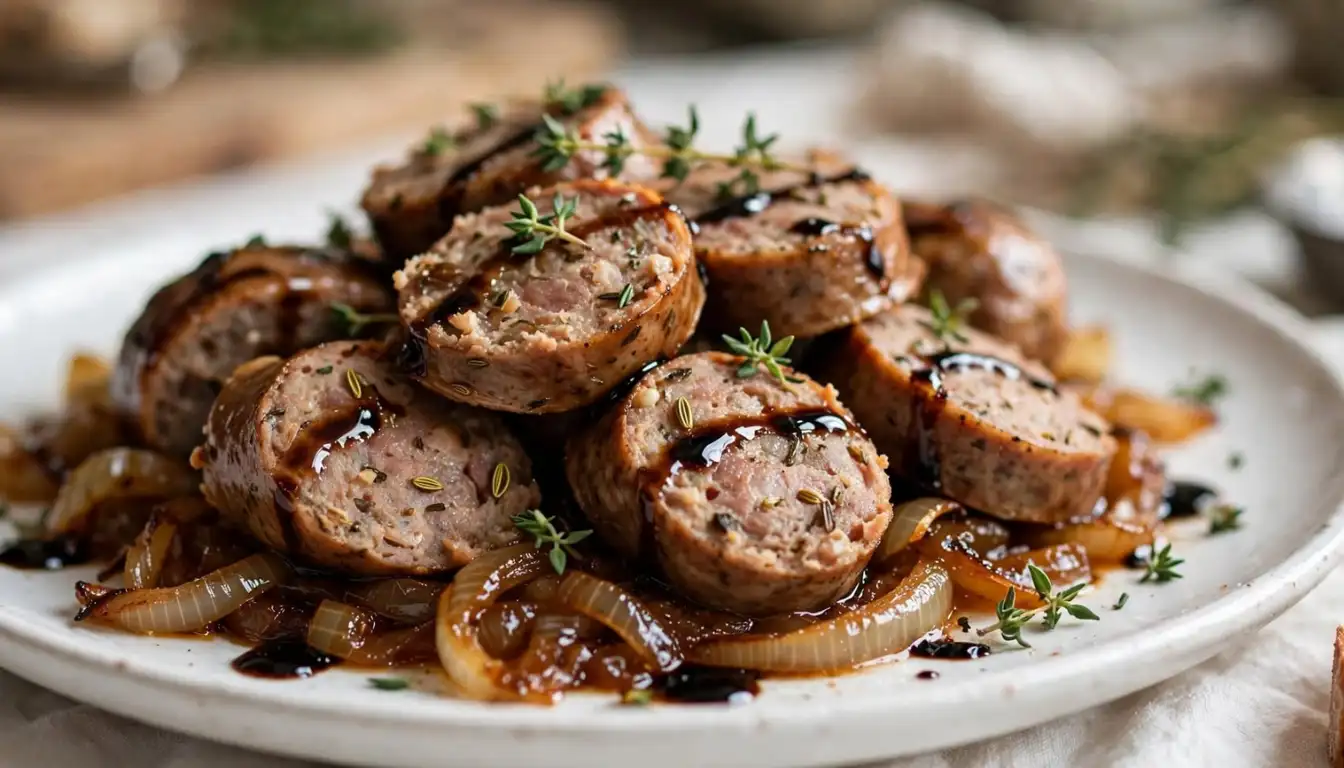
Sheet-Pan Sausage and Caramelized Onions (The Dinner I Make When I Don’t Want to Think)
I burned onions so badly the first time I tried this that my smoke detector introduced itself to my whole apartment building. That was maybe eight years ago, back when I thought “caramelized” just meant “brown and don’t stir too much.” Turns out patience is the actual secret ingredient, and I learned that the hard way, standing in a kitchen full of smoke while my downstairs neighbor knocked to ask if everything was okay.
These days, sheet-pan sausage and caramelized onions is one of those recipes I make when I’m tired, when the fridge looks sparse, or when I just need something that tastes like more effort than it actually takes. It’s become a regular in my dinner rotation, and honestly, it’s the recipe I recommend most to friends who say they “can’t cook.” You basically can’t mess this one up once you know the one trick that actually matters.
Why This One Works
Here’s the thing about sheet-pan dinners: most of them promise “easy” and then hand you a recipe with twelve ingredients and three different cooking times happening at once. This isn’t that. It’s sausage, onions, a sturdy sheet pan, and an oven that’s willing to do most of the work for you. The onions get sweet and jammy in the oven heat, the sausage renders its fat right into them, and by the time everything comes together you’ve got something that tastes like it simmered on the stove for an hour.
I use a good heavy-duty sheet pan for this, the kind that doesn’t warp the second it hits high heat (I’ve gone through a couple of the flimsy ones before finally investing in a USA Pan half-sheet, and it made a real difference in how evenly things browned). If you’ve got a rimmed baking sheet already, though, don’t run out and buy anything. Use what you have.
Essential Ingredients
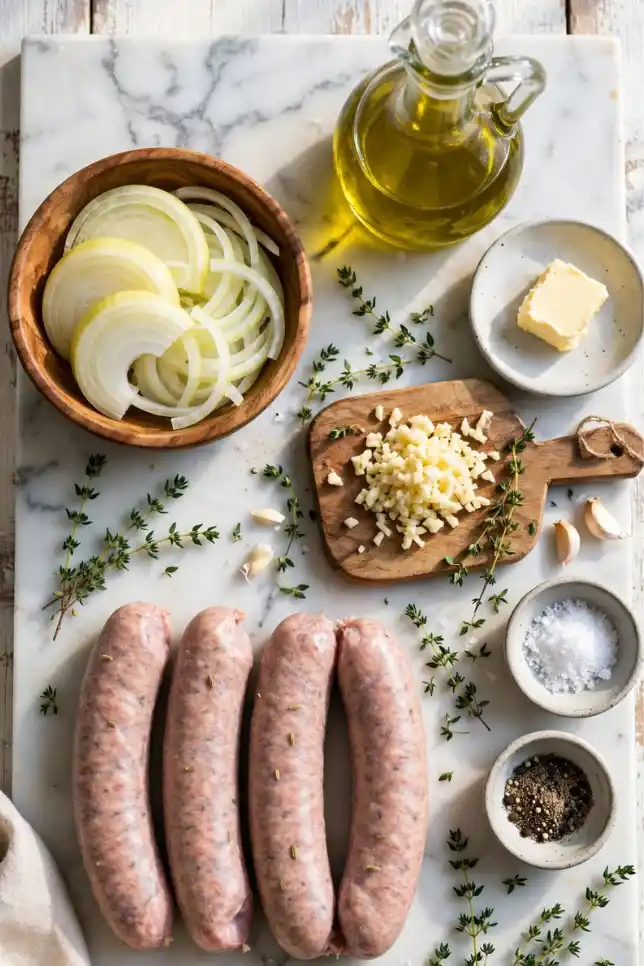
- 4 links Italian sausage (sweet or hot, your call)
- 3 large yellow onions, sliced into half-moons
- 3 tablespoons olive oil, divided
- 2 tablespoons unsalted butter
- 1 teaspoon sugar (helps the caramelization along, don’t skip it)
- 1 teaspoon dried thyme
- 2 cloves garlic, minced
- Salt and black pepper
- Splash of balsamic vinegar (optional but I almost never skip it)
Alternative Ingredients
Not big on Italian sausage? Chicken sausage, kielbasa, or bratwurst all work fine here, just adjust your roasting time depending on thickness (thinner sausages cook faster, obviously). Red onions give you a slightly sharper, sweeter result if that’s more your thing. No fresh thyme or dried thyme on hand? Rosemary works, or even just a good pinch of Italian seasoning from your spice rack. And if you’re avoiding butter, extra olive oil gets the job done, though you’ll lose a little of that richness.
Step-by-Step Directions
Step 1: Preheat your oven to 425°F. While it heats, slice your onions into even half-moons. This matters more than people think. Uneven slices mean some pieces burn while others are still raw, and I learned that lesson the annoying way more than once.
Step 2: Toss the onions with 2 tablespoons olive oil, the butter (melted), sugar, thyme, salt, and pepper directly on your sheet pan. Spread them out in as even a layer as you can manage. They’ll look like way too many onions. They’re not. They shrink down a lot.
Step 3: Roast the onions alone for 20 minutes first. I know it’s tempting to throw everything on at once, but sausage cooks faster than onions caramelize, and giving the onions a head start is honestly the whole trick to this recipe.
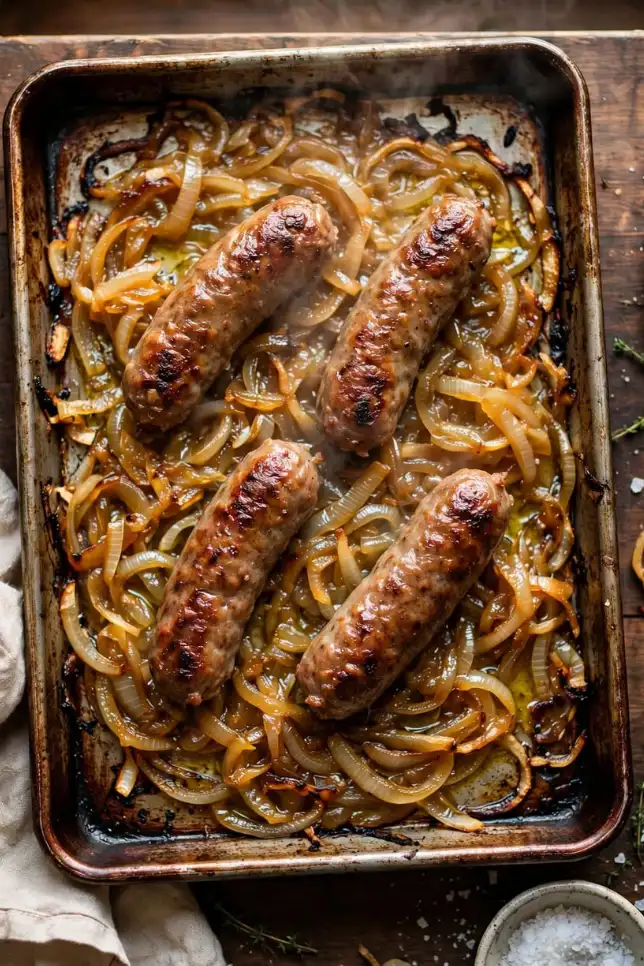
Step 4: Pull the pan out, give the onions a stir, and nestle the sausage links in among them. Drizzle the sausage with the remaining tablespoon of olive oil and scatter the garlic over everything.
Step 5: Return to the oven for another 20 to 25 minutes, flipping the sausages halfway through, until they’re browned and cooked through (internal temp should hit 160°F if you’re checking with a meat thermometer, which I’d honestly recommend owning if you don’t already).
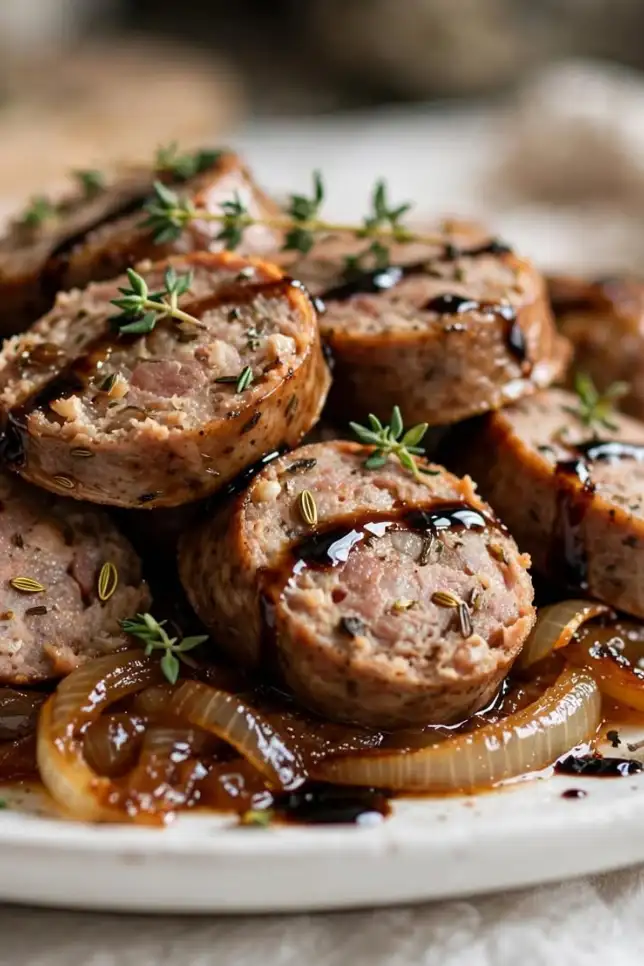
Step 6: Pull everything out, drizzle with balsamic vinegar if you’re using it, and let it rest for five minutes before serving. That resting time matters more than people give it credit for.
Pro Tips
Don’t crowd the pan. I mean it. If your onions and sausage are piled on top of each other, you’ll get steam instead of caramelization, and steamed onions are just sad, pale onions. Use two sheet pans if you need to. Also, if you notice the onions starting to look dry or catch before they’re done, a small splash of water or chicken broth on the pan will save you (this saved my dinner more than once). Lastly, resist the urge to stir constantly. Let those onions sit and actually brown between stirs.
FAQs
Can I make this ahead of time? Yes, and honestly it reheats beautifully. Store leftovers in meal prep containers in the fridge for up to four days.
Can I do this in an air fryer instead? You can, though you’ll need to work in batches since most air fryer baskets are smaller than a sheet pan. Roast the onions first for about 10 minutes, then add sausage for another 12 to 15.
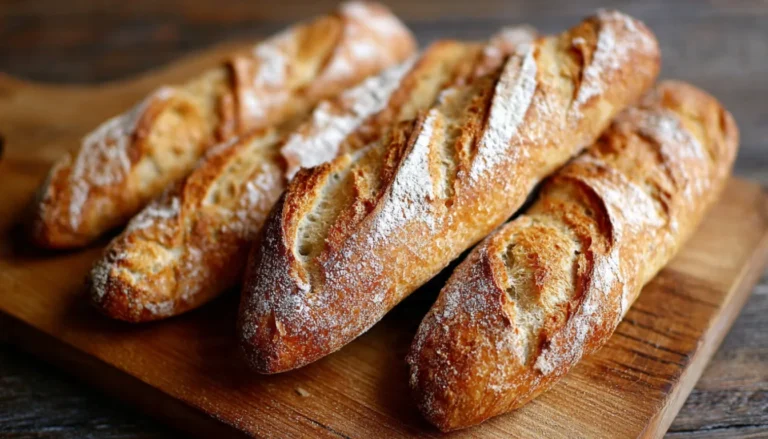
What should I serve this with? Crusty bread, mashed potatoes, or over polenta all work great. I’ve also served it over rice when I wanted something a little lighter.
My onions came out bitter, what went wrong? Usually means the heat was too high for too long without enough moisture. Lower the temp slightly next time and don’t be afraid to add a splash of water if things look dry.
Recipe Info Table
| Detail | Info |
|---|---|
| Prep Time | 15 minutes |
| Cook Time | 45 minutes |
| Total Time | 1 hour |
| Servings | 4 |
| Yield | 4 sausage links + roasted onions |
Why You’ll Love This Recipe
It’s genuinely a one-pan cleanup situation, which after a long day feels like a small miracle. The flavor punches way above the effort it takes, and it’s flexible enough to work with whatever sausage or seasonings you’ve got in the fridge already. It’s also budget-friendly, since onions and sausage are two of the cheaper items in most grocery stores.
What Makes This Recipe Unique
Most sheet-pan sausage recipes throw everything on the pan at the same time, which means you either get undercooked onions or overcooked sausage. Giving the onions that head start is what separates this version from the rest, and it’s the detail most recipes skip entirely.
Key Features
One pan, minimal dishes, budget ingredients, freezer-friendly leftovers, and a cooking method that actually teaches you something about caramelization you can use in other dishes down the road.
Nutrition Facts Table (Per Serving, Approximate)
| Nutrient | Amount |
|---|---|
| Calories | 410 |
| Protein | 19g |
| Fat | 30g |
| Carbohydrates | 14g |
| Fiber | 2g |
| Sodium | 720mg |
Your numbers will vary depending on the sausage brand and how much oil you use, so treat this as a rough guide rather than gospel.
You’ll Also Love
If this one worked for you, you might like my creamy sausage rigatoni for a pasta night version of the same sausage flavors, or my kielbasa sausage and cheesy potato casserole for something heartier on a cold night. And if sheet-pan dinners have become your thing (they became mine fast), check out my steak, shrimp, corn, and broccoli sheet-pan dinner too.
For more on getting caramelization right every time, The Kitchn’s deep dive into caramelizing onions tests several methods side by side. America’s Test Kitchen also has a solid sheet-pan sausage and vegetable recipe worth bookmarking, and Food Network’s sheet-pan sausage and hash brown recipe is a good one for breakfast-for-dinner nights.
Honestly, this recipe taught me more patience in the kitchen than almost anything else I’ve made, mostly because it punished me the one time I tried to rush it. Give the onions their time. Everything else falls into place after that. Let me know if you try it, and if you’ve got a favorite sausage brand for this, I’d genuinely love to hear it.