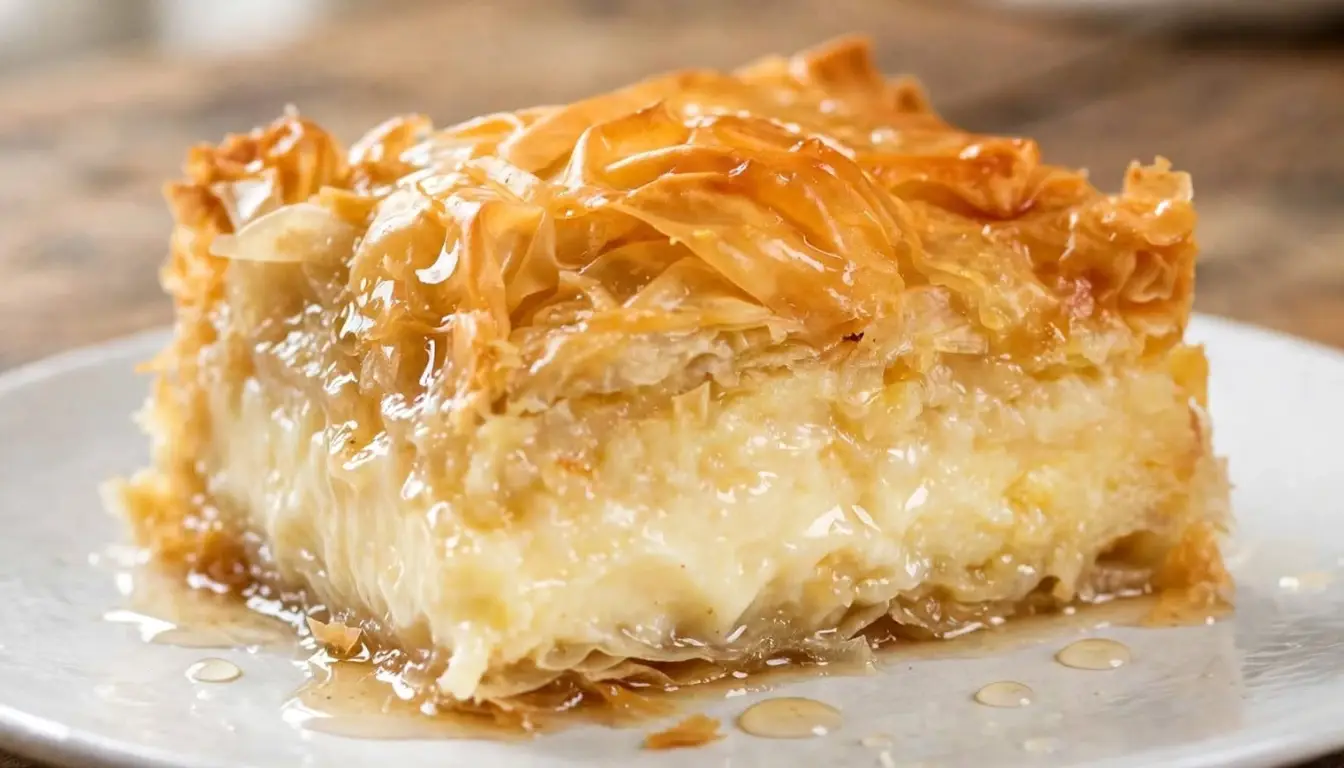
Classic Greek Galaktoboureko: A Custard Pie Worth Every Layer
Galaktoboureko is one of those Greek desserts that looks intimidating on Pinterest and turns out to be far simpler once you actually stand in front of the pan. I have been making this custard pie for over ten years, and it remains one of the most requested desserts whenever family comes over for dinner. The name literally translates to “milk pie,” and that is exactly what you get: a silky semolina custard tucked between crisp, buttery layers of phyllo dough, then soaked in a lemon-cinnamon syrup while it is still warm.
If you have made baklava before, this recipe will feel familiar. The phyllo technique is nearly identical, but instead of a nut filling, you are working with a creamy custard that needs a gentle hand. Get the syrup timing right, and this dessert holds together like a dream. Rush it, and you end up with a soggy bottom layer. I will walk you through exactly how to avoid that mistake, because I made it myself the first few times I tried this recipe.
Recipe Info
| Detail | Time/Amount |
|---|---|
| Prep Time | 30 minutes |
| Cook Time | 1 hour |
| Total Time | 1 hour 30 minutes (plus 2 hours cooling) |
| Servings | 12 pieces |
| Yield | One 9×13-inch pan |
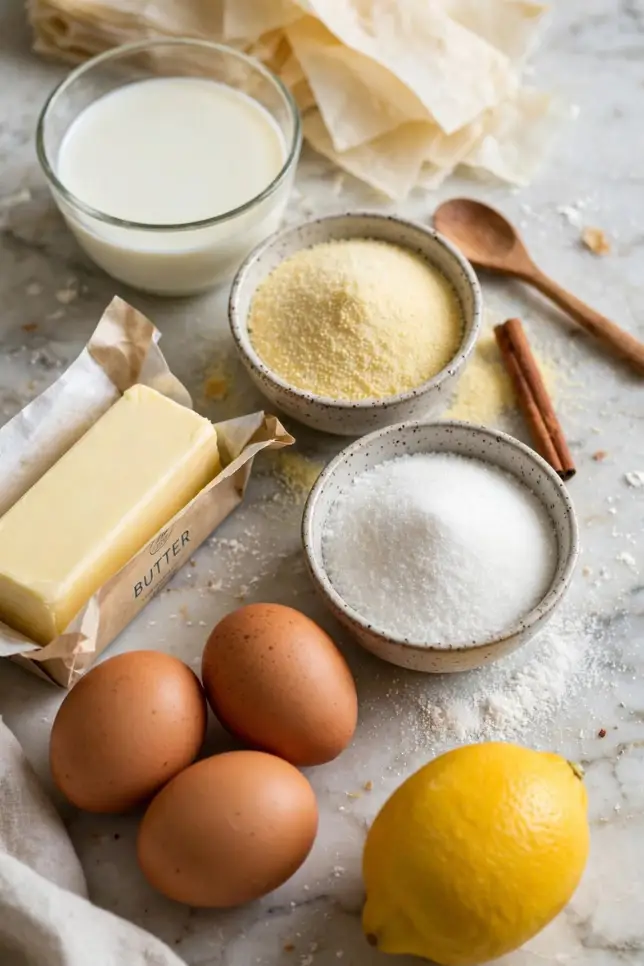
Essential Ingredients
For the custard:
- 8 cups whole milk
- 1 cup granulated sugar
- 1 1/4 cups fine semolina flour
- 6 large eggs
- 1 tablespoon vanilla extract
- 1 strip lemon peel
- 4 tablespoons unsalted butter
For the pastry:
- 1 pound phyllo dough (thawed overnight in the fridge)
- 1 cup unsalted butter, melted (for brushing layers)
For the syrup:
- 2 cups granulated sugar
- 2 cups water
- 1 cinnamon stick
- 1 strip lemon peel
- 2 tablespoons honey
- 1 tablespoon lemon juice
A good stand mixer makes whisking the eggs into the hot custard base much easier, since you need steady, constant motion so the eggs don’t scramble. If you don’t own one, a hand mixer works fine too. For the baking dish, I always reach for a heavy ceramic or glass 9×13 pan rather than a thin metal one, since it distributes heat more evenly and helps prevent the bottom layers from browning too fast.
Alternative Ingredients
If semolina is hard to find, fine cornmeal or cream of rice can work in a pinch, though the texture will be slightly less silky. Whole milk gives the richest custard, but a mix of 2% milk and a splash of heavy cream is a reasonable substitute if that’s what you have on hand. No fresh lemon peel? Bottled lemon juice with a bit of zest from a regular lemon will still get you most of the way there. For the syrup, some cooks swap honey for extra sugar entirely, but I think the honey adds a floral depth that plain sugar syrup doesn’t quite match.
Step-by-Step Directions
- Make the custard base. In a large saucepan, combine the milk, half the sugar, and the lemon peel. Heat over medium until it just starts to steam, stirring occasionally.
- Whisk the eggs. In a separate bowl, beat the eggs with the remaining sugar and semolina until pale and slightly thickened.
- Combine slowly. Remove the lemon peel from the milk. Slowly pour a ladle of hot milk into the egg mixture while whisking constantly, then pour everything back into the saucepan. This tempering step prevents scrambled eggs.
- Cook until thick. Return the pan to medium-low heat and stir constantly until the custard thickens into a pudding-like consistency, about 8 to 10 minutes. Stir in the butter and vanilla, then remove from heat and let cool slightly.
- Prep the pan. Preheat the oven to 350°F. Brush your baking dish generously with melted butter.
- Layer the bottom phyllo. Lay half the phyllo sheets into the dish, brushing each sheet with butter before adding the next. Let the edges hang over the sides for now.
- Add the custard. Pour the cooled custard evenly over the phyllo layers.
- Layer the top phyllo. Cover with the remaining phyllo sheets, buttering each one. Fold the overhanging edges inward and tuck them neatly.
- Score before baking. Use a sharp knife to score the top layers into diamond or square shapes, cutting only through the top few sheets.
- Bake. Bake for 45 to 55 minutes, until the top is deep golden brown.
- Make the syrup while it bakes. Combine sugar, water, cinnamon stick, and lemon peel in a saucepan. Bring to a boil, then simmer for 10 minutes. Stir in honey and lemon juice, then set aside to cool.
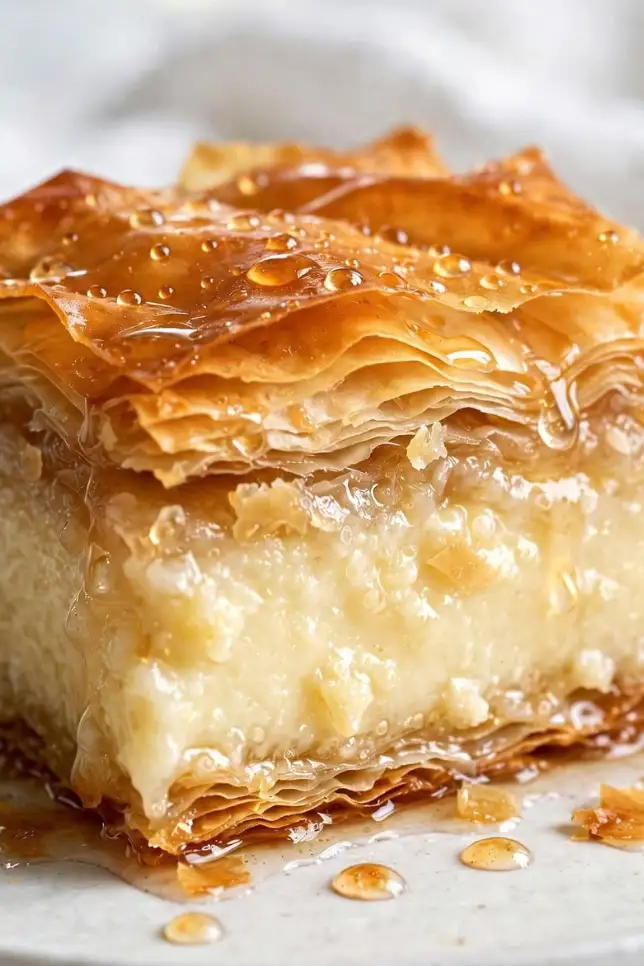
- Pour the cold syrup over the hot pie. This step matters more than any other in the recipe. Pour the cooled syrup slowly over the hot galaktoboureko right out of the oven, letting it soak into the scored lines.
- Cool completely. Let the pie rest for at least 2 hours before cutting along your scored lines. This dessert needs patience; cutting it warm will cause the custard to spill out.
Pro Tips
The temperature contrast between hot pastry and cold syrup is the entire trick to a crisp, non-soggy galaktoboureko. If both are hot or both are cold, the phyllo won’t absorb the syrup correctly and you’ll either get a dry pie or a mushy one. Keep your phyllo covered with a damp towel while you work, since it dries out and cracks within minutes of being exposed to air. I also recommend baking on the lower oven rack for the first 30 minutes so the bottom layers cook through before the top browns too quickly. For the best texture, use full-fat whole milk. This is not the recipe to save calories on, and low-fat milk tends to produce a thinner, less luxurious custard.
Why You’ll Love This Recipe
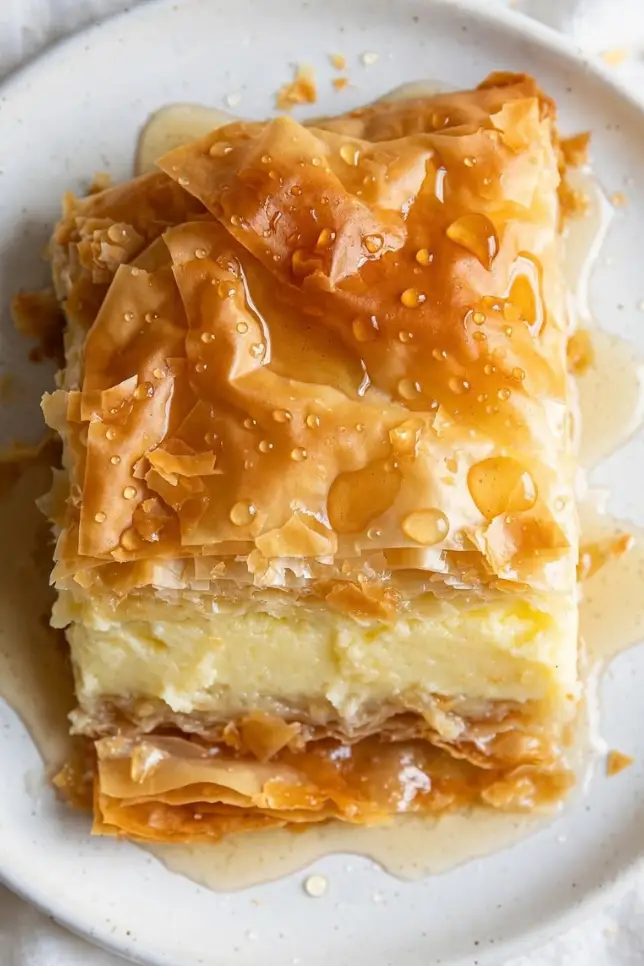
This dessert delivers restaurant-quality results without requiring any specialty equipment beyond a good baking dish and a reliable food processor or stand mixer for the custard step. It also keeps beautifully for a few days in the refrigerator, which makes it a smart make-ahead option for holidays or dinner parties. The combination of crisp pastry, silky custard, and citrus syrup is unlike most Western desserts, so it tends to impress guests who haven’t tried Greek sweets before.
What Makes This Recipe Unique
Unlike baklava, which relies on nuts and pure sweetness, galaktoboureko balances richness with brightness from lemon and cinnamon. The semolina custard sets into a texture somewhere between pudding and cheesecake, which is genuinely hard to replicate with other thickeners. According to the Wikipedia entry on Galaktoboureko, the dessert has roots tracing back to the Byzantine Empire and remains popular across Greece and the Black Sea region of Turkey today, which speaks to how well this combination of flavors has held up over centuries.
Key Features
- Crisp, buttery phyllo layers on top and bottom
- Silky semolina custard center
- Citrus and cinnamon-infused syrup
- Make-ahead friendly, keeps 2 to 3 days refrigerated
- No specialty pans required, just a standard 9×13 baking dish
FAQs
Can I make this dessert a day ahead?
Yes, and honestly it tastes even better the next day once the flavors settle. Keep it covered at room temperature or in the fridge.
Why did my custard turn out lumpy?
This usually happens when the eggs are added too quickly to hot milk. Go slow with the tempering step and whisk constantly.
Can I freeze galaktoboureko?
It’s not ideal. The custard layer doesn’t freeze and thaw well, and the texture suffers. It’s best enjoyed fresh within a few days.
What if my phyllo tears while I’m working with it?
Don’t worry about small tears in the middle layers since they won’t be visible once assembled. Save your least damaged sheets for the very top layer.
For more guidance on handling delicate phyllo sheets without tearing them, The Kitchn’s guide to making baklava covers several helpful techniques that apply directly to this recipe. Food Network also has a classic galaktoboureko recipe worth comparing if you want to see a slightly different syrup approach using bourbon and cardamom.
Nutrition Facts (per serving)
| Nutrient | Amount |
|---|---|
| Calories | 285 |
| Total Fat | 12g |
| Saturated Fat | 7g |
| Carbohydrates | 39g |
| Sugar | 27g |
| Protein | 6g |
| Sodium | 95mg |
Values are estimates and will vary based on exact ingredients and brands used.
You’ll Also Love
If you enjoyed the citrus and buttery notes in this recipe, you might like our Greek Lemon Potatoes for a savory side with the same bright lemon profile, or our Greek Chicken Recipe if you want to build a full Greek-inspired dinner around this dessert. For another phyllo-based treat, our Flourless Apple and Almond Tart offers a different take on fruit-forward baking that pairs nicely if you’re planning a dessert table.
Conclusion
Galaktoboureko takes a bit of patience, but nothing about it is genuinely difficult once you understand the rhythm: build the custard slowly, layer the phyllo with care, and always pour cold syrup over a hot pie. Once you’ve made it once, you’ll find yourself reaching for this recipe whenever you want to bring something a little different to the table. Give it a try this weekend, and let the syrup do its work while you wait.