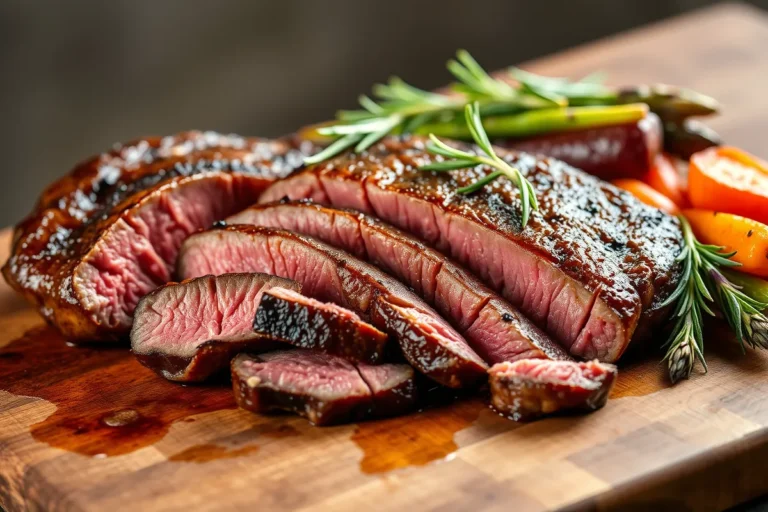
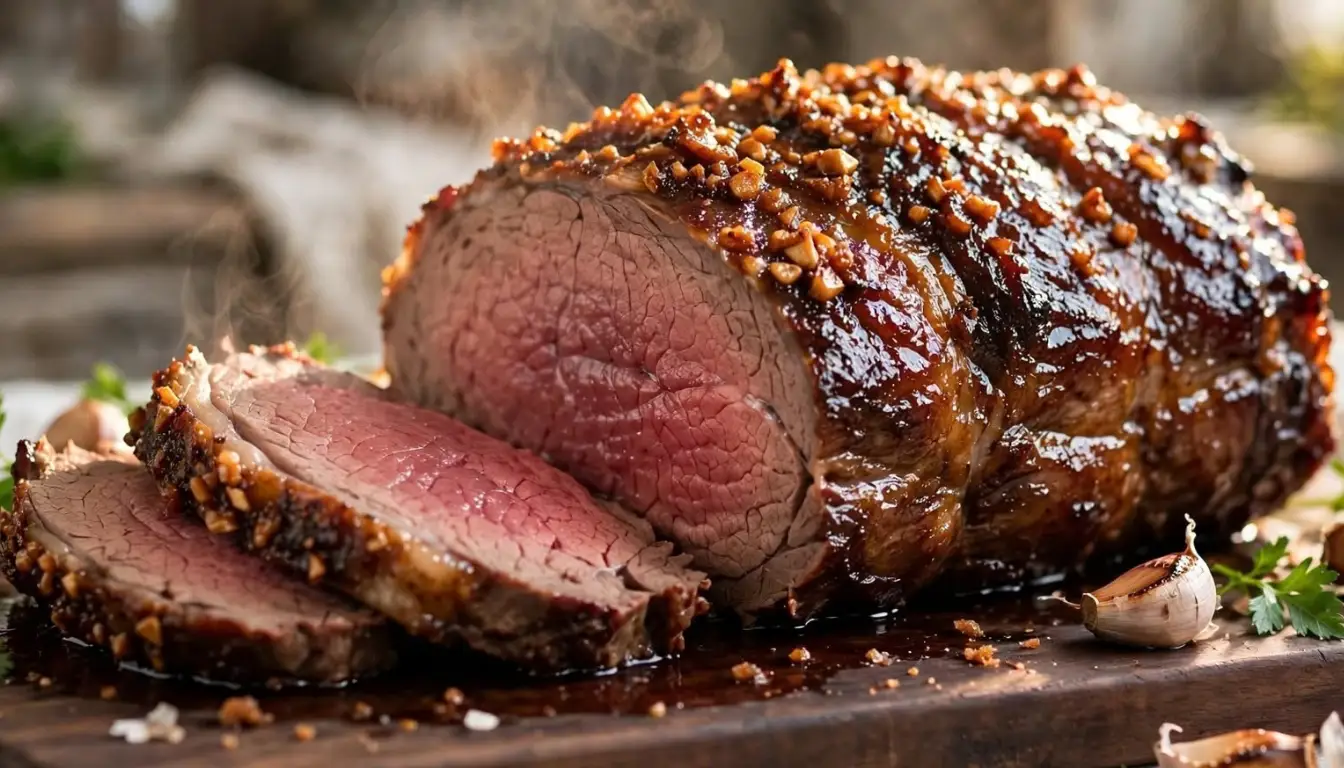
Garlic Brown Sugar Glazed Roast Beef
Introduction
I’ve been roasting beef for family Sundays for more than ten years now, and this garlic brown sugar glaze is the one my husband asks for by name. It started as an accident, honestly. I was out of my usual herb rub one Christmas and grabbed brown sugar and garlic instead of stressing over it. The crust that formed on that roast was so good I never went back to the old way.
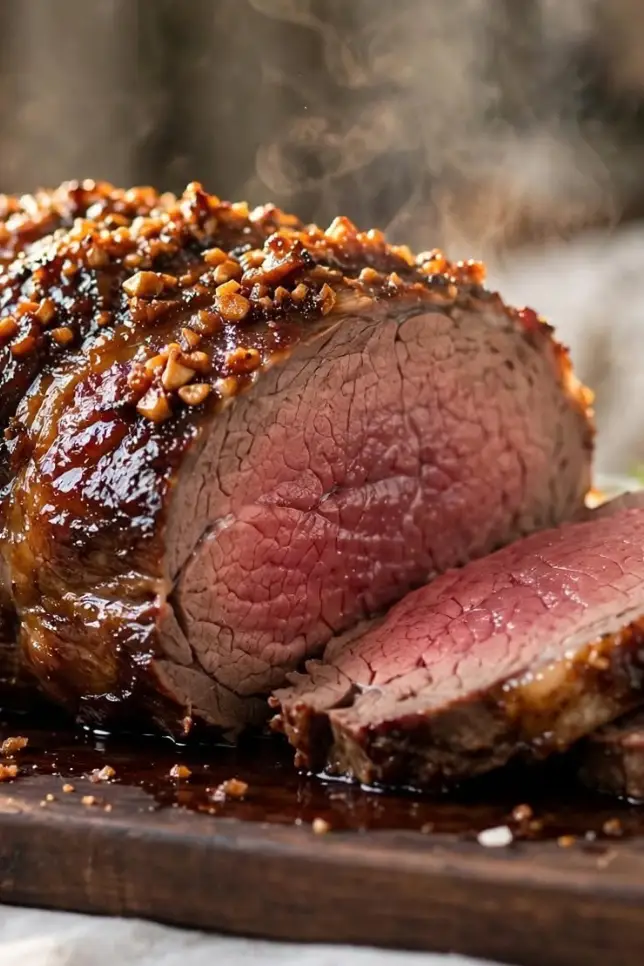
What makes this recipe work is the balance. Brown sugar caramelizes against the hot surface of the beef and forms a sticky, almost candy-like crust, while the garlic keeps things savory instead of dessert-sweet. It’s a simple pantry combination, but the result tastes like something you’d order at a steakhouse. If you’ve been searching for a roast beef recipe that doesn’t require fancy equipment or a culinary degree, this is it.
Essential Ingredients
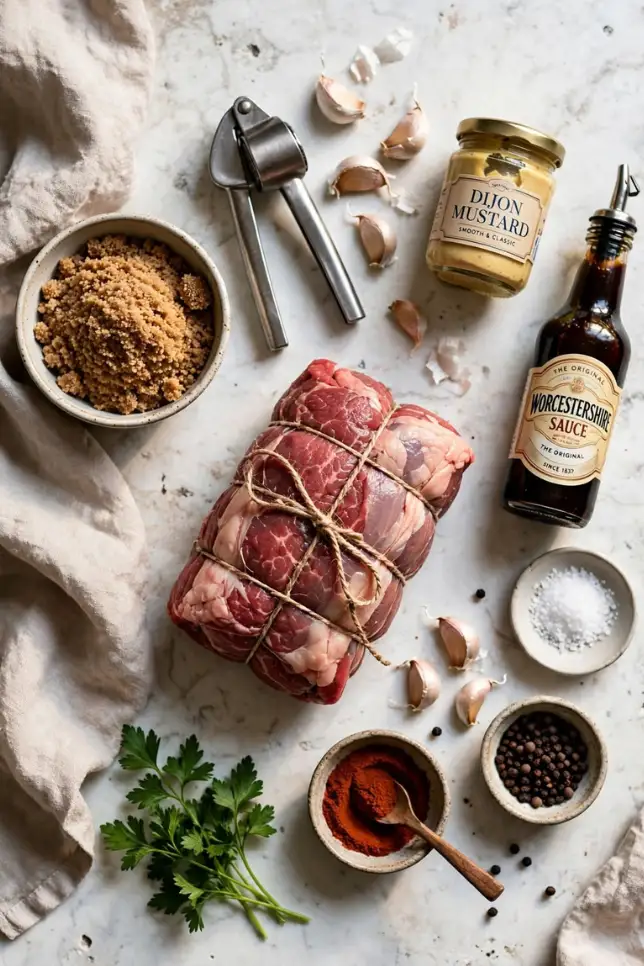
- 3 to 4 pound beef roast (top round, eye of round, or a chuck roast all work)
- 6 garlic cloves, minced
- 1/2 cup packed brown sugar (light or dark)
- 2 tablespoons olive oil
- 1 tablespoon Dijon mustard
- 1 tablespoon Worcestershire sauce
- 1 teaspoon kosher salt
- 1/2 teaspoon black pepper
- 1/2 teaspoon smoked paprika
- 1/4 cup beef broth
- Fresh parsley for garnish
Alternative Ingredients
If you don’t have Dijon on hand, plain yellow mustard works in a pinch, though it changes the flavor slightly. Honey can replace brown sugar for a lighter glaze, and it browns a bit faster, so keep an eye on it. For the cut of beef, a sirloin tip roast or a boneless rib roast will both take this glaze beautifully if your budget allows for something a little more marbled. And if you’re avoiding gluten, double check your Worcestershire sauce label, since some brands use barley.
Step-by-Step Directions
Start by pulling your roast out of the fridge about 45 minutes before cooking. Cold meat straight into a hot oven cooks unevenly, and I learned that lesson the hard way more than once early on.
Preheat your oven to 325°F. While it heats, mix the minced garlic, brown sugar, olive oil, Dijon, Worcestershire, salt, pepper, and smoked paprika into a thick paste.
Pat the roast dry with paper towels (this matters more than people think, since a wet surface won’t sear properly). Rub the paste generously over every side of the beef, pressing it in so it sticks.
Heat a heavy roasting pan or a cast iron skillet over medium-high heat with a splash of oil. Sear the roast for about 2 to 3 minutes per side until you get some color. This step builds flavor you simply can’t skip.
Pour the beef broth into the bottom of the pan, then transfer the whole thing to the oven. Roast until a meat thermometer inserted into the thickest part reads about 135°F for medium-rare, which usually takes 20 minutes per pound. Home cooks who don’t own one yet should grab an instant-read meat thermometer, since eyeballing doneness on a big cut like this is a gamble.
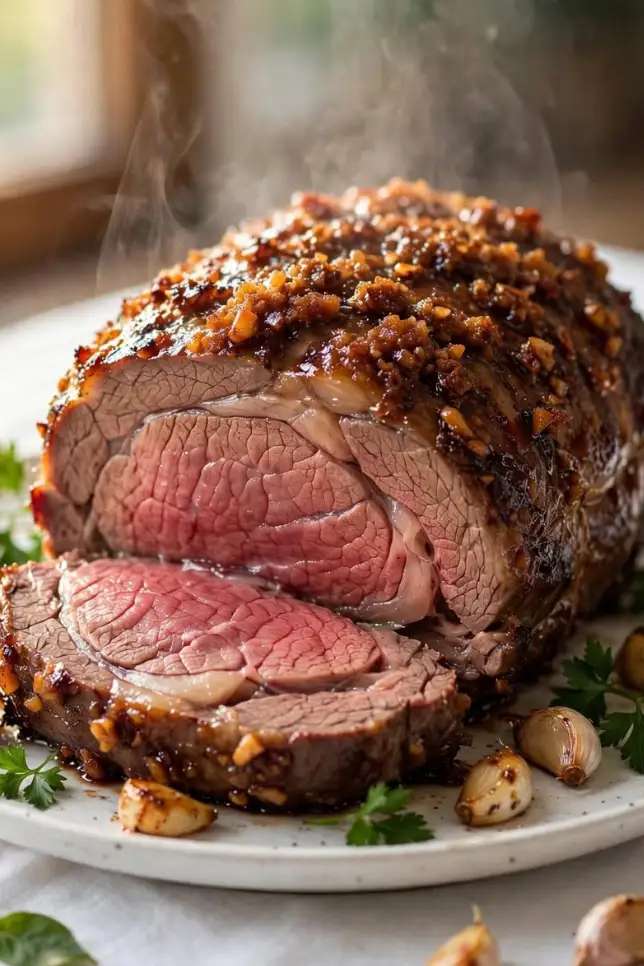
Once it hits temperature, pull the roast out, tent it loosely with foil, and let it rest for 15 to 20 minutes. This is the step everyone wants to skip, but resting is what keeps those juices inside the meat instead of all over your cutting board.
Slice thin against the grain and spoon the pan juices over the top before serving.
Pro Tips
Don’t crowd the pan when you’re searing. If your roasting pan is too small, the beef will steam instead of brown, and you’ll lose that crust you worked for. I also recommend salting the roast the night before if you have time. It draws out moisture at first, then reabsorbs it along with the salt, and the meat ends up seasoned all the way through instead of just on the surface.
If you’re using a slow cooker version of this recipe, sear the meat first on the stovetop, then transfer everything to the crockpot with the broth and cook on low for 6 to 8 hours. It’s not quite the same crust, but it’s a great hands-off option for a busy weeknight.
For the timing and safety side of things, the USDA’s safe minimum internal temperature chart is worth bookmarking, especially if you’re new to cooking large roasts. And if you want to see how a similar sweet-savory crust works on pork, RecipeTin Eats’ brown sugar garlic butter roast pork is a great reference for technique, even though the cut of meat is different. I also like comparing notes with Food Network’s garlic roast beef recipe, which uses a similar honey-mustard base.
FAQs
Can I make this in an Instant Pot?
Yes, though you’ll lose the caramelized crust. Sear on the sauté setting first, then pressure cook with the broth for about 15 minutes per pound, followed by a natural release.
What’s the best cut for this recipe?
Top round and eye of round are budget-friendly and slice beautifully. If you want something more tender, a boneless rib roast is worth the splurge for special occasions.
How do I store leftovers?
Keep sliced beef in an airtight container in the fridge for up to four days. It also freezes well for up to three months.
Why did my glaze burn?
Your oven is probably running hotter than 325°F, or the sugar content was too high relative to the liquid. A kitchen thermometer for your oven can help you catch this before it becomes a habit.
Recipe Info Table
| Detail | Time/Amount |
|---|---|
| Prep Time | 15 minutes |
| Cook Time | 1 hour 20 minutes |
| Resting Time | 15-20 minutes |
| Total Time | Approximately 1 hour 55 minutes |
| Servings | 6 |
| Yield | 1 (3-4 pound) roast |
Why You’ll Love This Recipe
This roast delivers restaurant-quality results without a long ingredient list or complicated technique. The glaze does most of the heavy lifting, turning an ordinary weeknight cut of beef into something that looks and tastes like it belongs on a holiday table. It’s also forgiving. Even if your timing is a little off, the sugar and garlic crust masks small imperfections better than a plain roast would.
What Makes This Recipe Unique
Most roast beef recipes lean either sweet or savory, rarely both at once. This one balances brown sugar against Dijon mustard and Worcestershire sauce, so the glaze caramelizes without tasting like dessert. It’s also flexible enough to work in an oven, a slow cooker, or a pressure cooker depending on your schedule that day.
Key Features
- Budget-friendly cuts work just as well as pricier ones
- One glaze doubles as a marinade and a basting sauce
- Naturally gluten-free when you check your Worcestershire label
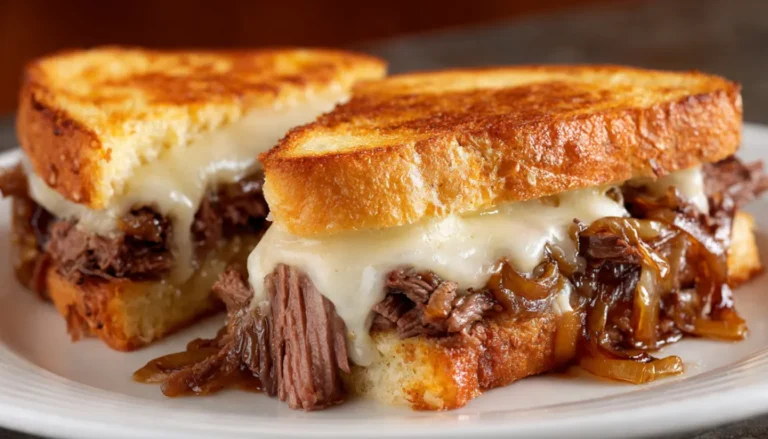
- Leftovers make excellent sandwiches the next day
Nutrition Facts Table
| Nutrient | Amount Per Serving |
|---|---|
| Calories | 340 |
| Protein | 36g |
| Fat | 14g |
| Carbohydrates | 12g |
| Sugar | 10g |
| Sodium | 480mg |
Values are estimates and will vary based on the cut of beef used.
You’ll Also Love
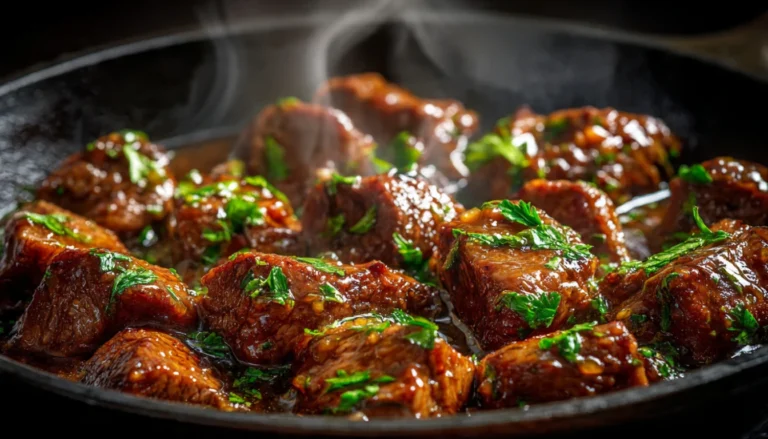
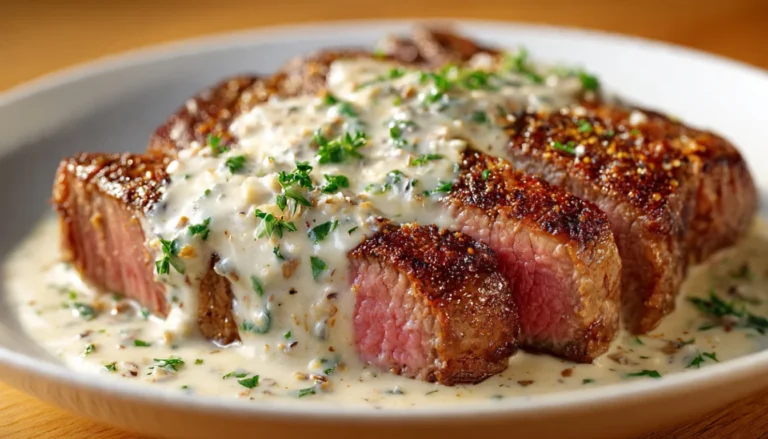
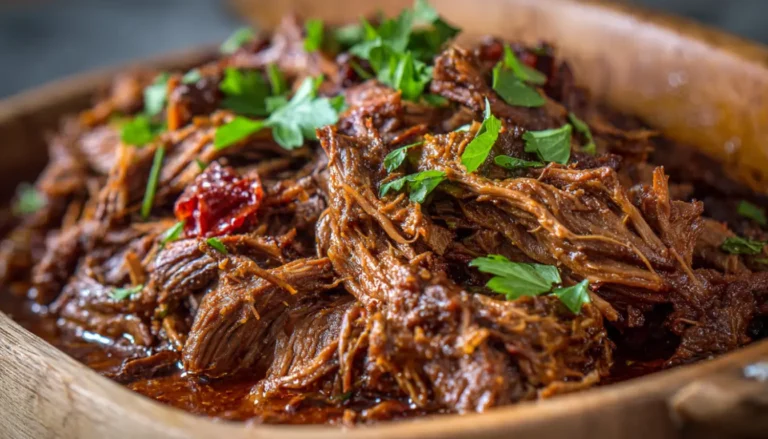
If this glaze worked for you, you’ll probably enjoy my Prime Rib Roast for your next special occasion dinner. For something faster on a weeknight, my Creamy Garlic Butter Steak Bites use a lot of the same garlic-forward flavor in a fraction of the time. And if you’re a fan of low, slow cooking, my Slow Cooker Texas Smoked Beef Brisket is another crowd favorite from my kitchen.
Conclusion
This is one of those recipes that quietly became a family staple without me planning it that way. The glaze is simple enough for a Tuesday and impressive enough for guests, and once you’ve got the searing and resting steps down, you’ll be able to riff on it with whatever cut of beef is on sale that week. Give it a try this weekend, and let me know in the comments how your crust turned out.