Soft and Moist Yogurt Cake: The Easiest Cake You’ll Ever Bake
I remember the first time I made a yogurt cake. It was a Sunday afternoon, I had no butter, no heavy cream, and honestly no real plan. What I did have was a big tub of plain Greek yogurt in the fridge and a serious craving for something sweet. I figured I had nothing to lose. What came out of that oven was so tender, so perfectly moist, that my family thought I had secretly ordered from a bakery. Ten years later, this yogurt cake is still the recipe I turn to when I want something reliable, simple, and honestly just really, really good.
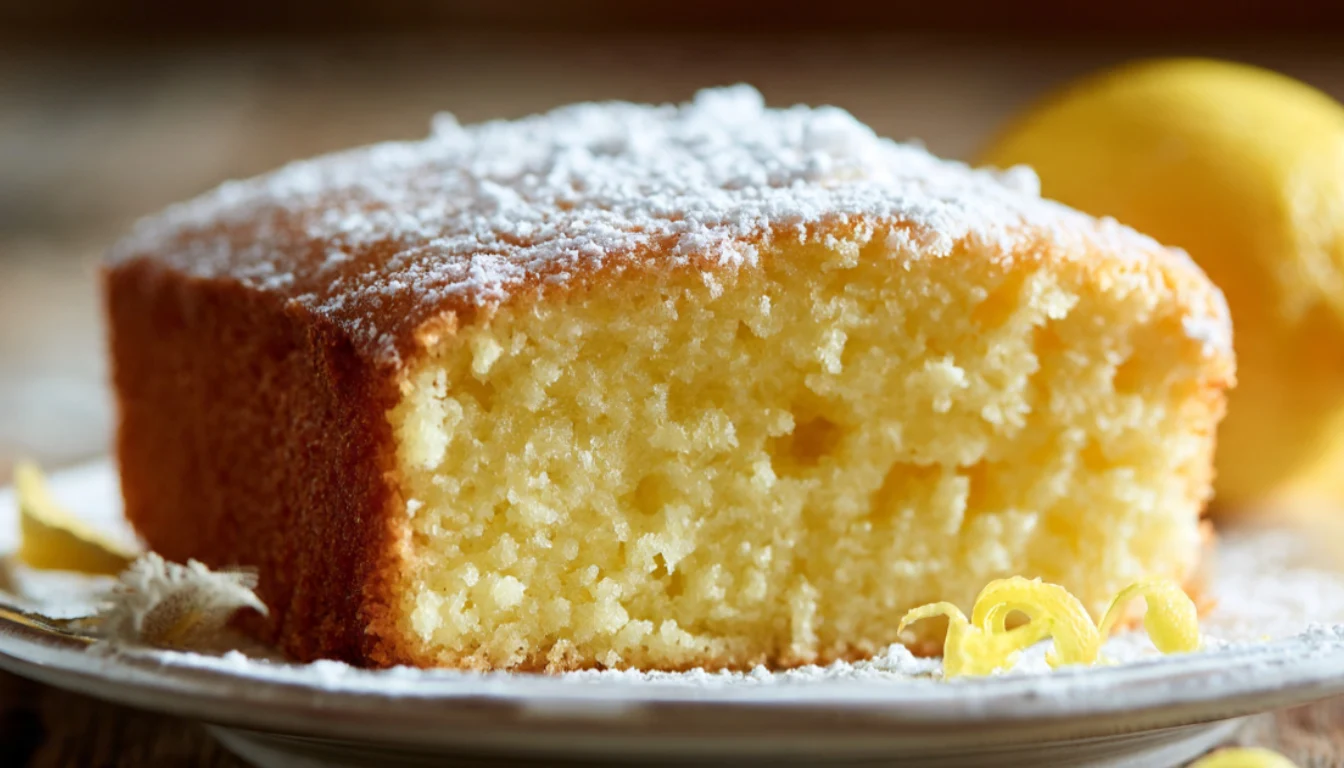
The thing people don’t expect is how much yogurt changes the texture of a cake. It makes the crumb incredibly soft, almost like a pound cake but lighter. It keeps the cake moist for days without any special storage tricks. And it adds this gentle tang that balances the sweetness in a way that feels almost sophisticated without any extra effort on your part.
If you’ve been searching for a healthy cake recipe that doesn’t taste like a compromise, this is it.
Why You’ll Love This Recipe
This yogurt cake works because it’s forgiving. You don’t need a stand mixer, you don’t need any special skills, and you can’t really overbake it into dryness. The yogurt fat and protein keep it moist even if you leave it in the oven five minutes too long (which, let’s be honest, happens to all of us). It’s also naturally lower in saturated fat than most cakes because you’re replacing butter with yogurt, which makes it a great option if you’re trying to eat a little cleaner without giving up dessert entirely.
It’s also a high protein cake by cake standards, especially if you use full-fat Greek yogurt. Each slice carries a decent protein punch from the yogurt and eggs together. Not a protein shake, obviously, but for a cake it’s genuinely not bad.
And it stores beautifully. Wrap it in plastic wrap or keep it in an airtight meal prep container and it stays moist and delicious for up to four days at room temperature. That’s rare for a homemade cake.
What Makes This Recipe Unique
Most cake recipes rely on butter or oil as the primary fat source. This one uses yogurt as the base, which means you get moisture, structure, and a subtle tang all in one ingredient. The result is a cake with a slightly denser crumb than a traditional sponge but far more flavor. It’s closer to what the French call a gateau au yaourt, a classic weekday cake that home bakers there have been making for generations.
The ratio I use here has been tested dozens of times. It gives you a cake that’s moist without being gummy, tender without falling apart, and sweet without being cloying.
Key Features
- Ready in under 45 minutes from start to finish
- No electric mixer needed (just a bowl and a whisk)
- Uses simple pantry staples
- Stays moist for 3 to 4 days
- Easily adaptable to gluten-free flour blends
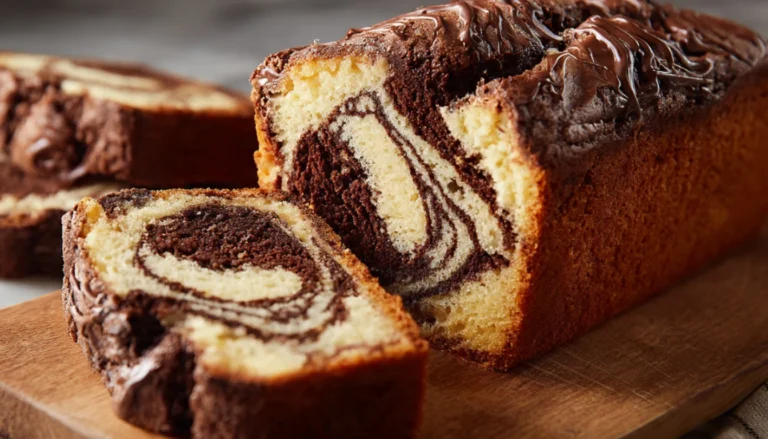
- Works as a base for lemon yogurt cake, blueberry yogurt cake, or chocolate yogurt cake
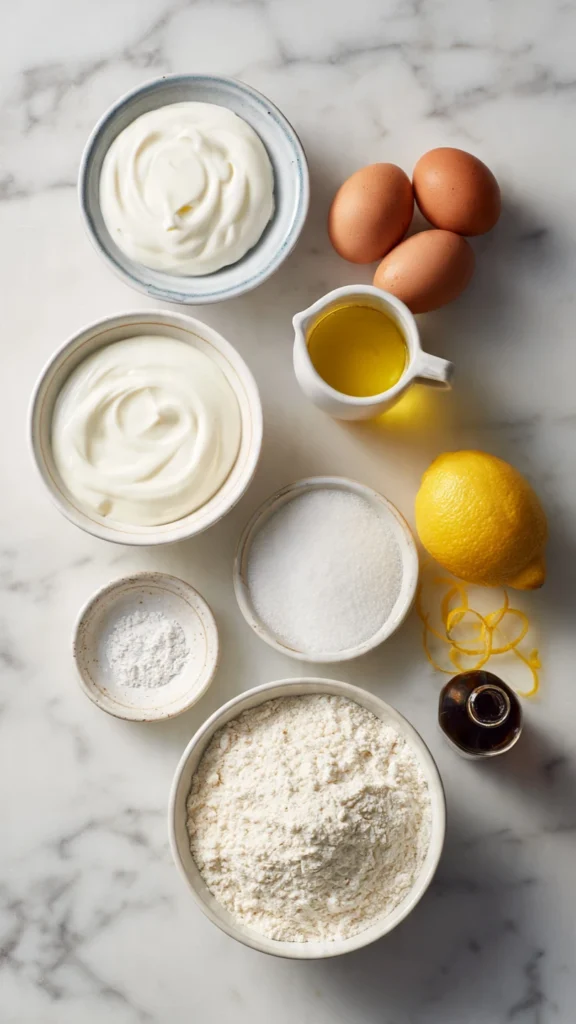
Essential Ingredients
- 1 cup plain full-fat Greek yogurt (or whole milk yogurt)
- 3/4 cup granulated sugar
- 3 large eggs
- 1/2 cup neutral oil (vegetable, sunflower, or light olive oil)
- 1 teaspoon pure vanilla extract
- 1 and 1/2 cups all-purpose flour
- 2 teaspoons baking powder
- 1/4 teaspoon salt
- Zest of 1 lemon (optional but highly recommended)
Alternative Ingredients
Here’s the thing, you can customize this cake pretty freely without wrecking it. That’s one of the reasons I love it.
For the yogurt: Plain whole milk yogurt works just as well as Greek yogurt, the texture will be slightly lighter. Low-fat yogurt works in a pinch but the cake won’t be quite as rich. If you want a dairy free cake, coconut yogurt is a surprisingly good swap. I’ve tried it and the result is a little more fragrant but still totally delicious.
For the flour: A 1:1 gluten free flour blend like Bob’s Red Mill works really well here. The yogurt helps bind everything together so you don’t notice the absence of gluten as much as you might in other recipes.
For the sugar: You can reduce to 1/2 cup if you want a less sweet cake, especially if you plan to top it with fruit or a simple glaze. Coconut sugar also works for a slightly caramel-y depth.
For the oil: Melted coconut oil adds a faint tropical note that pairs beautifully with lemon zest. Avocado oil is neutral and a great choice if you’re focused on healthy baking.
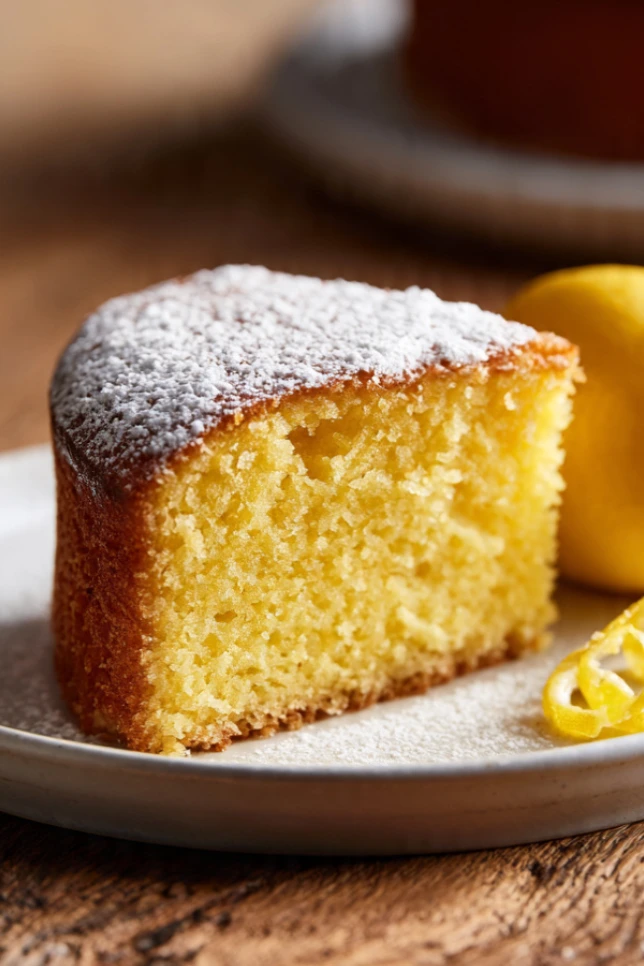
Step-by-Step Directions
Step 1: Preheat and prep. Heat your oven to 350°F (175°C). Grease a 9-inch round cake pan or a standard loaf pan with oil or non-stick baking spray. If you have a non-stick pan with a good coating, you can skip the flour dusting. If yours is older or questionable, line the bottom with a round of parchment paper just to be safe.
Step 2: Mix the wet ingredients. In a large mixing bowl, whisk together the Greek yogurt and sugar until the sugar is mostly dissolved. Add the eggs one at a time, whisking after each one. Pour in the oil and vanilla extract. If you’re using lemon zest, add it here. Whisk until everything looks smooth and combined. Don’t overmix, just get it uniform.
Step 3: Add the dry ingredients. Add the flour, baking powder, and salt directly into the same bowl. Fold gently with a spatula or a wooden spoon until no dry streaks remain. The batter will be thick but pourable. A few small lumps are totally fine.
Step 4: Bake. Pour the batter into your prepared pan and smooth the top lightly. Bake for 30 to 35 minutes until the top is golden and a toothpick inserted into the center comes out clean. Start checking at the 28-minute mark because ovens vary.
Step 5: Cool before cutting. Let the cake cool in the pan for 10 minutes, then turn it out onto a wire cooling rack. Try to let it cool at least partially before slicing. I know, it smells incredible and waiting is hard. But cutting into a very hot cake tends to make it crumble.
Tools That Make This Easier
You don’t need fancy equipment for this cake, which is honestly part of the appeal. A regular mixing bowl and a whisk get the job done. That said, if you bake often, a few good tools make everything smoother.
A kitchen food scale is the one tool I always recommend. Measuring flour by weight rather than volume gives you more consistent results, especially with baking. I use a basic digital kitchen scale that cost under $15 and it’s one of the most useful things in my kitchen.
For the pan, a quality non-stick baking pan makes releasing the cake effortless. I’ve been through a lot of pans over the years and a good heavy-gauge one really does make a difference. The cheap thin ones tend to bake unevenly and cause those dreaded brown edges with a raw center.
If you want to take this cake up a notch, a hand mixer will make the batter even smoother in about 30 seconds, though it’s genuinely not required. A whisk works just fine.
Pro Tips
Use room temperature eggs. Cold eggs don’t incorporate as smoothly into the yogurt mixture. Just set them on the counter for 20 minutes before you start.
Don’t skip the lemon zest. I know it’s listed as optional but it transforms the cake from good to genuinely special. Lemon and yogurt are best friends. You don’t taste lemon exactly, you just taste something brighter and more interesting.
Check your baking powder. Old baking powder is the number one reason home cakes don’t rise properly. If yours has been open for more than six months, test it: drop a teaspoon into hot water. If it bubbles aggressively, it’s still good. If it just sits there, get a new can.
Don’t open the oven door before 25 minutes. The cake needs that initial heat to set. Opening early causes sinking in the middle and we’ve all experienced that disappointment.
Mistakes I Used to Make
My first few yogurt cakes were good but not great. The main culprit was using low-fat yogurt because I thought I was being smart about calories. The result was a slightly rubbery texture and not much flavor. Switching to full-fat Greek yogurt was a game changer. That fat is doing real structural work in the recipe.
I also used to overmix the batter because I wanted it perfectly smooth. Overmixing develops gluten and makes cakes tough. Fold gently and stop as soon as the flour disappears. Done.
Frequently Asked Questions
Can I make this yogurt cake with flavored yogurt?
Yes. Vanilla yogurt works especially well, but you may want to reduce the added sugar slightly.
Can I add fruit to yogurt cake?
Absolutely. Blueberries, raspberries, peaches, or strawberries work wonderfully in this recipe.
How do I store yogurt cake?
Store the cake in an airtight container at room temperature for up to 4 days or freeze slices for up to 2 months.
Can I make yogurt cake gluten free?
Yes. Use a 1:1 gluten-free flour blend for best results.
Why is my yogurt cake dense?
Overmixing the batter can develop gluten and make the cake dense. Mix only until the ingredients are combined.
You’ll Also Love
- Classic French Butter Cake (Gateau Breton)
- Lemon Olive Oil Cake
- Greek Yogurt Banana Bread
- One-Bowl Blueberry Muffins
- Easy Ricotta Pound Cake
Conclusion
This yogurt cake has been part of my baking life for ten years now and it still surprises people every single time. There’s something almost unfair about how simple it is compared to how good it tastes. You genuinely do not need a lot of skill, a lot of equipment, or a lot of time. You need a bowl, a whisk, a decent non-stick pan, and about 45 minutes.
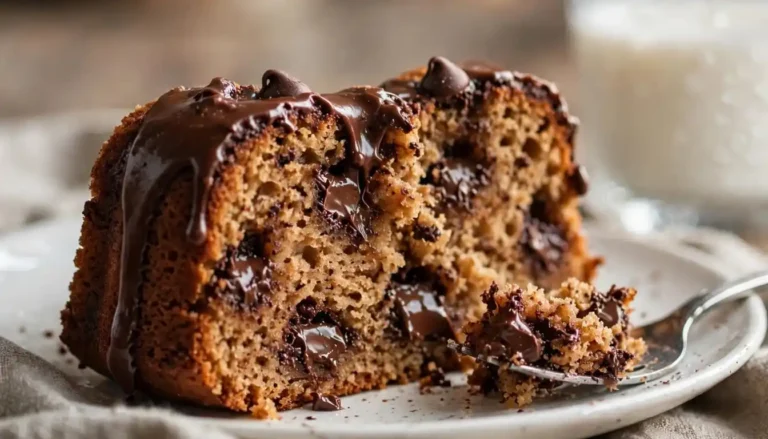
If you try it, let me know how it goes in the comments below. And if you added something creative, like cardamom or orange zest or a handful of chocolate chips, I especially want to hear about it. That’s the best part of a recipe like this. It’s a starting point, not a rulebook.
Soft and Moist Yogurt Cake
A one-bowl French-style cake with Greek yogurt. Tender crumb, subtle citrus tang, and ready in 45 minutes with no mixer required.
Ingredients
Wet Ingredients
- 1 cup plain full-fat Greek yogurt
- 3/4 cup granulated sugar
- 3 large eggs, room temperature
- 1/2 cup neutral oil (vegetable or light olive oil)
- 1 tsp pure vanilla extract
- 1 lemon, zested (optional but recommended)
Dry Ingredients
- 1 1/2 cups all-purpose flour
- 2 tsp baking powder
- 1/4 tsp salt
Instructions
- Preheat and prep Heat oven to 350°F (175°C). Grease a 9-inch round cake pan or loaf pan. Line the bottom with parchment paper if you want easy release.
- Mix the wet ingredients In a large bowl, whisk Greek yogurt and sugar until mostly dissolved. Add eggs one at a time. Add oil, vanilla, and lemon zest. Whisk until smooth.
- Fold in dry ingredients Add flour, baking powder, and salt. Fold gently with a spatula until no dry streaks remain. A few small lumps are fine. Do not overmix.
- Pour and bake Pour batter into the prepared pan and smooth the top lightly. Bake 30 to 35 minutes. Start checking at 28 minutes. A toothpick should come out clean.
- Cool before slicing Cool in the pan for 10 minutes, then transfer to a wire rack. Wait until at least partially cool before slicing to keep the crumb intact.
Pro Tips
- Use full-fat Greek yogurt for the best moist texture. Low-fat versions make the cake slightly rubbery.
- Room temperature eggs incorporate more smoothly into the batter.
- Don’t open the oven before 25 minutes or the center may sink.
- For a lemon yogurt cake, add the zest of 2 lemons and drizzle with a simple lemon glaze when cooled.
- Store wrapped at room temperature for up to 4 days. Freezes well up to 2 months.
Nutrition Facts
Per serving (1 of 8 slices)
| Calories | 265 kcal |
| Total Fat | 13g |
| Saturated Fat | 2g |
| Cholesterol | 72mg |
| Sodium | 160mg |
| Total Carbohydrates | 32g |
| Dietary Fiber | 0.5g |
| Sugars | 18g |
| Protein | 6g |
Estimated values. Will vary based on specific ingredients and portion size.