How to Cook a Juicy Ribeye Steak: Restaurant-Quality Results at Home
Look, I’ll be honest with you. For the first three years of cooking, I absolutely butchered every steak I touched. And I mean that literally. I’d get these gorgeous ribeyes from the butcher, spend good money on them, and then turn them into expensive shoe leather. My husband would smile and choke them down, but I knew the truth.
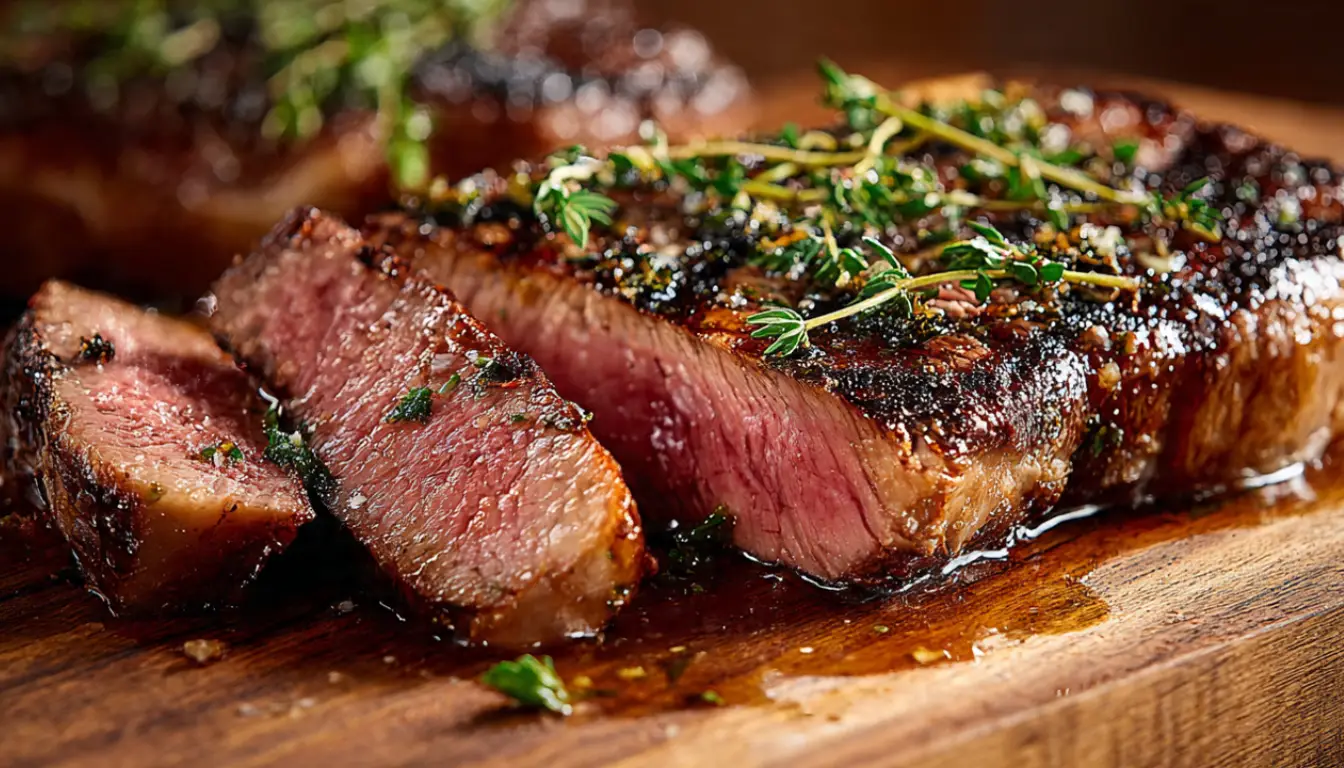
The turning point came when I finally invested in a proper meat thermometer and a good cast iron skillet. Those two purchases changed everything. Suddenly, I was nailing that perfect medium-rare every single time. My steaks had that beautiful crust, that butter-soft interior, and I wasn’t guessing anymore.
So if you’ve been struggling with steaks, trust me when I say this: you’re probably closer to success than you think. You just need to understand a few key principles and maybe upgrade a tool or two.
Essential Ingredients
Here’s what you actually need for a perfect ribeye. No fancy marinades, no complicated rubs. Just quality ingredients that let the beef shine.
- 1 ribeye steak (1.5 to 2 inches thick, about 12-16 oz)
- 2 tablespoons coarse salt (kosher or sea salt works best)
- 1 tablespoon freshly ground black pepper
- 2 tablespoons high-heat oil (avocado or grapeseed)
- 3 tablespoons unsalted butter
- 4 cloves fresh garlic, smashed
- 3 sprigs fresh thyme (or rosemary)
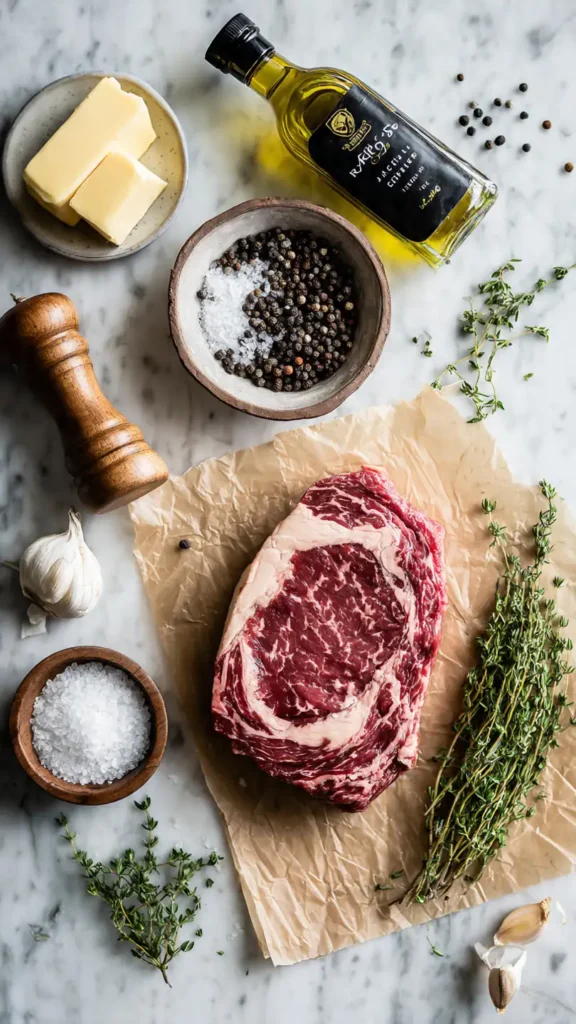
That’s it. Seriously. When you’ve got a good cut of beef, you don’t need to dress it up. I learned this the hard way after years of over-complicating things.
Alternative Ingredients
Not everyone has access to the same ingredients, and that’s totally fine. Here’s what you can swap:
For the steak: If you can’t find ribeye, a New York strip or top sirloin works beautifully with this method. Just adjust your cooking time slightly for thinner cuts.
For the oil: Regular vegetable oil will do in a pinch. Just avoid olive oil for this, it smokes too easily at high heat.
For the butter: I’ve used clarified butter when I’m feeling fancy, but regular salted butter works if that’s what you have. Just watch it doesn’t burn.
For the herbs: Dried herbs are fine if fresh isn’t available. Use about 1 teaspoon dried thyme instead of the fresh sprigs.
Step-by-Step Directions
This is the method I’ve refined over hundreds of steaks. Follow it exactly the first time, then adjust to your preferences.
1. Bring the steak to room temperature (30-45 minutes before cooking)
Take your ribeye out of the fridge and let it sit on the counter. I know this sounds weird if you’re worried about food safety, but a cold steak won’t cook evenly. The outside will overcook before the inside comes up to temperature. Trust me on this.
2. Season generously
Pat the steak completely dry with paper towels. This is crucial for getting that crust. Then season both sides heavily with salt and pepper. When I say heavily, I mean more than feels comfortable. The salt creates that perfect crust and enhances the beef flavor.
3. Get your pan screaming hot
Put your cast iron skillet over high heat for 5 minutes. You want it smoking hot. This is where a lot of home cooks mess up because they’re afraid of the heat. Don’t be. A hot pan is your friend here.
4. Add oil and sear the first side (3-4 minutes)
Add your high-heat oil to the pan, swirl it around, and immediately add the steak. You should hear an aggressive sizzle. Don’t touch it. Don’t move it. Don’t peek under it. Just let it sit there and develop that crust for 3-4 minutes.
5. Flip and sear the second side (3-4 minutes)
Flip it once, just once. Add your butter, garlic, and thyme to the pan. As the butter melts, tilt the pan slightly and use a spoon to baste the steak with that flavored butter. This is the restaurant trick that makes everything taste better.
6. Check internal temperature
This is where your meat thermometer becomes essential. For medium-rare, you’re looking for 130-135°F. For medium, aim for 140-145°F. Insert the thermometer into the thickest part of the steak.
7. Rest the steak (5-10 minutes)
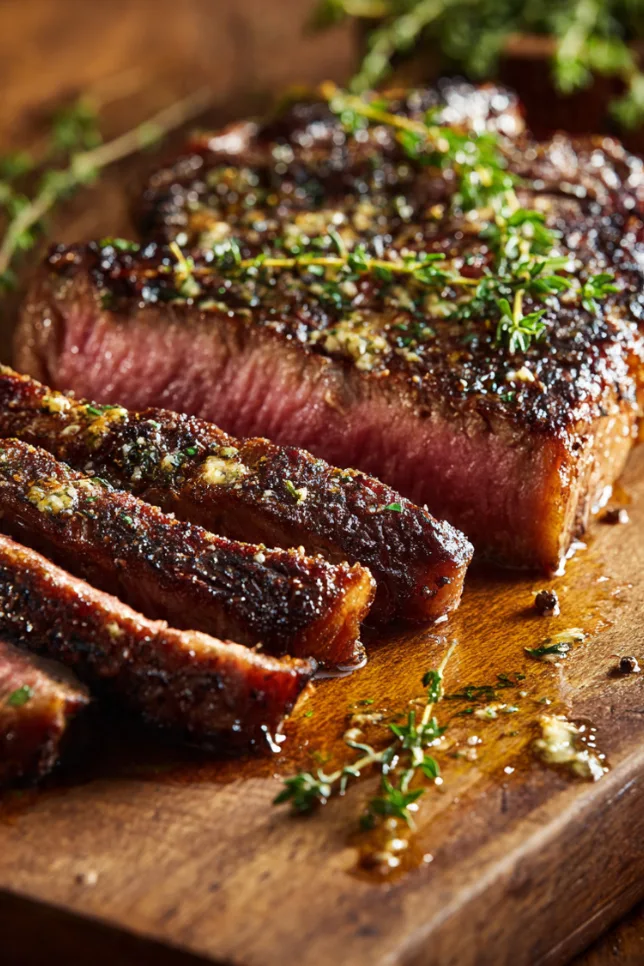
Move it to a cutting board and let it rest. I know you want to cut into it right away. Resist that urge. The resting period lets the juices redistribute throughout the meat instead of running all over your cutting board.
Pro Tips
These are the little things I’ve learned that separate a good steak from a great one:
Dry aging at home: If you’re planning ahead, you can dry age your ribeye in your fridge. Just place it uncovered on a wire rack over a plate for 2-3 days. This concentrates the flavor and makes the texture even better. It’s what fancy steakhouses do.
The finger test is unreliable: People love to talk about touching your palm to test doneness. Forget it. Get a good digital meat thermometer. Mine cost about $15 and has saved me from countless ruined steaks.
Basting is non-negotiable: That butter-basting step isn’t just for show. It adds incredible flavor and helps the steak cook more evenly. I use this technique for all my pan-seared proteins.
Consider the reverse sear method: For thicker steaks (over 2 inches), I sometimes use the reverse sear. You cook it in a low oven (250°F) until it hits 115°F internally, then sear it in the hot pan. This gives you more control and an even more perfect result.
Your kitchen will get smoky: Open windows, turn on fans. This is high-heat cooking, and some smoke is normal. Don’t let that scare you into lowering the heat.
Frequently Asked Questions
What is the best thickness for a ribeye steak?
A ribeye steak that is 1.5 to 2 inches thick works best for pan searing. Thicker steaks create a better crust while staying juicy inside.
Why should I let steak come to room temperature before cooking?
This helps the steak cook evenly so the outside does not overcook before the center reaches the right temperature.
What temperature is medium rare ribeye?
Medium rare ribeye should reach about 130 to 135°F internally. A digital meat thermometer gives the most accurate result.
Why do chefs baste steak with butter?
Butter basting adds flavor and helps cook the surface evenly while infusing the steak with garlic and herb aroma.
How long should steak rest after cooking?
Let the steak rest 5 to 10 minutes before slicing so the juices stay inside the meat.
Recipe Info
| Prep Time | 40 minutes (mostly resting time) |
| Cook Time | 10 minutes |
| Total Time | 50 minutes |
| Servings | 1-2 people |
| Yield | 1 steak |
Why You’ll Love This Recipe
This isn’t some complicated restaurant technique that requires years of training. It’s straightforward, reliable, and works every single time once you get the hang of it.
You’ll love that you can make steakhouse-quality ribeye without spending $60 at a restaurant. You’ll love the confidence of knowing exactly when your steak is done. And you’ll love how impressed your family or dinner guests will be when you nail that perfect medium-rare with a gorgeous crust.
Plus, once you master this technique, it opens up so many other recipes. The same method works for lamb chops, pork chops, and thick fish steaks.
What Makes This Recipe Unique
Most ribeye recipes either overcomplicate things with marinades and rubs, or they oversimplify and leave you guessing on temperatures. This recipe hits that sweet spot. It’s minimal ingredient-wise but detailed where it matters, in the technique.
The butter-basting step is something you’ll see in professional kitchens but rarely in home cooking guides. It makes a huge difference. That garlic and herb-infused butter creates an extra layer of flavor that you just can’t get from seasoning alone.
And the emphasis on using a meat thermometer instead of guessing. Look, I know some people can tell doneness by touch after years of practice. But for most of us home cooks, a $15 thermometer eliminates all the anxiety.
Key Features
- Simple ingredient list that doesn’t mask the beef flavor
- Foolproof temperature guidance so you’re not guessing
- Professional butter-basting technique that anyone can master
- Works with any thick-cut steak, not just ribeye
- No special equipment beyond a cast iron skillet and meat thermometer
- Restaurant-quality results for a fraction of the price
You’ll Also Love
If you enjoyed this recipe, check out these other favorites:
- Garlic Butter Shrimp – Uses the same butter-basting technique
- Pan-Seared Lamb Chops – Another thick cut that loves this method
- Cast Iron Pork Chops – Perfect weeknight version of this technique
- Compound Butter Guide – Make flavored butters for finishing steaks
- Reverse Sear Tomahawk Steak – For when you want to go all out
Conclusion
Here’s what I want you to remember: cooking a perfect ribeye isn’t about following a complex recipe. It’s about understanding heat, timing, and temperature. Once you nail those three things, you’ll never be intimidated by a good steak again.
Start with a quality cut, get your pan really hot, don’t flip it too many times, and for the love of everything, use a meat thermometer. These simple rules have saved me from countless disappointing dinners.
The first time you slice into a perfectly cooked ribeye that you made yourself, with that pink center and beautifully caramelized crust, you’ll get it. That’s the moment when you realize you don’t need to pay steakhouse prices to eat like you’re at a steakhouse.
Now get out there and cook yourself an amazing steak. You’ve got this.
Juicy Ribeye Steak
Perfectly seared ribeye steak with a golden crust and buttery garlic herb flavor cooked in a cast iron skillet.
Ingredients
- 1 ribeye steak (1.5 to 2 inches thick)
- 2 tbsp coarse salt
- 1 tbsp freshly ground black pepper
- 2 tbsp high heat oil
- 3 tbsp unsalted butter
- 4 garlic cloves, smashed
- 3 sprigs fresh thyme or rosemary
Instructions
- Bring steak to room temperature. Remove steak from refrigerator and rest 30 to 45 minutes.
- Season generously. Pat steak dry and season heavily with salt and pepper.
- Heat skillet. Preheat a cast iron skillet over high heat for about 5 minutes.
- Sear first side. Add oil and place steak in pan. Cook without moving for 3 to 4 minutes.
- Flip and baste. Turn steak once, add butter, garlic, and herbs. Spoon butter over steak repeatedly.
- Check temperature. Cook until internal temperature reaches desired doneness.
- Rest the steak. Let steak rest 5 to 10 minutes before slicing.
Notes
Always use a meat thermometer for accuracy. Cast iron skillets produce the best crust. Allowing the steak to rest after cooking keeps the juices inside the meat instead of spilling onto the cutting board.