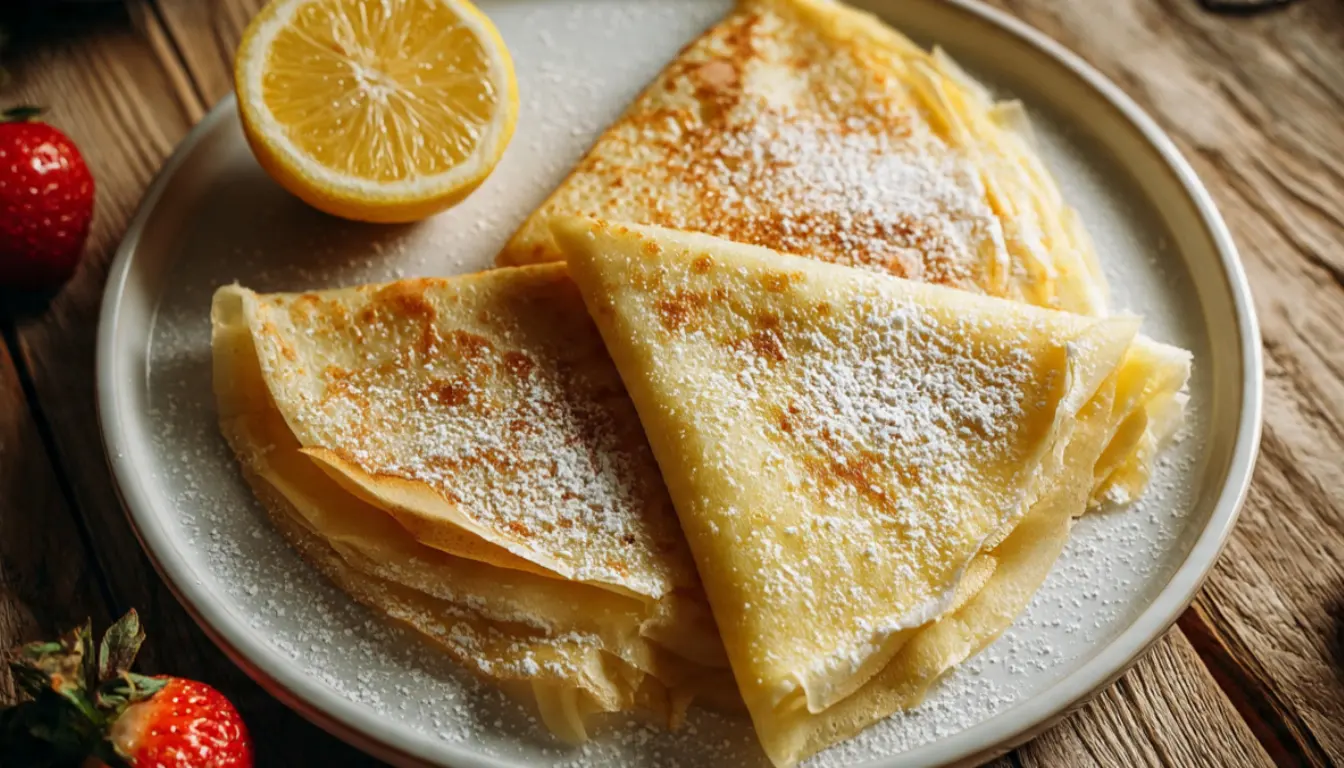
Homemade French Crêpes: Thin, Golden, and Easier Than You Think
I used to think crêpes were one of those fancy things you only get at a Parisian café or from a street cart with a line around the block. Seriously, I avoided making them at home for years. My mom tried once when I was a kid and the first four came out looking like a lace curtain soaked in butter. We laughed, ate them anyway, and that was that. Crêpes went into the “too complicated” box in my brain.
Then, about six years into blogging, I spent a weekend testing crêpe recipes until I figured out what I was doing wrong. Turns out, it wasn’t the recipe that was the problem. It was the pan and the resting time. Once I fixed those two things, everything clicked. Now I make crêpes on a random Tuesday like it’s nothing.
This guide covers everything: the batter, the pan, the flip, the fillings. Whether you want a sweet breakfast crêpe or a savory dinner version, this recipe works for both.
Why Crêpes Deserve a Spot in Your Weekly Rotation
Here’s what most people don’t realize: crêpe batter takes about five minutes to mix and costs almost nothing. A batch of 10 to 12 crêpes runs maybe $2.50 in ingredients. That’s a meal prep win if I’ve ever seen one.
They also keep well. Store cooked crêpes stacked between sheets of parchment paper in an airtight meal prep container and they’ll stay fresh in the fridge for up to 3 days. Freeze them the same way and they last a month. Reheat in 30 seconds flat. This is genuinely one of the most flexible, budget-friendly recipes I keep in my rotation.
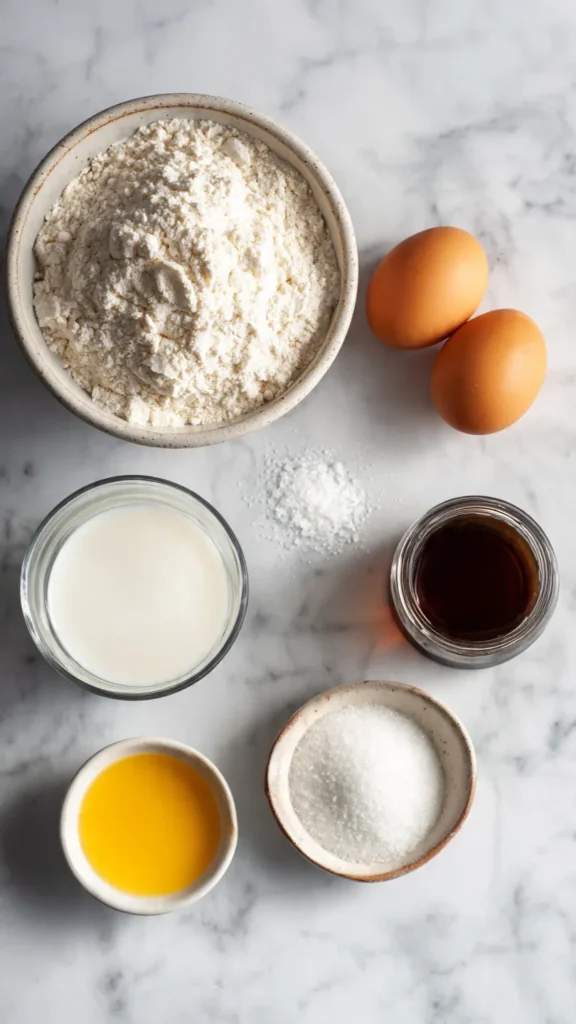
Essential Ingredients
- 1 cup all-purpose flour
- 2 large eggs
- 1 1/2 cups whole milk (room temperature)
- 2 tablespoons unsalted butter, melted (plus more for the pan)
- 1 tablespoon granulated sugar (skip for savory crêpes)
- 1/4 teaspoon fine sea salt
- 1/2 teaspoon pure vanilla extract (sweet version only)
That’s it. Nothing fancy, nothing you need to order online. You probably have all of this right now.
Alternative Ingredients
Flour: Swap all-purpose for buckwheat flour to make traditional Breton galettes. Buckwheat crêpes are naturally gluten-free-adjacent (though not certified GF) and have a nutty, earthy flavor that pairs beautifully with savory fillings. Bob’s Red Mill makes a reliable buckwheat flour that I’ve used for years.
Milk: Whole milk gives the richest result, but 2% works fine. For a dairy-free version, oat milk or unsweetened almond milk both work well. The batter comes out slightly thinner with plant-based milks, so you may need to add an extra tablespoon of flour.
Butter: Swap melted butter for coconut oil if you’re dairy-free. The flavor is slightly different but still delicious, especially with sweet fillings.
Eggs: I haven’t cracked the fully vegan crêpe yet in a way I love. You can try a flax egg (1 tablespoon ground flaxseed plus 3 tablespoons water), but the crêpes end up more fragile. Use them quickly if you go that route.
Tools That Make This Easier
You don’t need a special crêpe pan, but having the right tools does make a difference.
A good non-stick pan is the single most important piece of equipment here. I use an 8-inch non-stick pan with a low, sloped edge (that’s what makes the flip easy). My current favorite is the Zwilling Spirit ceramic non-stick, but honestly a solid Cuisinart or T-fal non-stick skillet in the $25-35 range works perfectly fine. What you want to avoid is a pan with high sides since it makes it almost impossible to get a spatula under the crêpe cleanly.
A blender makes the batter incredibly smooth with zero lumps. I use my Vitamix for this when I’m being efficient, but a regular countertop blender or even a hand mixer with a whisk attachment does the job. You can also just whisk by hand in a bowl. Whichever method you choose, the most important step is resting the batter after you mix it. Don’t skip that.
A flexible silicone spatula or a thin offset spatula helps with flipping. And if you want to get serious about crêpes, a crêpe spreader (those little wooden T-shaped tools) makes spreading the batter perfectly even. They’re like $4 on Amazon.
Step-by-Step Directions
Step 1: Make the batter. Combine flour, eggs, milk, melted butter, sugar, salt, and vanilla in a blender. Blend on medium for 20 to 30 seconds until completely smooth. Alternatively, whisk the eggs with the milk first, then gradually whisk in the flour, then add everything else. The blender method is faster and gets a smoother result.
Step 2: Rest the batter. Pour the batter into a bowl, cover it with plastic wrap or a plate, and let it rest at room temperature for at least 30 minutes. This is the step I used to skip and it made all the difference once I stopped skipping it. Resting relaxes the gluten and lets the air bubbles settle so you get smooth, even crêpes instead of rubbery ones.
Step 3: Heat your pan. Set your non-stick pan over medium heat. Add a small knob of butter, about half a teaspoon, and let it melt until it starts to foam. You want the pan hot enough that a drop of batter sizzles immediately, but not so hot that the butter burns. Medium heat is your friend here. High heat is how you get crêpes with burnt spots and raw centers.
Step 4: Cook the first crêpe. Pour about 3 tablespoons of batter into the center of the pan. Immediately pick up the pan and tilt it in a circular motion to spread the batter into a thin, even circle. Move fast here. You have about 3 seconds before the batter sets.
Cook for 60 to 90 seconds until the edges look dry and slightly golden. The surface should look mostly set with no wet spots. Then slide a thin spatula under the edge and flip. Cook the second side for just 30 seconds. It won’t color as evenly and that’s completely normal.
Step 5: Repeat. Stack cooked crêpes on a plate. You don’t need to add butter between every single crêpe but add a fresh bit to the pan every 2 to 3 crêpes to prevent sticking.
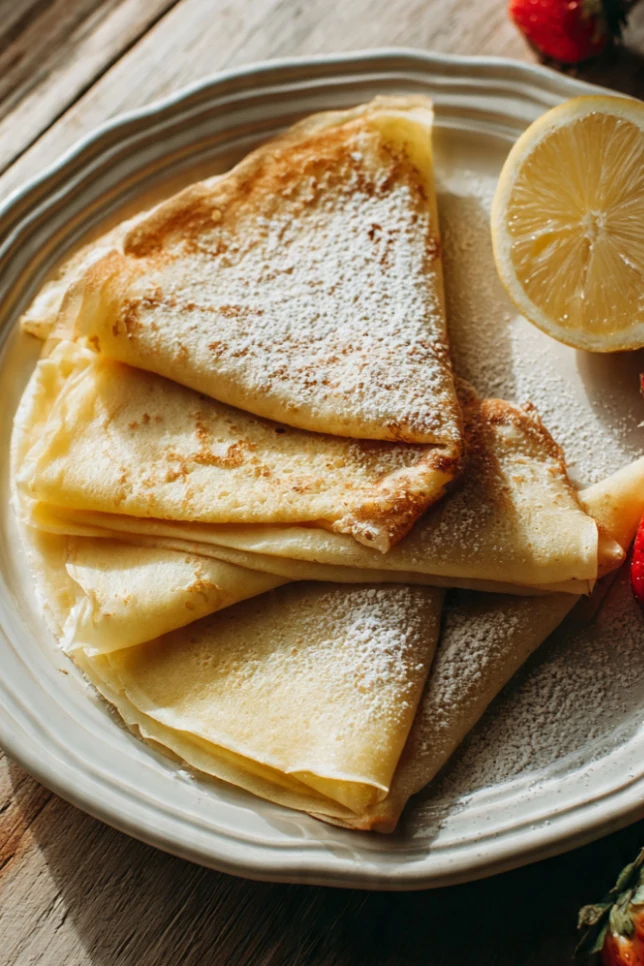
The first crêpe almost always comes out imperfect. That’s not you failing, that’s just how crêpes work. Think of it as the seasoning crêpe. Eat it in the kitchen, no judgment.
Pro Tips
The batter consistency matters more than most recipes admit. It should be thin, like heavy cream, not like pancake batter. If yours looks thick, add milk one tablespoon at a time and whisk it in.
Room temperature ingredients help the batter come together evenly. Cold milk straight from the fridge can cause the butter to seize into little clumps. Pull your milk and eggs out 20 minutes before you start.
Don’t overcrowd the pan. One crêpe at a time, always. If you have two pans going at once, great. But cramming multiple crêpes into one pan is a trap.
For meal prep: Stack crêpes with parchment between each layer, slide them into a zip-lock freezer bag or airtight glass container, and refrigerate for up to 3 days or freeze for up to 4 weeks. Reheat directly in a dry pan for 20 seconds per side or in the microwave for 30 seconds with a damp paper towel on top.
Filling Ideas
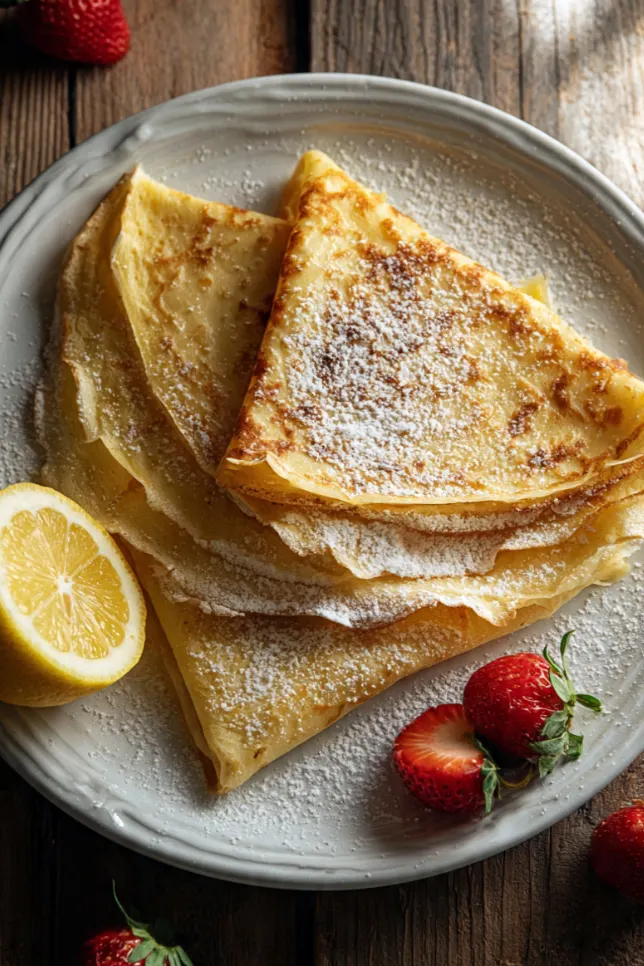
Sweet: Nutella and sliced banana, lemon juice with powdered sugar (the classic), fresh strawberries with whipped cream, or salted caramel with toasted almonds.
Savory: Ham and Gruyère cheese, sautéed mushrooms with garlic and thyme, spinach and ricotta, or smoked salmon with cream cheese and capers.
The savory fillings work best if you skip the sugar and vanilla in the batter. That base becomes more neutral and pairs cleanly with cheeses and vegetables.
Frequently Asked Questions
Why are my crêpes tearing when I flip them?
Your batter may be too thick or the crêpe may not be cooked long enough before flipping. Wait until the edges are dry and lightly golden.
Can I make crêpe batter ahead of time?
Yes. Crêpe batter can be made the night before and stored in the refrigerator. Stir well before cooking.
What is the best pan for homemade French crêpes?
A non-stick skillet with low sides works best because it makes flipping easier and prevents sticking.
Can I freeze homemade French crêpes?
Yes. Stack them with parchment paper between each crêpe and freeze in an airtight container for up to one month.
Can I make these crêpes gluten-free?
Yes. A good 1-to-1 gluten-free flour blend works well, although the crêpes may be slightly more delicate.
Why You’ll Love This Recipe
It costs almost nothing. It works for breakfast, lunch, or dinner. The batter comes together in five minutes and the rest of the work is just repetition. Once you’ve made one batch you’ll realize it’s one of the most practical skills you can have in the kitchen. Your kids will love them, guests will be impressed, and you’ll never look at a sad Tuesday morning the same way again.
What Makes This Recipe Unique
Most crêpe recipes tell you to rest the batter but don’t explain why, so people skip it. This one is built around the two things that actually matter: batter consistency and pan temperature. Get those right and the rest takes care of itself.
Key Features
- Ready in under an hour including rest time
- Works for sweet and savory fillings with one base batter
- Freezer-friendly for easy meal prep
- Budget-friendly at under $3 per batch
- Adaptable for dairy-free and gluten-free diets
You’ll Also Love
- Classic Buttermilk Pancakes
- Dutch Baby Pancake (Oven Puffed Pancake)
- Savory Galettes with Ham and Cheese
- Easy Blender Banana Pancakes
- Overnight Oat Waffles
Conclusion
Crêpes were intimidating to me for longer than I’d like to admit. But once I understood that the “secret” is really just about resting the batter and getting your pan temperature right, the mystery evaporated. Now they’re one of my go-to recipes when I want something that looks impressive but takes almost no effort.
Make a batch this weekend. Try them sweet first, then make a savory version for dinner. You’ll see what I mean. And if your first crêpe comes out lumpy and weird, eat it standing over the stove and start fresh. That’s the real French tradition nobody talks about.
If you try this recipe, leave a comment below and let me know what filling you went with. I always love hearing what combinations people come up with.
Happy cooking, Linda
Homemade French Crêpes
Thin, buttery, golden French crêpes that are easy enough for beginners and perfect for both sweet and savory fillings.
Ingredients
- 1 cup all-purpose flour
- 2 large eggs
- 1 1/2 cups whole milk, room temperature
- 2 tablespoons unsalted butter, melted
- 1 tablespoon granulated sugar
- 1/4 teaspoon fine sea salt
- 1/2 teaspoon vanilla extract
- Butter for the pan
Instructions
- Make the batter: Blend flour, eggs, milk, melted butter, sugar, salt, and vanilla until smooth and lump-free.
- Rest the batter: Cover and let the batter rest for at least 30 minutes so the gluten relaxes and the bubbles settle.
- Heat the skillet: Place a non-stick pan over medium heat and lightly butter the surface.
- Cook the crêpes: Pour about 3 tablespoons of batter into the center and quickly swirl into a thin circle. Cook 60 to 90 seconds.
- Flip carefully: Slide a thin spatula underneath and flip. Cook the second side for about 30 seconds.
- Serve: Stack warm crêpes and serve with sweet or savory fillings.
Resting the batter is the key to soft, flexible crêpes. If the batter seems too thick, whisk in a tablespoon of milk at a time until it reaches a thin cream-like consistency. Store leftover crêpes between parchment paper in the fridge for up to 3 days or freeze for up to 1 month.