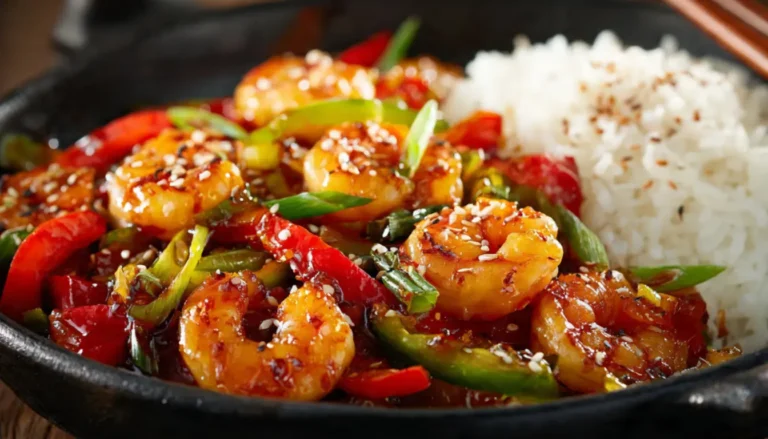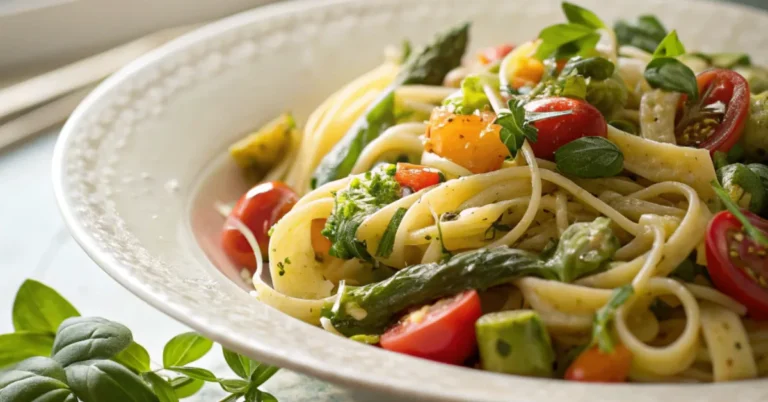
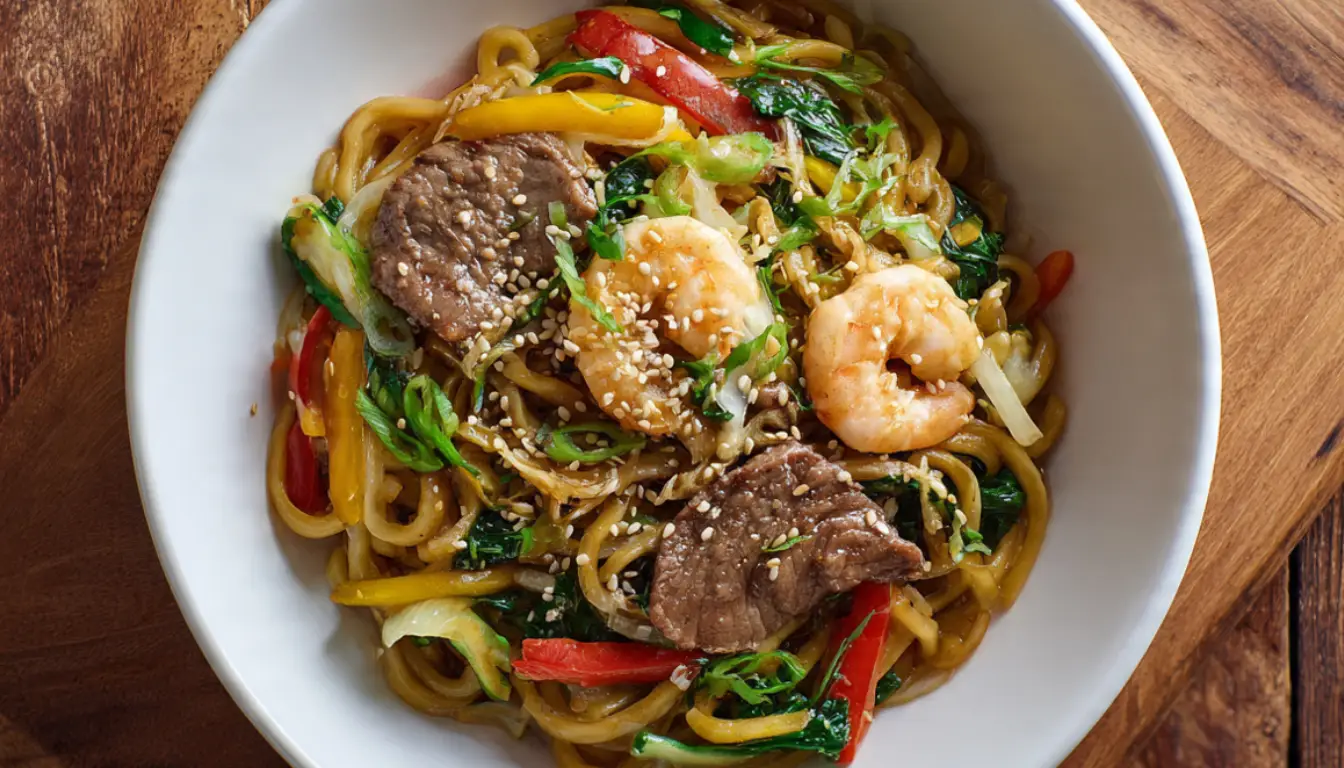
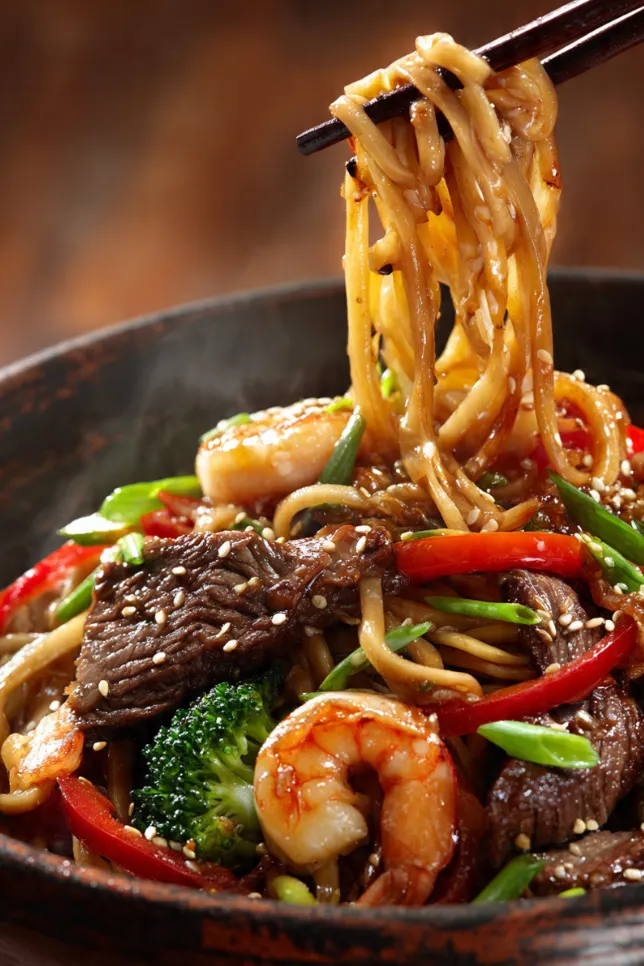
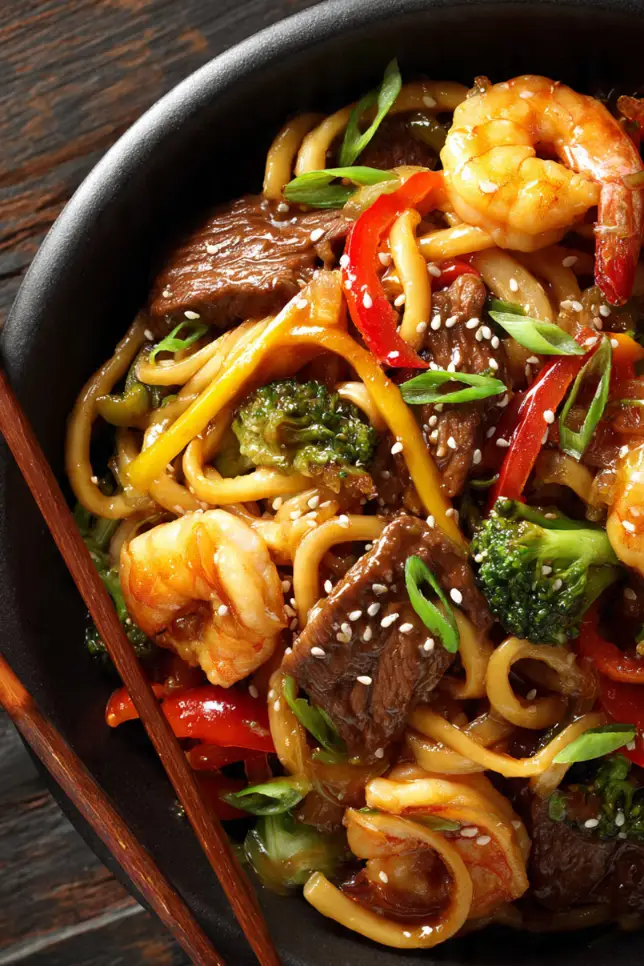
Steak & Shrimp Stir-Fry Noodles
The first time I tried making stir-fry noodles with both steak and shrimp, I ended up with rubbery shrimp and overcooked beef. I was trying to impress my sister-in-law who’d just returned from a semester teaching English in Shanghai, and let’s just say she politely pushed the noodles around her plate. That disaster taught me everything I needed to know about timing, temperature, and why a good wok (or at least a heavy cast iron skillet) makes all the difference.
Fast forward ten years, and this steak and shrimp stir-fry has become my go-to when I want restaurant-quality noodles without the restaurant prices. The secret? Cooking the proteins separately and keeping everything moving fast. Real fast. If you’ve been intimidated by stir-fry before, I promise this one’s more forgiving than you think.
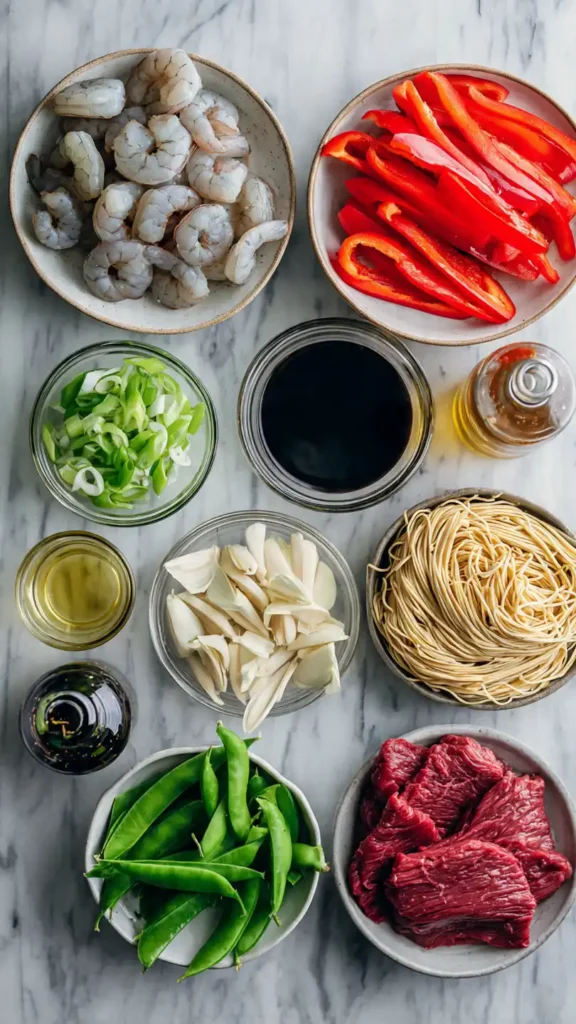
Essential Ingredients
For the Proteins:
- 8 oz flank steak or sirloin, thinly sliced against the grain
- 8 oz large shrimp, peeled and deveined
- 2 tablespoons vegetable oil, divided
- 1 tablespoon soy sauce (for marinating steak)
- 1 teaspoon cornstarch (for marinating steak)
For the Noodles:
- 8 oz fresh or dried lo mein noodles (or linguine in a pinch)
- 1 tablespoon sesame oil
For the Vegetables:
- 1 red bell pepper, sliced thin
- 1 cup snap peas, trimmed
- 3 green onions, cut into 2-inch pieces
- 3 cloves garlic, minced
- 1 tablespoon fresh ginger, minced
- 1/2 cup shredded carrots
For the Sauce:
- 3 tablespoons soy sauce
- 2 tablespoons oyster sauce
- 1 tablespoon rice vinegar
- 1 tablespoon brown sugar
- 1 teaspoon sesame oil
- 1/2 teaspoon red pepper flakes (optional)
- 1/4 cup beef or chicken broth
Alternative Ingredients
Here’s where you can get creative without ruining the dish. I’ve learned through plenty of trial and error what swaps actually work.
Protein Swaps: Instead of flank steak, try ribeye if you’re feeling fancy (it’s more tender but pricier), or even chicken thighs if you want to skip beef entirely. For the shrimp, scallops work beautifully, though they’re usually more expensive. I’ve also used firm tofu when my vegetarian friends come over, just press it really well and add an extra tablespoon of soy sauce to compensate for the missing seafood flavor.
Noodle Options: Can’t find lo mein noodles? Honestly, spaghetti or linguine work fine. I’ve also used rice noodles (soak them first), udon (a bit thicker but delicious), and even those instant ramen noodles (just skip the flavor packet). The key is getting them slightly undercooked since they’ll finish cooking in the wok.
Vegetable Variations: Use whatever you have. Broccoli florets, bok choy, mushrooms, baby corn, water chestnuts… stir-fry is forgiving. I once cleaned out my entire vegetable drawer and it turned out great. Just keep the harder vegetables like carrots and broccoli, and add softer ones like spinach at the very end.
Step-by-Step Directions
Step 1: Prep Everything First This is crucial. Stir-fry happens fast, and you won’t have time to chop mid-cooking. Slice your steak thin (freezing it for 20 minutes makes this easier), devein the shrimp, mince your garlic and ginger, slice all vegetables, and mix your sauce in a small bowl. I learned this the hard way when I burned garlic while frantically trying to slice peppers. Having a food processor nearby makes the prep work much faster, especially for mincing ginger and garlic.
Step 2: Marinate the Steak Toss your sliced steak with 1 tablespoon soy sauce and 1 teaspoon cornstarch. Let it sit while you prep everything else (at least 10 minutes). The cornstarch creates a light coating that helps the steak brown beautifully and thickens the sauce slightly. This trick came from a Chinese cooking class I took years ago, and it’s a total game changer.
Step 3: Cook the Noodles Boil your noodles according to package directions, but stop 1 minute before they’re done. They should be slightly firm because they’ll cook more in the wok. Drain them, toss with a tablespoon of sesame oil to prevent sticking, and set aside. Pro tip: save a cup of that starchy pasta water. If your stir-fry seems dry later, a splash of this works better than plain water.
Step 4: Sear the Steak Heat your wok or largest skillet over high heat until it’s smoking hot. Add 1 tablespoon of vegetable oil, swirl it around, then add the steak in a single layer. Don’t move it for 1 minute. Let it get a good sear. Then stir-fry for another 1-2 minutes until just cooked through. Remove to a plate. If you’re using a regular non-stick pan instead of a wok, you might need to do this in two batches to avoid crowding.
Step 5: Cook the Shrimp Add another tablespoon of oil to the same pan (don’t wash it, those browned bits add flavor). Toss in the shrimp and cook for about 2 minutes per side until pink and just cooked through. Shrimp go from perfect to rubber in about 30 seconds, so watch them carefully. Remove to the same plate as the steak.
Step 6: Stir-Fry the Vegetables If your pan looks dry, add a tiny bit more oil. Toss in the garlic and ginger first, stirring constantly for about 30 seconds until fragrant. Add the bell peppers, snap peas, and carrots. Stir-fry for 2-3 minutes until they’re tender-crisp. I like my vegetables to still have some bite, but cook them longer if you prefer them softer.
Step 7: Combine Everything Add the cooked noodles to the pan with the vegetables. Pour in your sauce mixture and toss everything together for about 1 minute. Add back the steak and shrimp, along with any juices that accumulated on the plate. Toss everything for another 1-2 minutes until the sauce thickens and coats everything. Add the green onions in the last 30 seconds. If things look dry, add a splash of that reserved pasta water.
Step 8: Taste and Adjust This is where you make it yours. Need more salt? Add a splash more soy sauce. Want it sweeter? Another pinch of brown sugar. Too salty? A tiny bit of rice vinegar balances it out. I always taste at this point and tweak it.
Pro Tips
The Wok Situation: I resisted buying a proper carbon steel wok for years, thinking my regular pans were fine. They worked, but once I invested in a good wok (around $30, not expensive), my stir-fries improved dramatically. The high, sloped sides make tossing ingredients so much easier, and it gets hotter than regular pans. That said, a heavy cast iron skillet is my second choice and works almost as well.
Knife Skills Matter: Slicing the steak against the grain is crucial for tenderness. Look for the lines running through the meat and cut perpendicular to them. Each slice should be about 1/4-inch thick. I use a sharp chef’s knife for this, but if your knife is dull, you’ll just mangle the meat. A good knife sharpener is worth having in your kitchen.
Temperature Control: Your pan needs to be screaming hot for proper stir-fry. If you add ingredients and they don’t sizzle immediately, your pan isn’t hot enough. On my electric stove, I turn the heat to high and let the pan heat for a full 3-4 minutes before adding oil. Gas stoves heat faster but you still need patience.
Meal Prep Advantage: This recipe is perfect for meal planning. I often double the recipe on Sunday and store it in glass meal prep containers for easy weekday lunches. It reheats beautifully in the microwave (add a splash of water to loosen the sauce). The vegetables stay relatively crisp for 3-4 days, though the noodles absorb more sauce over time, which I personally love.
Freezer Meals Option: You can freeze the stir-fry, but I recommend freezing the components separately. The shrimp and steak freeze great in the sauce for up to 2 months. Freeze the noodles separately. This way, you can thaw and quickly reheat everything without the noodles getting mushy.
Frequently Asked Questions
Can I use frozen shrimp for stir-fry noodles?
Yes, just thaw completely and pat dry to avoid excess moisture.
What noodles work best for stir-fry?
Lo mein noodles are ideal, but spaghetti, udon, or rice noodles work well too.
How do I keep shrimp from getting rubbery?
Cook shrimp quickly over high heat and remove immediately once pink.
Can I make this recipe ahead of time?
Prep ingredients ahead, but cook fresh for best results.
How do I thicken stir-fry sauce?
Add a cornstarch slurry at the end and stir until thickened.
Why You’ll Love This Recipe
First off, it tastes like takeout but costs about half as much and you know exactly what’s going in it. No mystery ingredients or excessive sodium. When I calculated it once, this recipe came out to about $4.50 per serving versus $12-15 for comparable restaurant dishes.
The flexibility is another huge selling point. You can swap proteins, change up vegetables based on what’s in season or on sale, adjust the spice level, and even make it vegetarian. I’ve made this recipe at least a hundred times, and it’s never exactly the same twice.
It’s also fast. From start to finish, including prep, you’re looking at about 35 minutes. That’s less time than ordering delivery and waiting for it to arrive. On busy weeknights, this is my sanity saver.
And here’s something I didn’t expect: it’s actually a great recipe for beginners to practice knife skills and learn about high-heat cooking. The worst that happens is you overcook the shrimp or undercook the vegetables, and it still tastes good.
What Makes This Recipe Unique
Most stir-fry recipes I’ve seen either use one protein or combine them all at once (which leads to that rubbery shrimp issue I mentioned). Cooking the steak and shrimp separately, then combining them at the end, ensures both stay perfectly tender.
The sauce ratio here is also carefully balanced. I’ve tested this with different amounts, and this exact combination gives you enough sauce to coat everything without drowning the noodles. Some recipes are too dry, others are soupy. This one’s just right.
I also love that this recipe doesn’t call for a bunch of specialty ingredients you’ll use once and never again. Everything here is either a kitchen staple or something you can use in multiple other dishes. The most “unusual” ingredient is oyster sauce, and I use that in at least five other recipes regularly.
Key Features
Quick weeknight meal: 35 minutes total time, most of it active prep work Restaurant-quality results: Better texture and flavor than most takeout Protein-packed: Combines beef and shrimp for a complete amino acid profile Vegetable-forward: Easily pack in 2-3 cups of vegetables per serving Meal prep friendly: Stores well for 3-4 days, reheats beautifully Customizable: Swap proteins, vegetables, or noodle types based on preference Budget-conscious: Costs about $18-20 to make 4 generous servings Balanced nutrition: Good mix of protein, carbs, and vegetables in one dish
You’ll Also Love
If this steak and shrimp stir-fry hit the spot, here are some similar recipes you might want to try:
Beef and Broccoli Stir-Fry: A classic takeout dish that’s even easier than this one. Uses similar sauce ingredients and cooking techniques.
Pad Thai with Shrimp: If you love noodles and shrimp, this Thai classic has a sweet-tangy-spicy sauce that’s addictive. Takes about the same amount of time.
Korean Japchae: Sweet potato glass noodles with beef and vegetables. Slightly sweeter than Chinese-style stir-fries but uses similar techniques.
Conclusion
After ten years of making this recipe, I still get excited when it’s on the menu. There’s something deeply satisfying about a perfectly executed stir-fry: the sizzle when ingredients hit the hot wok, the way the sauce glazes everything, the mix of textures and flavors in each bite.
The beauty of stir-fry cooking is that once you master the basic technique (high heat, quick cooking, everything prepped ahead), you can apply it to endless combinations. This steak and shrimp version is my favorite because it feels special enough for company but easy enough for a random Tuesday night.
Give yourself permission to mess it up the first time. I certainly did. But by the second or third attempt, you’ll develop a feel for the timing and heat, and then you’ll be making restaurant-quality noodles whenever the craving hits. And trust me, once you nail this recipe, you’ll wonder why you ever paid $15 for soggy takeout noodles.
Now go heat up that wok and make some magic happen. Your taste buds will thank you.
Steak & Shrimp Stir-Fry Noodles
Fast, flavorful, and better than takeout with perfectly cooked steak and shrimp.
Ingredients
- 8 oz steak, sliced
- 8 oz shrimp
- 8 oz noodles
- Bell pepper, snap peas, carrots
- Garlic, ginger, green onions
- Soy sauce, oyster sauce, vinegar, sugar
Instructions
- Prep all ingredients before cooking
- Marinate steak briefly
- Cook noodles and set aside
- Sear steak, then remove
- Cook shrimp, then remove
- Stir-fry vegetables
- Add noodles, sauce, steak, and shrimp
- Toss and serve hot
Notes
Cook proteins separately to avoid overcooking. Keep heat high and ingredients moving constantly for best results.