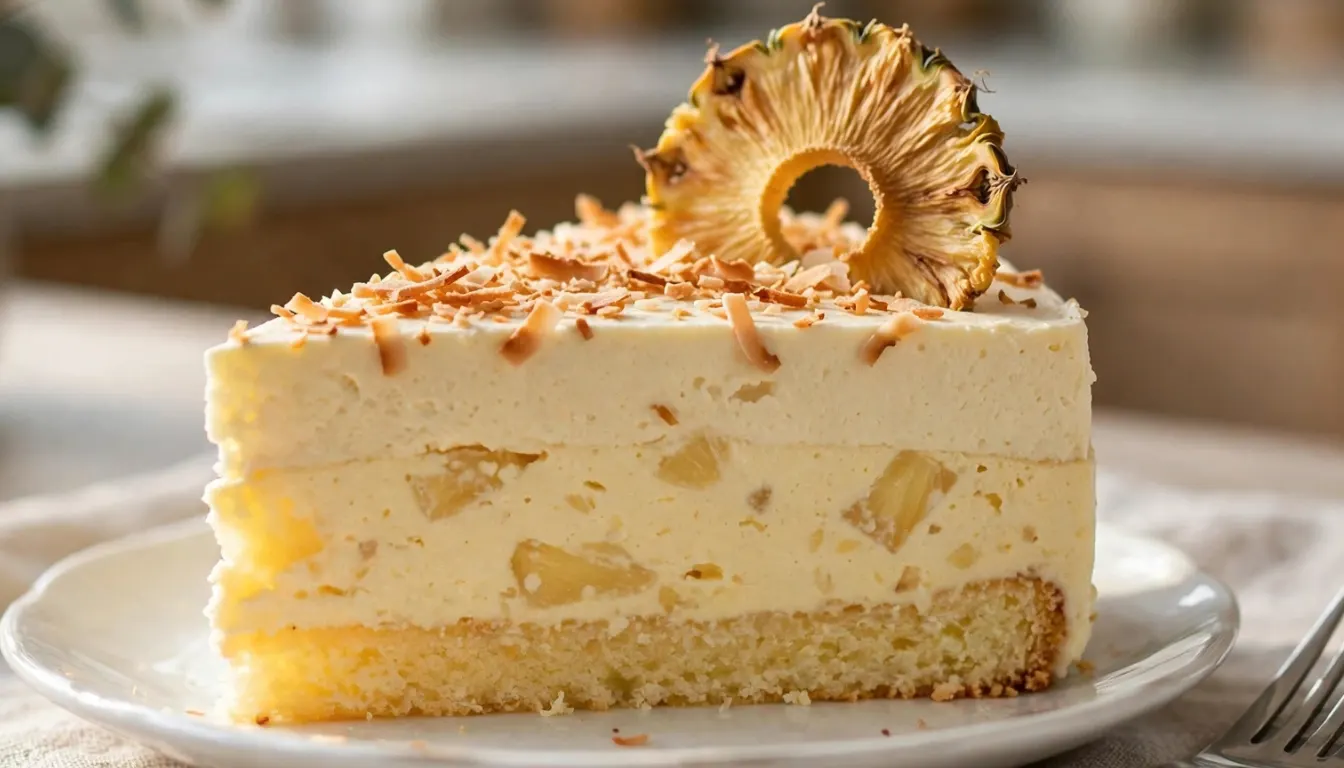
Pineapple Coconut Mousse Cake
I made this cake for the first time about six years ago when my sister asked for “something tropical, but not too heavy” for her backyard birthday party in July. I’ll be honest, my first attempt was a mess. The mousse layer didn’t set right because I rushed the gelatin step, and the whole thing slid sideways when I tried to remove the springform pan ring. Lesson learned the hard way: mousse cakes reward patience, and they punish shortcuts.
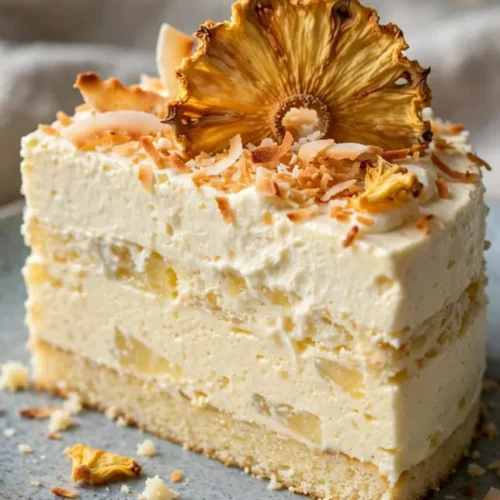
Since then I’ve made this pineapple coconut mousse cake more times than I can count, tweaking it each summer until it finally became one of those recipes people ask me for by name. It’s light, it’s creamy, and it tastes like a vacation without the sunburn. The base is a simple coconut sponge, the middle is a fluffy pineapple mousse studded with real fruit, and the top gets a soft coconut cream finish with toasted coconut flakes for crunch. If you’ve ever had a piña colada and wished it were a dessert you could eat with a fork, this is basically that.
A good stand mixer makes this recipe so much easier, especially when you’re whipping the cream and folding the mousse without deflating it. I use my KitchenAid for the heavy lifting, but any reliable hand mixer will get you there too, it just takes a bit more arm work. You’ll also want a springform pan, 9 inches works best here, because trying to unmold a mousse cake from a regular pan is asking for heartbreak.
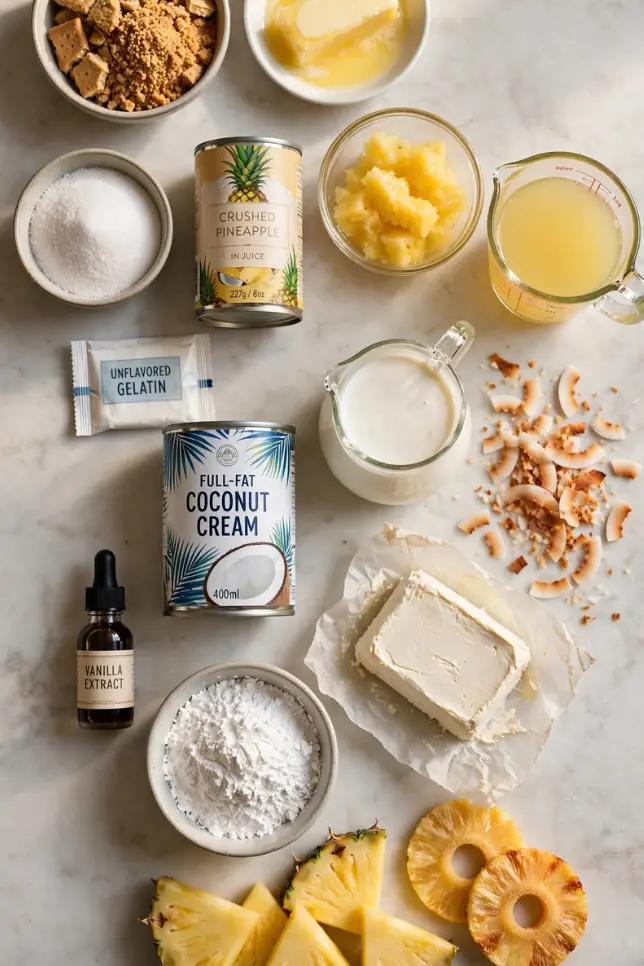
Essential Ingredients
For the coconut sponge base:
- 1 1/2 cups all-purpose flour
- 1/2 cup shredded coconut, unsweetened
- 1 teaspoon baking powder
- 1/4 teaspoon salt
- 1/2 cup butter, softened
- 3/4 cup granulated sugar
- 2 large eggs
- 1/2 cup coconut milk
- 1 teaspoon vanilla extract
For the pineapple mousse:
- 2 cups fresh pineapple, finely chopped (plus juice)
- 1/2 cup granulated sugar
- 2 1/2 teaspoons unflavored gelatin
- 1/4 cup cold water
- 1 1/2 cups heavy whipping cream
- 8 oz cream cheese, softened
For the coconut cream topping:
- 1 cup heavy cream
- 2 tablespoons powdered sugar
- 1/2 cup toasted coconut flakes, for garnish
- Fresh pineapple wedges, for garnish
Alternative Ingredients
If fresh pineapple isn’t in season where you are, canned pineapple in juice (not syrup) works just fine, just drain it well and pat it dry before chopping. Coconut milk can be swapped for whole milk with a splash of coconut extract if that’s what you have on hand. For the cream cheese, a lighter Neufchâtel cheese cuts some richness without changing the texture much. And if gelatin isn’t your thing, agar agar is a plant-based substitute, though you’ll want to follow the package ratio since it sets differently than gelatin does.
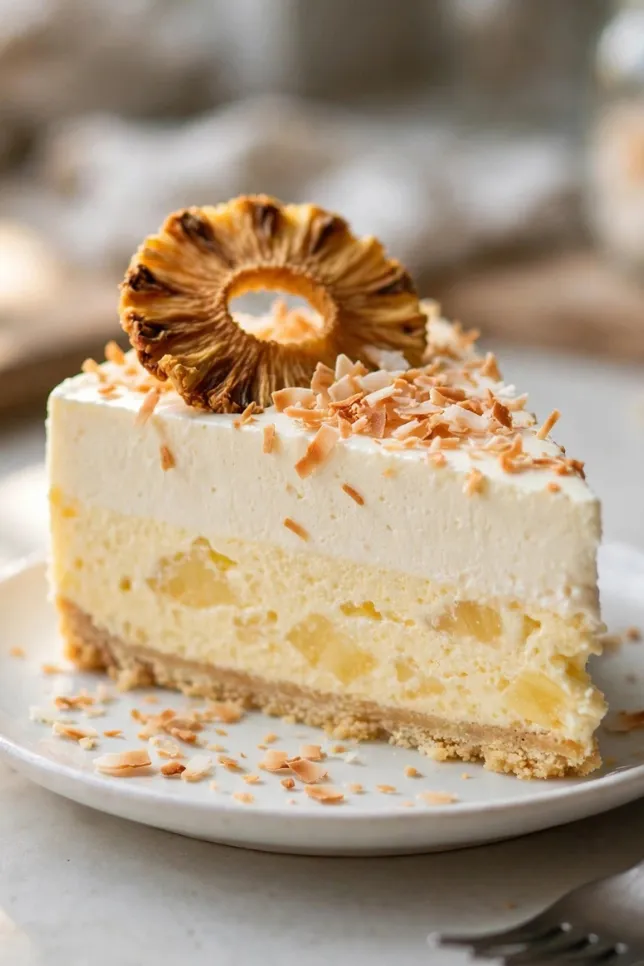
Step-by-Step Directions
Make the sponge base. Preheat your oven to 350°F and grease your springform pan. Whisk together the flour, shredded coconut, baking powder, and salt in a bowl. In a separate bowl, cream the butter and sugar until fluffy, about 3 minutes, then beat in the eggs one at a time. Add the coconut milk and vanilla, then fold in the dry ingredients until just combined. Pour into the pan and bake for 22 to 25 minutes, until a toothpick comes out clean. Let it cool completely in the pan, this part matters more than people realize.
Prep the pineapple. Blend or finely chop the pineapple until you have a chunky puree. Cook it in a saucepan with the sugar over medium heat for about 8 minutes, until it thickens slightly and smells incredible. Set it aside to cool to room temperature.
Bloom the gelatin. Sprinkle the gelatin over the cold water and let it sit for 5 minutes until it looks spongy. Microwave it in short bursts, about 10 seconds at a time, until it’s fully liquid. Stir this into the cooled pineapple mixture.
Whip and fold. Beat the cream cheese until smooth, then whip the heavy cream to soft peaks in a separate bowl (a stand mixer really earns its keep here). Fold the pineapple mixture into the cream cheese, then gently fold in the whipped cream in two additions. Don’t rush this step, folding too aggressively will knock the air right out and you’ll end up with a dense mousse instead of a cloud-like one.
Assemble. Pour the mousse over the cooled sponge base, still in the springform pan. Smooth the top and refrigerate for at least 4 hours, though overnight is honestly better.
Finish it off. Whip the remaining heavy cream with powdered sugar to soft peaks and spread it over the chilled mousse. Sprinkle with toasted coconut flakes and arrange fresh pineapple wedges on top before releasing the springform ring.
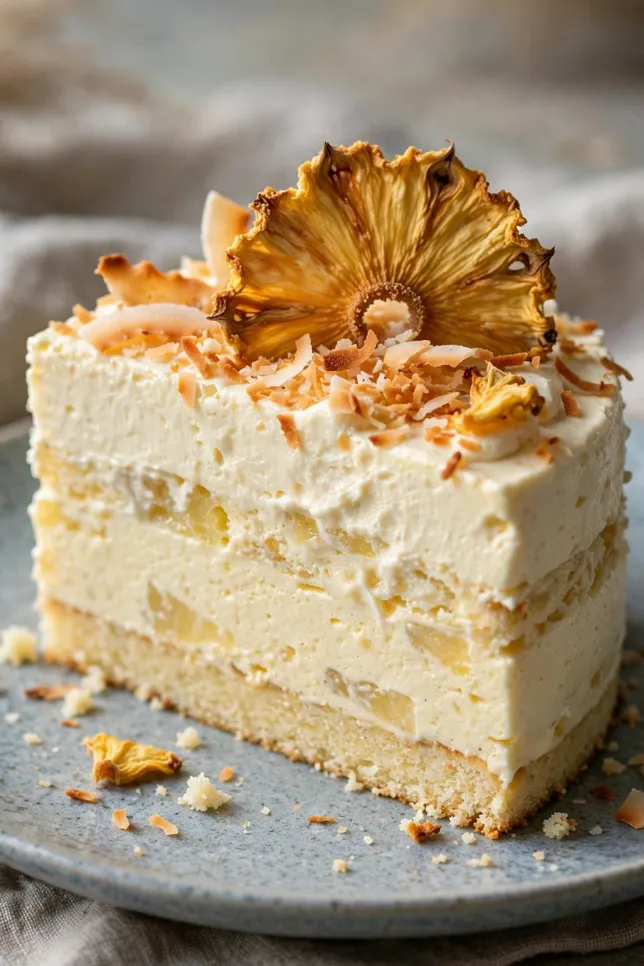
Pro Tips
Toast your coconut flakes in a dry skillet over low heat, stirring constantly, they burn fast and there’s no saving them once they do. Make sure your cream cheese is truly room temperature before mixing, cold cream cheese creates lumps that no amount of whisking will fix. If your kitchen runs warm, chill your mixing bowl and beaters before whipping the cream, it whips faster and holds its structure longer. And if you’re making this ahead for a party, it actually tastes better on day two once the flavors settle.
FAQs
Can I make this cake without gelatin? Yes, agar agar works as a plant-based alternative, just note it sets firmer than gelatin so use slightly less than the package suggests for a softer mousse texture.
Why is my mousse runny? Usually it’s one of two things, either the gelatin wasn’t fully dissolved before mixing, or the cream wasn’t whipped to stiff enough peaks. Both are easy fixes next time around.
Can I freeze this cake? You can freeze it for up to a month, wrapped tightly. Thaw it in the fridge overnight rather than on the counter to keep the texture creamy instead of watery.
Recipe Info
| Prep Time | Chill Time | Total Time | Servings | Yield |
|---|---|---|---|---|
| 40 minutes | 4+ hours | 5 hours | 10 servings | One 9-inch cake |
Why You’ll Love This Recipe
It’s genuinely refreshing without being boring, which is a tough balance to strike in a dessert. The mousse is rich enough to feel indulgent but light enough that you won’t feel weighed down after a slice. It also travels well for potlucks and birthdays since it holds its shape once chilled properly.
What Makes This Recipe Unique
Most pineapple desserts I’ve come across lean on canned filling and call it a day. This one uses fresh pineapple cooked down into an actual mousse base, which gives it a brighter, more natural flavor instead of that overly sweet canned taste. The coconut sponge underneath also adds a texture contrast that a lot of mousse cakes skip entirely.
Key Features
No-bake mousse layer, real fruit flavor throughout, make-ahead friendly, and a tropical flavor combination that works year-round, not just in summer.
Nutrition Facts (per serving)
| Nutrient | Amount |
|---|---|
| Calories | 340 |
| Fat | 22g |
| Carbohydrates | 32g |
| Sugar | 24g |
| Protein | 4g |
Both pineapple and coconut bring more to the table than just flavor, pineapple contains bromelain, an enzyme often discussed for its digestive properties, while coconut has been a staple ingredient across tropical cuisines for centuries. If you’re curious about the technique behind this dessert style, mousse as a culinary method dates back much further than most people assume.
You’ll Also Love
If tropical flavors are your thing, you might enjoy our Hawaiian Pineapple Coconut Cream Fluff for something quicker and no-bake. Our No-Bake Mango Cheesecake is another fruity, chilled dessert that works great for warm-weather gatherings, and the No-Bake Tropical Fruit Cheesecake is worth trying if you want to mix things up with a bigger fruit medley on top.
Conclusion
This cake taught me that mousse desserts aren’t actually hard, they just require you to slow down at the right moments. Once you get the gelatin and folding technique down, you’ll find yourself making versions of this with whatever fruit is in season. Give it a try, and if your first attempt slides a little sideways like mine did, don’t worry, it still tastes amazing either way. Let me know how yours turns out.
Pineapple Coconut Mousse Cake

Ingredients
- | Amount | Unit | Name | Notes |
- | —–: | ——– | —————– | ———– |
- | 1 1/2 | cups | All-purpose flour | |
- | 1/2 | cup | Shredded coconut | Unsweetened |
- | 1 | teaspoon | Baking powder | |
- | 1/4 | teaspoon | Salt | |
- | 1/2 | cup | Butter | Softened |
- | 3/4 | cup | Granulated sugar | |
- | 2 | large | Eggs | |
- | 1/2 | cup | Coconut milk | |
- | 1 | teaspoon | Vanilla extract | |
- | Amount | Unit | Name | Notes |
- | —–: | ——— | ——————– | ————————– |
- | 2 | cups | Fresh pineapple | Finely chopped plus juice |
- | 1/2 | cup | Granulated sugar | |
- | 2 1/2 | teaspoons | Unflavored gelatin | |
- | 1/4 | cup | Cold water | For blooming gelatin |
- | 1 1/2 | cups | Heavy whipping cream | |
- | 8 | oz | Cream cheese | Softened |
- | Amount | Unit | Name | Notes |
- | ——–: | ———– | ———————- | ———– |
- | 1 | cup | Heavy cream | |
- | 2 | tablespoons | Powdered sugar | |
- | 1/2 | cup | Toasted coconut flakes | For garnish |
- | As needed | | Fresh pineapple wedges | For garnish |
Instructions
- Instruction 1
- Prepare the springform pan and dry ingredients
- Preheat the oven to 350°F and grease a 9-inch springform pan. Whisk together the all-purpose flour, shredded coconut, baking powder, and salt in a mixing bowl.
- Instruction 2
- Make the coconut sponge batter
- In a separate bowl, cream the softened butter and granulated sugar until fluffy, about 3 minutes. Beat in the eggs one at a time. Add the coconut milk and vanilla extract, then fold in the dry ingredients until just combined.
- Instruction 3
- Bake the coconut sponge
- Pour the batter into the prepared springform pan. Bake for 22 to 25 minutes, or until a toothpick inserted into the center comes out clean. Allow the sponge to cool completely in the pan.
- Instruction 4
- Prepare the pineapple
- Blend or finely chop the fresh pineapple until you have a chunky puree. Place it in a saucepan with the granulated sugar and cook over medium heat for about 8 minutes, until slightly thickened. Remove from the heat and allow it to cool to room temperature.
- Instruction 5
- Bloom the gelatin
- Sprinkle the unflavored gelatin over the cold water. Let it stand for about 5 minutes, until the gelatin becomes spongy.
- Instruction 6
- Dissolve the gelatin
- Microwave the bloomed gelatin in short bursts of about 10 seconds at a time until completely liquid. Stir the dissolved gelatin into the cooled pineapple mixture.
- Instruction 7
- Prepare the cream cheese
- Beat the softened cream cheese until smooth and lump-free.
- Instruction 8
- Whip the heavy cream
- In a separate bowl, whip the heavy cream until soft peaks form.
- Instruction 9
- Make the pineapple mousse
- Fold the pineapple mixture into the smooth cream cheese. Gently fold the whipped cream into the pineapple and cream cheese mixture in two additions. Fold carefully to keep the mousse light and airy.
- Instruction 10
- Assemble the cake
- Pour the pineapple mousse over the completely cooled coconut sponge while it remains inside the springform pan. Smooth the top evenly.
- Instruction 11
- Chill the mousse cake
- Refrigerate the cake for at least 4 hours. For the best texture and easiest unmolding, chilling overnight is recommended.
- Instruction 12
- Prepare the coconut cream topping
- Whip the remaining heavy cream with the powdered sugar until soft peaks form.
- Instruction 13
- Decorate the cake
- Spread the whipped coconut cream over the chilled mousse layer. Sprinkle the toasted coconut flakes over the top and arrange fresh pineapple wedges as desired.
- Instruction 14
- Release and serve
- Carefully release the springform ring from the chilled cake. Slice and serve cold.