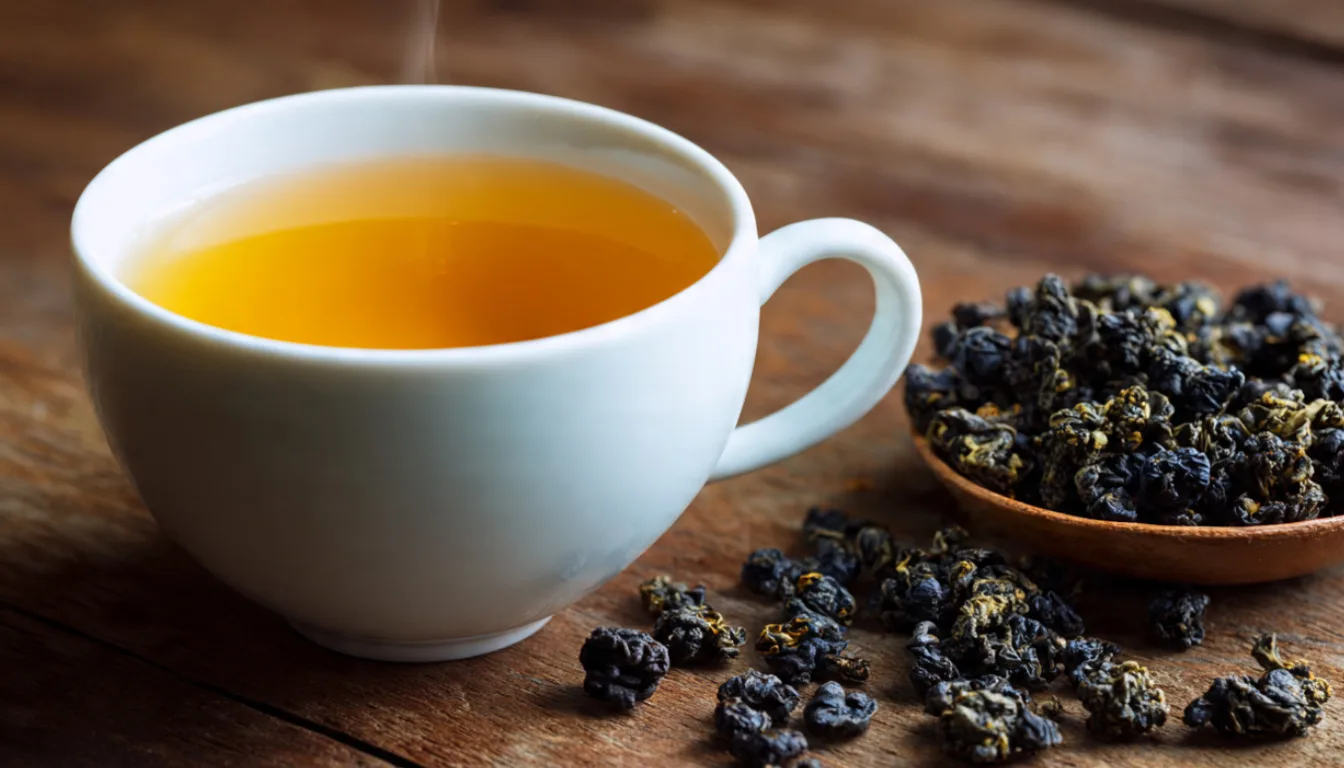
Oolong Tea Fat-Oxidation Brew
This article is part of our comprehensive guide on Low-Calorie Weight Loss Recipes. For the full collection of calorie-conscious recipes, check out the complete guide.
I started drinking oolong tea three years ago after reading a study that made me do a double-take. The research showed participants who drank oolong burned roughly 20% more fat than those who drank water. Twenty percent. I thought there had to be a catch.
There wasn’t. Well, sort of.
Here’s the thing about oolong tea and fat oxidation – it’s not magic. But the science behind it is genuinely interesting, and when you brew it right and time it well, it can become a useful tool in your weight loss toolkit. I’ve been making this pre-workout brew for years now, and I want to share exactly how I do it.
What Makes Oolong Different
Oolong sits somewhere between green tea and black tea in terms of oxidation. According to Wikipedia’s entry on oolong tea, the leaves are partially oxidized, which creates a unique chemical profile that you won’t find in other teas.
Why does this matter for fat burning? Oolong contains both caffeine and catechins, but in different ratios than green or black tea. This combination appears to boost your metabolism in a way that’s been documented in actual clinical studies. We’re not talking about influencer claims here.
A study published in the Journal of Medical Investigation found that oolong tea increased energy expenditure by about 10% for two hours after consumption. That’s not earth-shattering, but it adds up. Especially if you’re drinking it before exercise.
Why Timing Matters
I drink my oolong brew about 30 minutes before working out. Not because I read it in a magazine, but because I tested different timings and this one felt right.
Too close to exercise and I felt jittery. Too far out and the effects seemed to fade before I really got moving. Thirty minutes hits that sweet spot where the caffeine kicks in, the catechins are circulating, and my body feels primed to move.
But look, I know not everyone exercises at the same time. Some of you work out at 5am (I honestly don’t know how you do it). Others squeeze in a lunch break walk. The 30-minute window works regardless of when you’re active.
If you’re interested in other beverages that support your weight loss goals, check out our Low-Calorie Smoothie Recipes for post-workout options.
The Science Part (Keep Reading, I Promise It’s Quick)
Fat oxidation is basically your body’s process of breaking down stored fat and using it for energy. According to research on fat metabolism, this process involves multiple steps and can be influenced by various factors – including what you consume.
Oolong tea contains polyphenols that appear to activate enzymes responsible for dissolving triglycerides. That’s the stored fat in your cells. The caffeine content also triggers your nervous system to signal fat cells to break down.
I’m not a scientist. But I can tell you that after three years of consistent oolong consumption before workouts, my body composition has changed in ways that diet and exercise alone didn’t achieve. Is it the tea? Partially. Is it also consistency and patience? Absolutely.
Choosing Your Oolong
Not all oolong is created equal. Trust me on this one.
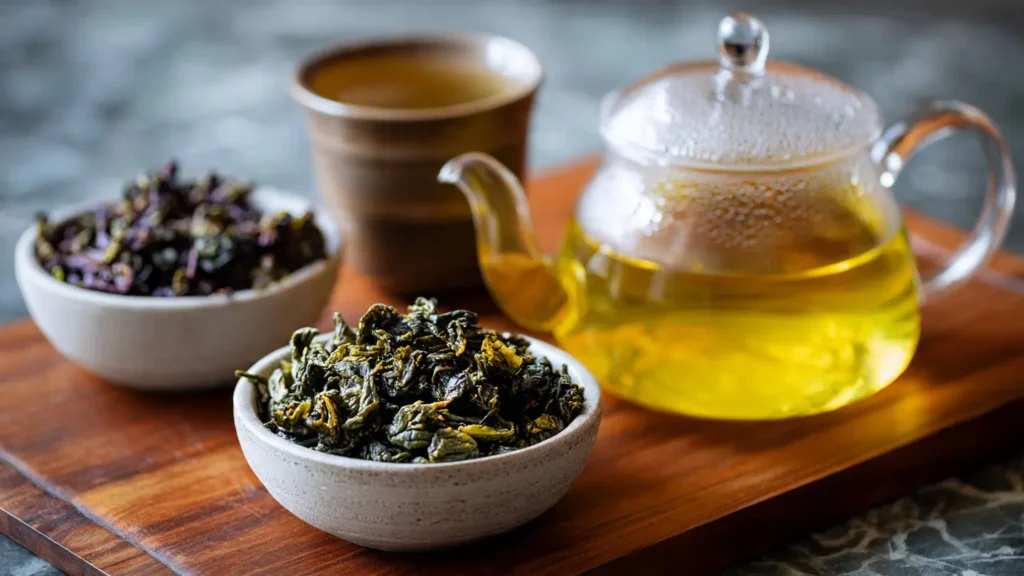
I wasted probably $60 on grocery store oolong before I figured out what to look for. The cheap stuff in tea bags? It’s often dust and fannings – the leftover bits from tea production. You want whole or semi-rolled leaves.
Look for these varieties:
- Da Hong Pao (Big Red Robe) – robust, slightly roasted flavor
- Tie Guan Yin (Iron Goddess) – lighter, more floral
- High Mountain Oolong – smooth and buttery
I personally prefer Tie Guan Yin for my pre-workout brew because it’s gentler on my stomach. But honestly, any quality loose-leaf oolong will work.
Storage Tips
Keep your oolong in an airtight container away from light and moisture. I use a ceramic canister in my pantry – not near the stove where heat fluctuates.
Good oolong can last 6-12 months when stored properly. You’ll know it’s gone stale when it loses its fragrance and tastes flat.
If you’re into meal prepping (and if you’re reading this blog, you probably are), check out our guide to Low-Calorie Meal Prep Recipes for more make-ahead strategies.
Oolong Tea Fat-Oxidation Brew
Prep Time: 2 minutes
Brew Time: 5 minutes
Servings: 1
Calories per Serving: 0-2 calories (plain)
Ingredients
- 1 tablespoon loose-leaf oolong tea (or 1 premium tea sachet)
- 8 ounces filtered water (heated to 190-200°F)
- Optional: thin slice of fresh ginger
- Optional: squeeze of lemon
Instructions
- Heat your water to about 190-200°F. This is just below boiling – you’ll see small bubbles forming but not a rolling boil. If you don’t have a thermometer, bring water to boil and let it sit for 2 minutes.
- Place your oolong leaves in a teapot, infuser, or directly in your mug with a strainer ready.
- Pour the hot water over the leaves. Don’t rush this part.
- Steep for exactly 5 minutes. I know some people say 3-4 minutes, but for fat oxidation purposes, you want those polyphenols fully extracted. Five minutes does the trick without making it bitter.
- Remove the leaves or strain into your cup. Add ginger or lemon if you like, but honestly? Good oolong doesn’t need anything.
- Drink 30 minutes before your workout or physical activity. Sip slowly rather than gulping it down.
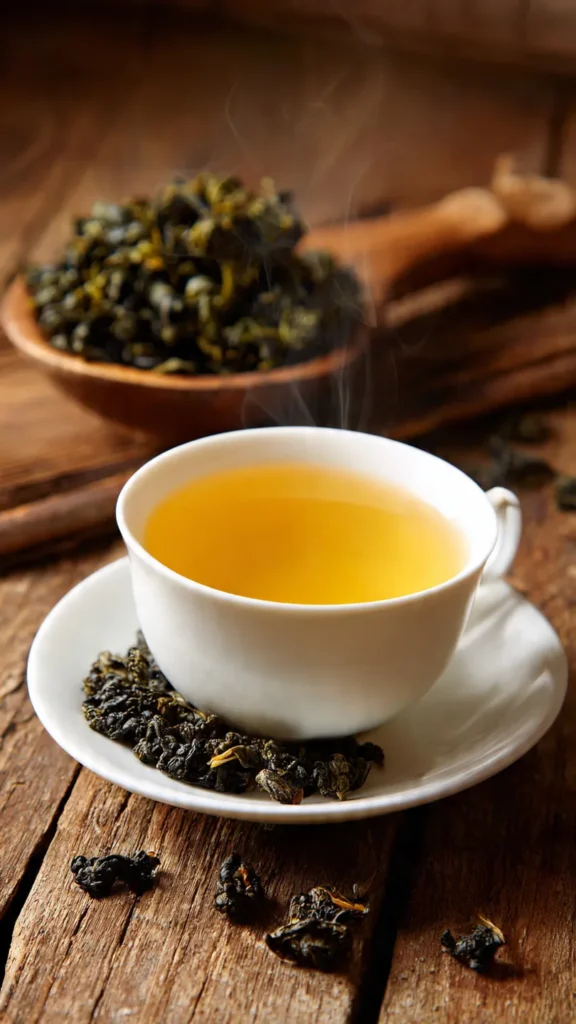
Notes
You can re-steep quality oolong leaves 2-3 times. The second steeping often tastes even better than the first. I usually get two cups from one tablespoon of leaves.
If caffeine sensitivity is a concern, be aware that oolong contains roughly 37-55mg per cup. That’s less than coffee but more than green tea.
Making It a Habit
The real results come from consistency. I drink this brew 4-5 times per week before my morning walks or afternoon gym sessions. Some days I skip it. Life happens.
What I’ve noticed over time is better endurance during cardio and a general sense of alertness without the crash I used to get from pre-workout supplements. My husband David tried it too, though he prefers his with a slice of lemon.
For those busy weeknights when you need something quick after your workout, our Quick Low-Calorie Recipes has meals you can throw together in under 30 minutes.
Final Thoughts
Oolong tea isn’t a miracle weight loss solution. Nothing is. But it’s a zero-calorie, research-backed beverage that can support your fat oxidation when combined with regular movement and sensible eating.
I like that it’s simple. I like that it’s been consumed for centuries. And I really like that it gives me a moment of calm before I head to the gym – a little ritual that signals to my brain that it’s time to move.
Give it a try for a month. See how you feel. Your body might surprise you.
Looking for more ways to support your weight loss goals? Explore our full collection of Low-Calorie Weight Loss Recipes for hundreds of satisfying, calorie-conscious meals.