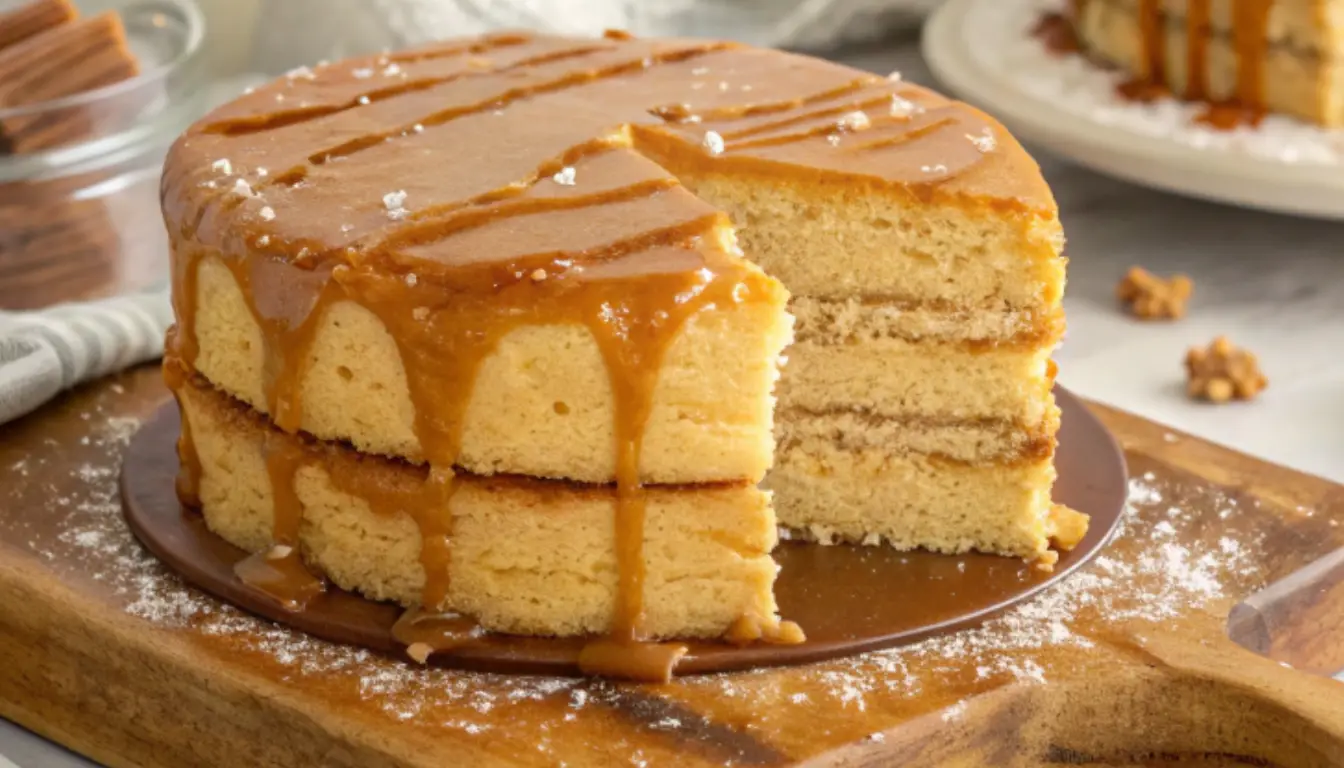
Southern Caramel Cake: The Classic Dessert That Made Me Fall in Love with Baking
I’ll never forget the first time I tasted authentic Southern caramel cake at my neighbor’s house in Georgia. I was 23, fresh out of culinary school, and thought I knew everything about baking. One bite of that towering, golden-frosted masterpiece completely humbled me. The caramel wasn’t just sweet, it had this deep, almost burnt-sugar complexity that made my fancy French pastries seem one-dimensional. That cake changed everything for me.
Here’s the thing about Southern caramel cake: it’s not technically difficult, but it demands respect. The caramel frosting is alive, constantly threatening to crystallize or separate if you turn your back for even a minute. I’ve made this cake probably 200 times over the past decade, and I still get a little nervous when I’m cooking that caramel. But that’s exactly what makes it special.
Essential Ingredients
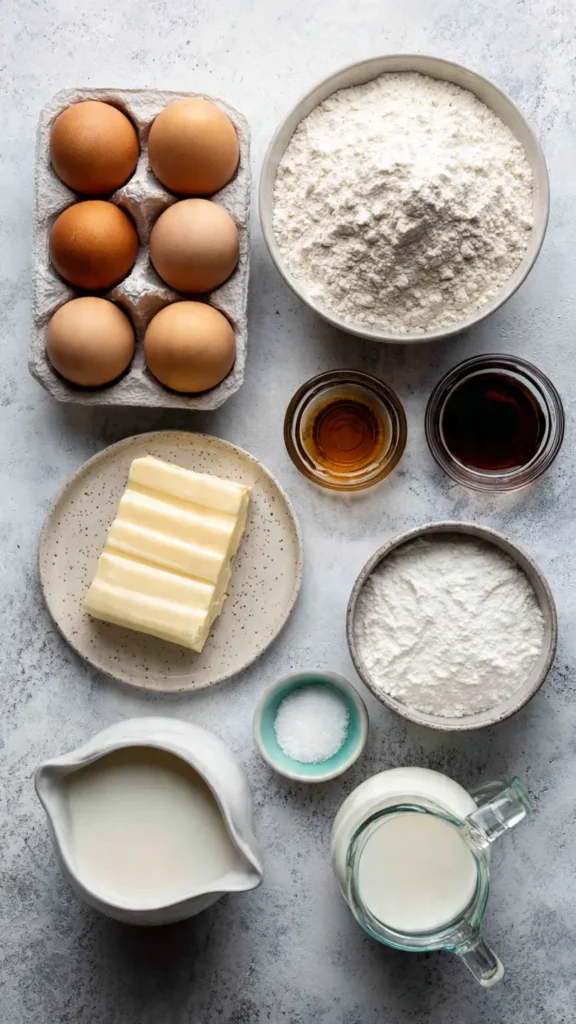
The beauty of this recipe is that you probably have most of what you need already. No exotic ingredients, just quality basics:
- 2 ½ cups all-purpose flour
- 2 cups granulated sugar
- 1 cup unsalted butter (softened, plus extra for pans)
- 4 large eggs (room temperature)
- 1 cup whole milk
- 2 ½ teaspoons baking powder
- ½ teaspoon salt
- 2 teaspoons vanilla extract
For the caramel frosting:
- 3 cups granulated sugar
- 1 cup heavy cream
- ½ cup unsalted butter
- 1 tablespoon light corn syrup
- ¼ teaspoon salt
- 1 teaspoon vanilla extract
Alternative Ingredients
If you’re out of whole milk, buttermilk actually makes an even more tender crumb (my personal preference). You can substitute cake flour for all-purpose if you want an extra-delicate texture, just use 2 ¾ cups instead. Some folks swear by adding a tablespoon of bourbon to the frosting, which I think is genius if you’re serving adults.
Don’t have corn syrup? A tablespoon of honey works, though the caramel will have a slightly different flavor profile. And please, use real vanilla extract. The imitation stuff just doesn’t cut it in something this simple and elegant.
Step-by-Step Directions
Making the Cake Layers
Preheat your oven to 350°F and grease three 9-inch round cake pans. I use butter and a light dusting of flour, old-school style. Parchment circles in the bottom make life easier, trust me on this.
In my stand mixer (I use a KitchenAid, but honestly any good stand mixer works), cream the butter and sugar for about 5 minutes until it’s pale and fluffy. This step is crucial. Don’t rush it. I used to cut corners here when I was impatient, and my cakes always turned out dense.
Add the eggs one at a time, beating well after each addition. The mixture might look a little curdled after the third egg. That’s totally normal. Just keep going.
In a separate bowl, whisk together your flour, baking powder, and salt. With the mixer on low, alternate adding the dry ingredients and milk, starting and ending with the flour mixture. Mix just until combined. Over-mixing is the enemy of tender cake.
Divide the batter evenly between your pans. I actually weigh them on my kitchen scale to be precise, but eyeballing works fine too. Bake for 25-28 minutes until a toothpick comes out clean. Let them cool in the pans for 10 minutes, then turn out onto wire racks.
The Caramel Frosting (Where the Magic Happens)
This is where things get real. Have everything measured and ready before you start because once this caramel starts cooking, you cannot walk away.
In a heavy-bottomed saucepan (I use my cast iron skillet actually, it distributes heat perfectly), combine the sugar, cream, butter, corn syrup, and salt. Cook over medium heat, stirring constantly, until the sugar dissolves.
Once it starts boiling, stop stirring. I know this feels wrong, but stirring at this stage encourages crystallization. Instead, swirl the pan occasionally. Use a candy thermometer if you have one (get it to 238°F for perfect consistency), but I’ve learned to judge by color and feel over the years.
The mixture will bubble like crazy and turn from pale gold to a rich amber. This takes about 15-20 minutes. When you lift your spoon and the caramel falls in thick ribbons, you’re close. Remove from heat and stir in the vanilla.
Here’s the critical part: let it cool for exactly 10 minutes while beating with a hand mixer. Not 5 minutes, not 15 minutes. Ten. This is when the caramel develops that signature fudgy texture that makes this frosting legendary.
Assembly
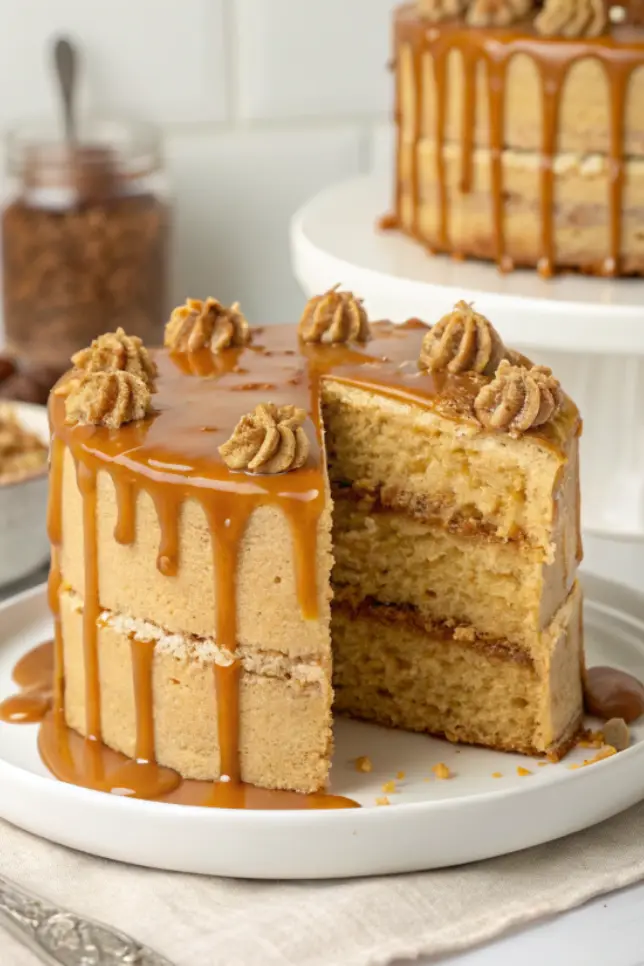
Place your first cake layer on a serving plate. Working quickly (the frosting sets up fast), spread about a third of the caramel over the top. Add the second layer, more caramel, then the final layer. Use the remaining frosting for the top and sides.
The frosting will start to set within 15 minutes, so work with purpose but don’t panic. I use an offset spatula for smooth sides, but honestly, a rustic, textured finish looks just as beautiful and is way more forgiving.
Pro Tips
I learned this the hard way: high humidity is caramel’s worst enemy. On rainy days, the frosting never quite sets properly. Save this recipe for dry weather if you can.
Your eggs and butter need to be genuinely room temperature. Cold eggs make the batter dense, and cold butter won’t cream properly. I take mine out of the fridge at least 2 hours before baking.
If your caramel crystallizes (happens to everyone eventually), add 2 tablespoons of hot water and stir vigorously. Sometimes you can save it, sometimes you can’t. I keep extra cream on hand just in case I need to start the frosting over.
For meal prep purposes, this cake actually freezes beautifully. Wrap individual slices in plastic wrap, then foil, and freeze for up to 3 months. Thaw in the refrigerator overnight.
Frequently Asked Questions
Why did my caramel frosting turn grainy?
It usually happens from stirring too much during boiling. Let it cook undisturbed and use corn syrup to prevent crystallization.
Can I make this cake ahead of time?
Yes, bake layers a day before and frost the next day for best results.
Can I freeze it?
Yes, wrap slices tightly and freeze up to 3 months.
What makes it special?
The cooked caramel frosting creates a rich, fudgy texture that sets it apart from regular cakes.
Can I use buttermilk?
Yes, it improves texture and adds a subtle tang.
Why You’ll Love This Recipe
This isn’t a quick weeknight dessert, and that’s exactly the point. Southern caramel cake is a project, something you make when you want to show people you care. The process of making it is almost meditative once you get the hang of it.
The flavor is unlike anything you can buy. That deep, caramelized sugar taste with hints of butter and cream creates layers of complexity that artificial cake just can’t touch. And the texture, that perfect balance of moist cake and fudgy frosting, is incredibly satisfying.
What Makes This Recipe Unique
Most caramel cake recipes use a cooked frosting method, but this old-fashioned approach beats them all. The traditional Southern technique creates a frosting that’s part caramel, part fudge, and entirely addictive. It’s not buttercream with caramel flavor added. It’s actual cooked caramel that becomes spreadable.
I’ve also simplified the process without sacrificing authenticity. Some recipes call for separating eggs and folding in whites, but I find that fussy and unnecessary. This straightforward method delivers the same tender crumb with less hassle.
Key Features
- Classic Southern recipe passed down through generations
- Rich, deep caramel flavor from proper cooking technique
- Moist, tender cake crumb that stays fresh for days
- Impressive presentation for special occasions
- Easier than it looks once you understand the process
- No artificial flavors or colors, just real ingredients
Nutrition Facts (Per Slice)
| Nutrient | Amount |
|---|---|
| Calories | 520 |
| Total Fat | 24g |
| Saturated Fat | 15g |
| Cholesterol | 115mg |
| Sodium | 220mg |
| Total Carbohydrates | 72g |
| Dietary Fiber | 0g |
| Sugars | 58g |
| Protein | 5g |
Note: This is a celebratory dessert, not health food. Enjoy it in moderation.
You’ll Also Love
If this Southern caramel cake speaks to you, try my German Chocolate Cake with homemade coconut-pecan frosting. The techniques are similar, and the flavors are equally complex.
My Classic Red Velvet Cake uses the same layering method and pairs beautifully with cream cheese frosting if you’re not ready to tackle caramel yet.
For a simpler weeknight option, my Caramel Apple Dump Cake gives you those same caramel flavors with about 10% of the effort.
Conclusion
Ten years into making this cake, I still get excited every single time. There’s something magical about watching sugar transform into glossy caramel, knowing that in about an hour you’ll have created something that makes people genuinely happy.
Yes, the frosting might intimidate you the first time. That’s normal. My first attempt crystallized into a grainy mess that I had to scrape off and start over. But by the third or fourth try, you’ll develop a feel for it. You’ll know exactly when to pull it off the heat just by how it moves in the pan.
That’s the real gift of this recipe. It teaches you patience, attention, and the value of doing something the right way instead of the fast way. In our world of boxed mixes and store-bought frosting, taking the time to make a proper Southern caramel cake feels like an act of rebellion.
Make this for someone’s birthday. Bring it to a potluck. Serve it at Thanksgiving. Or just make it on a random Tuesday because you want to feel the satisfaction of creating something genuinely special. Whatever the occasion, this cake delivers.
Just remember: respect the caramel, trust the process, and don’t even think about walking away while it’s cooking. Your patience will be rewarded with the best cake you’ve ever made.
Southern Caramel Cake
A rich and nostalgic layered cake with deep caramel flavor and a soft buttery crumb.
Ingredients
- 2 1/2 cups all-purpose flour
- 2 cups sugar
- 1 cup butter
- 4 eggs
- 1 cup milk
- 2 1/2 tsp baking powder
- 1/2 tsp salt
- 2 tsp vanilla
Caramel Frosting
- 3 cups sugar
- 1 cup heavy cream
- 1/2 cup butter
- 1 tbsp corn syrup
- 1/4 tsp salt
- 1 tsp vanilla
Instructions
- Cream butter and sugar until fluffy.
- Add eggs one at a time.
- Mix dry ingredients and alternate with milk.
- Bake at 350°F for 25 to 28 minutes.
- Cook caramel ingredients until thick and amber.
- Cool and beat frosting until spreadable.
- Layer cake and frost quickly before it sets.
Notes
Work quickly with caramel frosting as it sets fast. Avoid making on humid days for best texture.