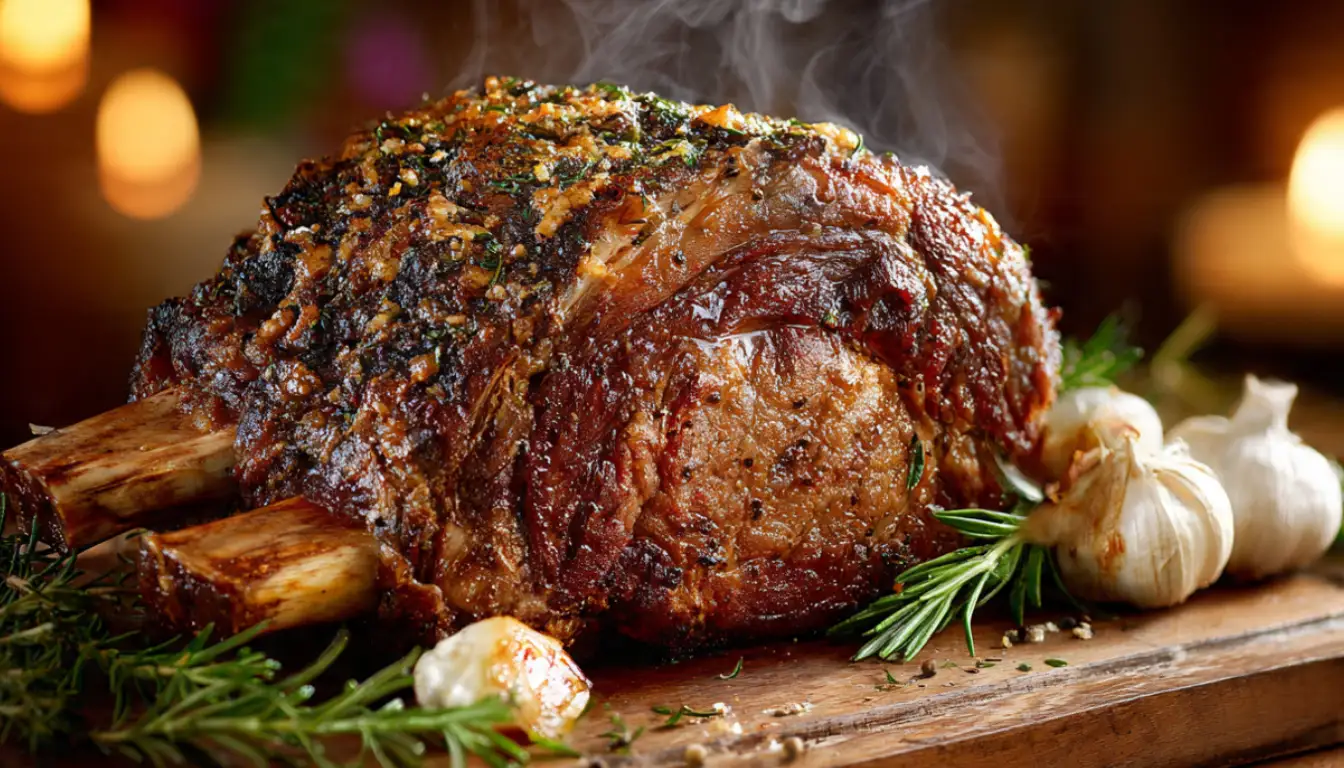
Mastering the Art of Christmas Prime Rib
The first time I roasted a prime rib for Christmas, I was terrified. I’d spent a small fortune on the meat, invited twelve people, and realized halfway through I had no idea what I was doing. That dinner turned out fine, but I learned some hard lessons.
After a decade of Christmas dinners and testing every method imaginable, I’ve cracked the code on prime rib. It’s way easier than most people think. The key isn’t fancy equipment or culinary school training. It’s understanding a few basic principles and trusting your meat thermometer.
Essential Ingredients
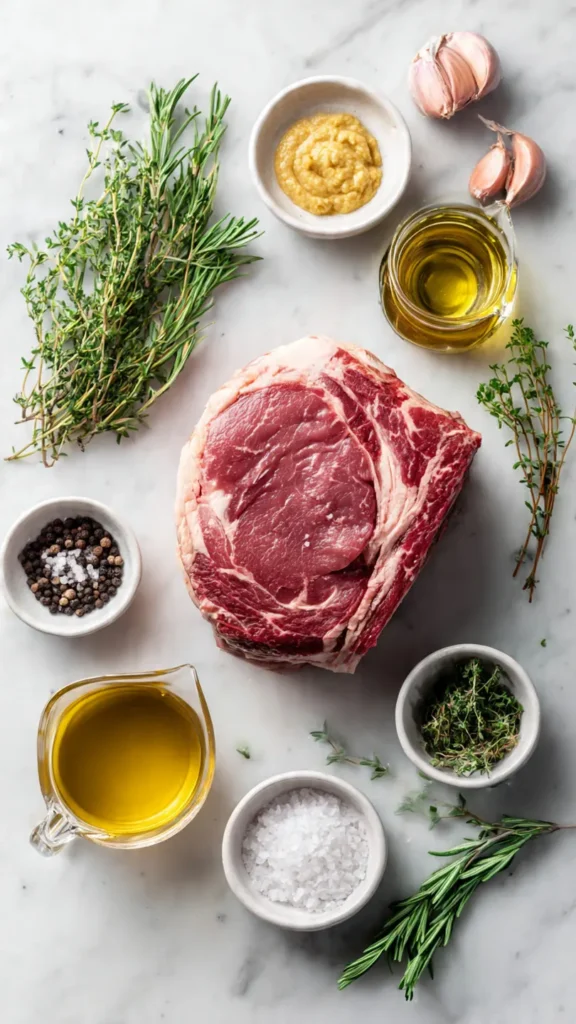
Here’s what you’ll need for a show-stopping prime rib:
For the Roast:
- 1 bone-in prime rib roast (4-7 ribs, about 8-12 pounds)
- 1/4 cup kosher salt
- 2 tablespoons freshly ground black pepper
- 6 cloves garlic, minced
- 3 tablespoons fresh rosemary, chopped
- 2 tablespoons fresh thyme leaves
- 1/4 cup olive oil
- 2 tablespoons Dijon mustard
For the Au Jus:
- 2 cups beef stock
- 1 cup red wine (something you’d actually drink)
- 2 tablespoons butter
- Pan drippings from the roast
- Salt and pepper to taste
The quality of your meat matters here. I always tell people to make friends with their butcher. A good relationship means they’ll cut you the perfect roast, tell you exactly how many ribs you need for your guest count, and sometimes even French the bones for you (that’s when they clean the meat off the rib ends for presentation).
Alternative Ingredients
Look, I get it. Not everyone has access to a fancy butcher or wants to spend their mortgage payment on meat. Here are some practical swaps:
Instead of bone-in: Boneless rib roast works perfectly and is easier to carve. Great for smaller groups.
Budget-friendly: Choice grade instead of prime is totally acceptable. With proper technique, choice can be just as tender.
Herb variations: Dried rosemary works (use 1 tablespoon). I’ve also used sage and oregano with fantastic results.
Wine substitute: Extra cup of beef stock with a splash of balsamic vinegar for depth.
Step-by-Step Directions
Day Before (This is Important!):
Take your roast out of its packaging and pat it completely dry. Mix the salt, pepper, garlic, rosemary, and thyme. Rub this mixture all over the roast. Place it uncovered on a rimmed baking sheet in your fridge overnight.
This step separates good prime rib from great. The salt penetrates deep (dry brining), and the uncovered rest dries the surface for an incredible crust.
Christmas Day:
Pull your roast from the fridge 2-3 hours before cooking. You want room temperature for even cooking.
Preheat oven to 450°F. A reliable meat thermometer is crucial here. I use a leave-in digital thermometer for about $30.
Mix olive oil and Dijon mustard, then brush all over the roast.
Place roast bone-side down in a roasting pan. No rack? Create a “raft” with chopped carrots, celery, and onions. The vegetables flavor your au jus.
The Two-Stage Method:
Roast at 450°F for 15 minutes to create the crust. Then reduce to 325°F without opening the door.
For medium-rare, aim for 120-125°F internal temperature. The roast continues cooking during rest, reaching perfect 130-135°F. Figure 15-20 minutes per pound at 325°F, but trust your thermometer over the clock. Insert it into the thickest part, away from bone.
My first disaster happened because I trusted a timing chart instead of my thermometer. The roast was well-done, and my mother-in-law still mentions it.
The Critical Rest:
When your thermometer hits 120°F, remove the roast, tent loosely with foil, and rest for 30 minutes minimum. The juices need time to redistribute. I’ve rested mine for 45 minutes with perfect results.
Make your au jus during this time. Pour off most fat from the roasting pan, leaving 2 tablespoons. Set pan over medium-high heat. Add wine and scrape up browned bits. Reduce by half, add beef stock, simmer 10 minutes, strain, and whisk in butter. Season to taste.
Carving:
Remove the bones by running a sharp knife along them. Slice the meat across the grain into 1/2-inch thick slices. Serve with the au jus on the side.
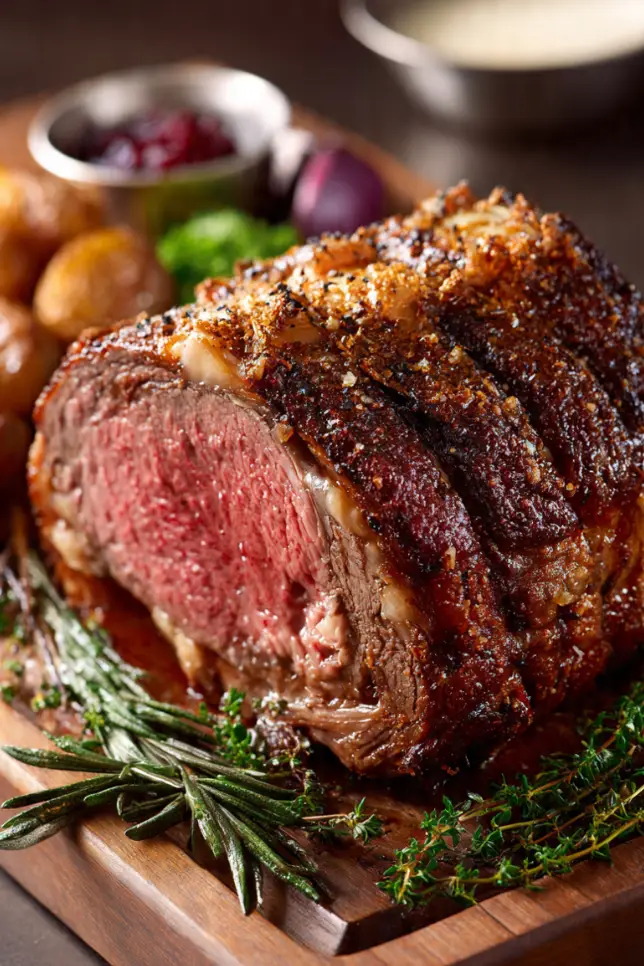
Pro Tips
Here are some lessons I learned the hard way:
Buy a meat thermometer. This isn’t optional. A good instant-read costs about $20 and saves expensive meat.
Salt generously the day before. The overnight dry brine transforms texture and penetrates deep for incredible tenderness.
Don’t skip room temperature rest. Cold meat cooks unevenly. The outside overcooks before the inside reaches temperature.
Use bones for stock. After dinner, throw those bones in your slow cooker with vegetables for amazing beef stock. Freezes beautifully in meal prep containers.
Get a roasting pan with a rack. Quality pans ensure even heat circulation. Restaurant supply stores have better prices than department stores.
FAQs
How much prime rib should I prepare per person?
About 1 pound per person for bone-in or 3/4 pound for boneless.
What is the best temperature for medium-rare?
Remove at 120-125°F and let it rest to reach perfect doneness.
Can I cook it ahead of time?
Yes, slow roast first and sear before serving.
Do I need a roasting rack?
No, vegetables or foil work just fine.
Why is resting important?
It keeps the meat juicy by redistributing the internal juices.
Recipe Info
| Detail | Information |
|---|---|
| Prep Time | 20 minutes (plus overnight dry brine) |
| Cook Time | 2-3 hours (depending on size) |
| Rest Time | 30-45 minutes |
| Total Time | 3-4 hours |
| Servings | 8-12 people |
| Yield | One 4-rib roast (8-10 pounds) |
Why You’ll Love This Recipe
This recipe needs good meat, a thermometer, and patience. The method gives you perfect medium-rare roast with gorgeous crust every time. No guesswork, no overcooked expensive meat. The technique works for any size roast.
Leftovers are incredible. Prime rib sandwiches with horseradish? French dip with au jus? Cold slices on salad? You’ll fight over them.
What Makes This Recipe Unique
The overnight dry brine is the game-changer. Most recipes season right before cooking, but that doesn’t give salt time to work. This method comes from a butcher who supplies high-end restaurants.
The two-stage cooking (high heat first, then low) gives restaurant-quality results. The 450°F blast creates the Maillard reaction (delicious browning), while lower temperature ensures even cooking. Starting at room temperature means more even cooking from edge to center.
Key Features
Foolproof timing method: Using temperature instead of time eliminates guesswork and oven variations.
Make-ahead friendly: The dry brine happens the day before, and you can even prep your au jus ingredients in advance.
Minimal active cooking time: Once it’s in the oven, you’re basically hands-off. No basting, no fussing.
Works for any size roast: The technique scales perfectly whether you’re feeding 4 people or 20.
Restaurant-quality crust: The high-heat start gives you that steakhouse exterior with a juicy interior.
Nutrition Facts (Per Serving)
Based on 1/2 pound serving of meat
| Nutrient | Amount |
|---|---|
| Calories | 520 |
| Total Fat | 42g |
| Saturated Fat | 17g |
| Cholesterol | 145mg |
| Sodium | 480mg |
| Protein | 32g |
| Iron | 15% DV |
| Vitamin B12 | 45% DV |
Note: Nutrition information is approximate and varies based on the specific cut and fat content. These values are for the meat only, not including au jus.
You’ll Also Love
If you’re planning your Christmas menu, try these sides:
Garlic Butter Green Beans – Simple side that doesn’t compete with the main course.
Creamy Horseradish Sauce – Classic prime rib accompaniment. Takes 5 minutes.
Roasted Garlic Mashed Potatoes – Perfect for soaking up au jus. I use my KitchenAid stand mixer for creamy results.
Yorkshire Pudding – Traditional British popovers made with pan drippings.
Red Wine Braised Carrots – Uses the same wine from your au jus.
Conclusion
Your first prime rib is intimidating, but if you follow this method, success is easier than failure. The overnight salt does most work. The thermometer tells you when it’s done. The rest period forgives timing errors.
I’ve made this for seven Christmas dinners with roasts from 6 to 12 pounds. Every time, people think I performed magic. The secret? I followed the same steps and trusted my thermometer.
Buy good meat, salt it the day before, use a thermometer, and let it rest. When everyone raves about the best prime rib they’ve had, you’ll know it was straightforward all along.
Christmas Prime Rib Roast
Juicy, tender, and perfectly cooked prime rib with a rich crust and classic au jus.
Ingredients
- 1 bone-in prime rib roast (8-12 lbs)
- 1/4 cup kosher salt
- 2 tbsp black pepper
- 6 cloves garlic
- Fresh rosemary and thyme
- Olive oil and Dijon mustard
- Beef stock and red wine
Instructions
- Dry brine overnight for best flavor.
- Bring to room temperature before cooking.
- Roast at high heat, then reduce temperature.
- Cook until internal temp reaches 120°F.
- Rest 30-45 minutes before slicing.
- Prepare au jus using pan drippings.
Notes
Always use a meat thermometer for accuracy. Letting the roast rest is essential for juicy results. Leftovers make excellent sandwiches.