
Low-Calorie Veggie Frittata Muffins (95 Cal) for Weight Loss
I burned my first batch of frittata muffins so badly that my smoke alarm went off at 6:30 AM. My husband wandered into the kitchen, half-asleep, and just said “ambitious breakfast choice.” He wasn’t wrong.
But here’s the thing – once I figured out the timing (and stopped checking Instagram while they were in the oven), these became my absolute go-to for busy mornings. They’re 95 calories each, they reheat perfectly, and I can grab two on my way out the door without feeling like I’m starting the day in a calorie deficit hole.
This article is part of our comprehensive guide on Low-Calorie Weight Loss Recipes. For more recipe ideas and weight loss tips, check out the full guide.
Why I Make These Every Single Week
Look, I’m not a morning person. Never have been. The idea of cracking eggs and chopping vegetables before my coffee kicks in? Not happening.
That’s exactly why I make a dozen of these on Sunday afternoon. I portion them into containers, stick them in the fridge, and suddenly I have breakfast sorted for the entire week. Two muffins, a piece of fruit, and I’m at around 250 calories with 16 grams of protein.
They’re also stupidly versatile. I’ve packed them in my kids’ lunchboxes (they think they’re getting “egg cupcakes” which sounds way more fun than frittata). I’ve eaten them cold as a snack. I’ve crumbled one over a salad when I needed extra protein.
The beauty is in the simplicity – eggs, vegetables, a bit of cheese, done.
What You Can Actually Use These For
Beyond the obvious breakfast situation, I’ve found these work for:
Meal prep containers – Stack them between parchment paper, and they stay perfect for 4-5 days. I usually make a double batch because they disappear fast.
Post-workout snacks – The protein helps, and they’re way more satisfying than a protein bar that tastes like sweetened cardboard.
Lunch on the go – Pack three or four with a side salad, and you’ve got a proper meal under 400 calories. I do this at least twice a week when I’m working from home and can’t be bothered to actually cook.
Kid-friendly dinners – My daughter will eat these without complaining, which is honestly a win. I serve them with roasted sweet potato wedges and call it dinner.
Storing Them (Because You’re Making a Batch, Right?)
Fridge storage is straightforward. Let them cool completely (don’t skip this or you’ll get soggy bottoms), then stack them in an airtight container with parchment paper between layers. They’ll keep for 5 days, maybe 6 if you’re pushing it.
For freezer storage, wrap each muffin individually in plastic wrap, then put them all in a freezer bag. They’ll stay good for about 2 months. To reheat from frozen, I just microwave them for 60-90 seconds. The texture isn’t quite as fluffy as fresh, but it’s close enough for a Tuesday morning.
Pro tip I learned the hard way: Don’t freeze them in the muffin tin. I tried that once thinking I’d be clever, and then couldn’t fit anything else in my freezer for three days.
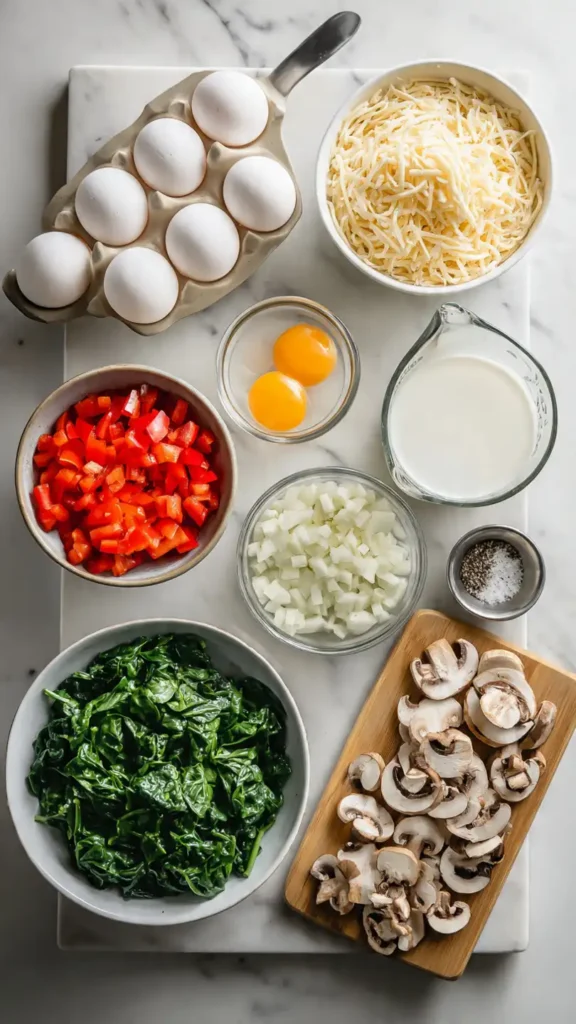
The Ingredients
You need less than you think. This is the beauty of these – they’re basically a vegetable delivery system held together with eggs.
For 12 muffins:
- 8 large eggs
- 1/4 cup milk (I use whatever’s in the fridge – whole, almond, oat, doesn’t matter)
- 1/2 cup shredded cheese (cheddar or mozzarella work best)
- 1 cup chopped spinach (fresh or frozen, thawed and squeezed dry)
- 1/2 cup diced bell peppers (any color, I usually grab whatever’s on sale)
- 1/2 cup diced mushrooms
- 1/4 cup diced onion
- Salt and pepper to taste
- Cooking spray
I’ve also made versions with zucchini, cherry tomatoes, and turkey bacon. The base recipe is forgiving – just keep the total veggie volume around 2 cups, and you’re good.
If you’re looking for more high-protein, low-calorie options, check out our Low-Calorie High-Protein Recipes guide.
How to Make Them (The Actual Method)
1. Preheat your oven to 350°F. I know that seems low, but trust me. Higher temps = rubbery eggs. I learned this after ruining two batches.
2. Spray your muffin tin really well. Like, more than you think you need. These will stick if you’re stingy with the cooking spray. I use the avocado oil spray because it has a higher smoke point, but regular nonstick spray works fine.
3. Chop all your vegetables small. About the size of a pea. Bigger pieces don’t distribute evenly, and you’ll end up with some muffins that are all pepper and some that are all spinach.
4. In a large bowl, whisk the eggs and milk together. I whisk for about 30 seconds until they’re fully combined and a bit frothy. This helps them cook evenly.
5. Stir in the cheese, vegetables, salt, and pepper. I usually do about 1/2 teaspoon of salt and 1/4 teaspoon of pepper, but season to your taste. Some people like more cheese (I get it), but adding more will bump up the calories.
6. Pour the mixture evenly into the 12 muffin cups. I use a 1/4 cup measuring cup to scoop, which gives me almost exactly the right amount per muffin. Fill them about 3/4 full – they’ll puff up as they bake.
7. Bake for 20-22 minutes. They’re done when the centers are set and don’t jiggle when you gently shake the pan. The tops should be lightly golden.
8. Let them cool in the pan for 5 minutes. This is important. If you try to pop them out immediately, they’ll fall apart. I’ve tried. It doesn’t work.
9. Run a knife around the edge of each muffin and gently lift them out. They should come out cleanly if you sprayed the pan well.
The whole process takes about 35 minutes from start to finish, including chopping time. I usually do this on Sunday afternoon while listening to a podcast.

What I’ve Learned After Making These 50+ Times
The vegetable-to-egg ratio matters. Too many vegetables, and they won’t bind together properly. I stick to about 2 cups of chopped veggies for 8 eggs.
Fresh spinach vs. frozen makes almost no difference in the final result. But if you use frozen, you absolutely have to squeeze out the excess water. Otherwise, you’ll get watery muffins, and nobody wants that.
The cheese is optional, but it adds flavor and helps them hold together. I’ve made them without cheese when I needed to cut calories even more, and they work – they’re just a bit bland. A little hot sauce fixes that problem.
Silicone muffin cups are a game-changer if you make these often. Nothing sticks to them, and they’re easier to clean than a metal tin. I resisted buying them for months because I thought they were unnecessary, but my sister convinced me. She was right.
For more make-ahead breakfast ideas, our Low-Calorie Meal Prep Recipes guide has tons of options that store well.
A Few Practical Notes
You can customize the vegetables based on what you have. I’ve used kale, diced tomatoes (pat them dry first), asparagus, and even leftover roasted broccoli. The formula stays the same.
If you want to add meat, cook it first. Diced turkey sausage or crumbled bacon work well. Just remember that it’ll add calories – about 20-30 per muffin depending on how much you use.
These also work in a mini muffin tin if you want smaller portions. Bake for about 12-15 minutes instead. I’ve done this for parties, and people love having a bite-sized option.
And honestly? Sometimes I add a bit more cheese than the recipe calls for. It’s about 10 extra calories per muffin, and some days, that’s worth it.
Why This Recipe Actually Helps with Weight Loss
Here’s what I love about these from a practical standpoint – they remove the morning decision fatigue. I don’t have to stand in front of the fridge at 7 AM trying to figure out what to eat while also making sure my kids have their lunches packed.
The protein keeps me full until lunch without needing a mid-morning snack. And because I know exactly how many calories I’m getting (190 for two muffins), I can plan the rest of my day accordingly.
They’re also satisfying in a way that a protein shake or a granola bar just isn’t. There’s something about eating actual food that feels more like a meal.
When I first started trying to lose weight, I thought meal prep meant spending hours in the kitchen every Sunday making complicated recipes. But things like these frittata muffins taught me that simple works just as well. Maybe better, actually, because I’m more likely to stick with it.
If you’re looking for more simple, low-calorie breakfast options, check out our full collection of Low-Calorie Breakfast Recipes.
The Bottom Line
These aren’t revolutionary. They’re not going to change your life or magically make you lose 10 pounds.
But they’re reliable, they’re easy, and they fit into a normal, busy life where you don’t have unlimited time to cook perfect meals every day. And sometimes, that’s exactly what you need.
Make a batch this weekend. See if they work for you. Worst case scenario, you’ve got breakfast sorted for the week. Best case, you’ve found something that actually makes weekday mornings a little easier.