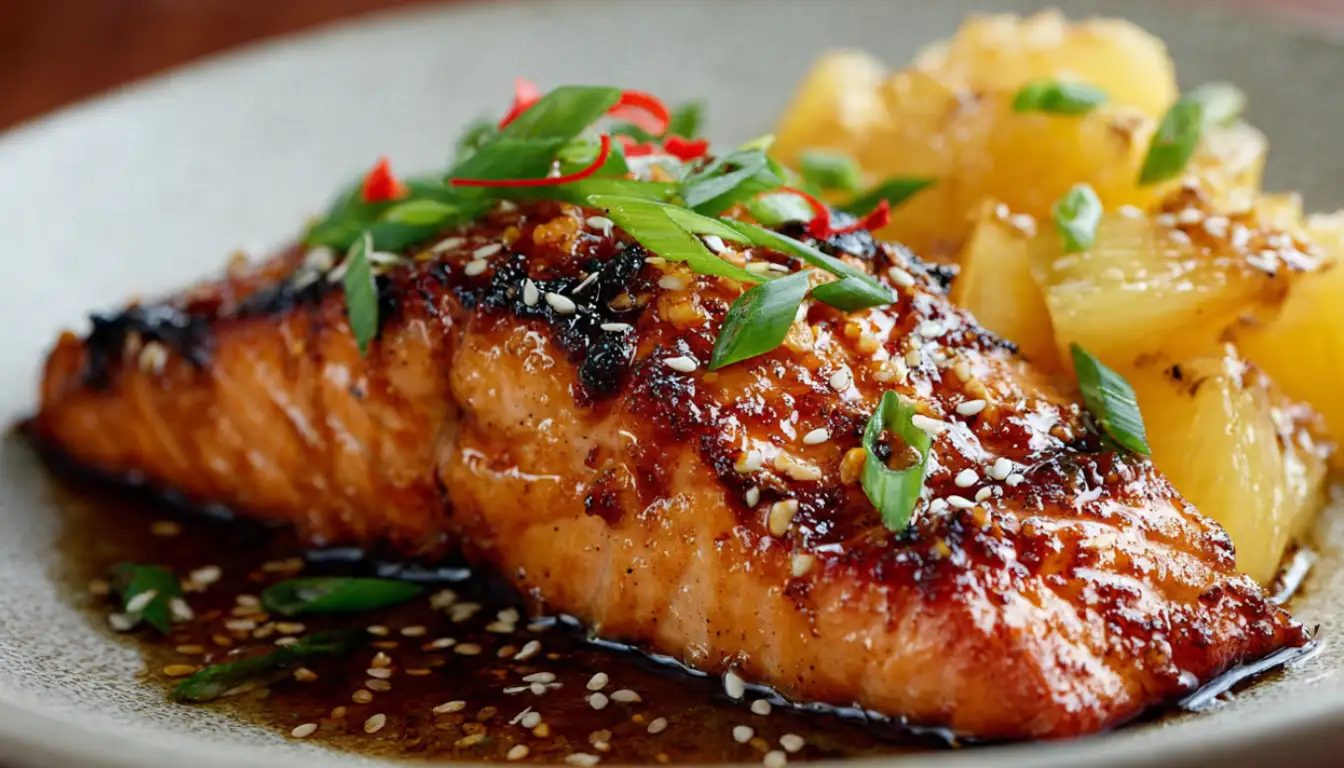
Honey Pineapple Glazed Salmon
The first time I made this honey pineapple glazed salmon, I honestly thought I’d ruined it. The glaze looked too thin, the pineapple seemed like it wasn’t caramelizing properly, and I was convinced my dinner party was about to be a disaster. But then I pulled those beautiful fillets out of my cast iron skillet, and the aroma that filled my kitchen? Pure magic. Turns out, sometimes the recipes that make you nervous end up being the ones you’ll make over and over again.
I’ve been cooking salmon for about ten years now, and I can tell you that this particular combination of sweet pineapple and honey with that slightly savory glaze hits different. It’s one of those recipes that looks fancy enough for guests but is secretly simple enough for a Tuesday night when you’re exhausted. And here’s the thing: most people overcomplicate salmon. They think you need expensive equipment or fancy techniques, but really, you just need good timing and a hot pan.
This recipe came about after a trip to Hawaii where I had the most incredible teriyaki salmon with grilled pineapple. I came home determined to recreate that tropical vibe, and after maybe six or seven attempts (yes, my family ate a lot of salmon that month), I finally nailed it. The key is getting that glaze thick enough to coat the fish but not so thick it burns before the salmon cooks through. Trust me, I learned that the hard way.
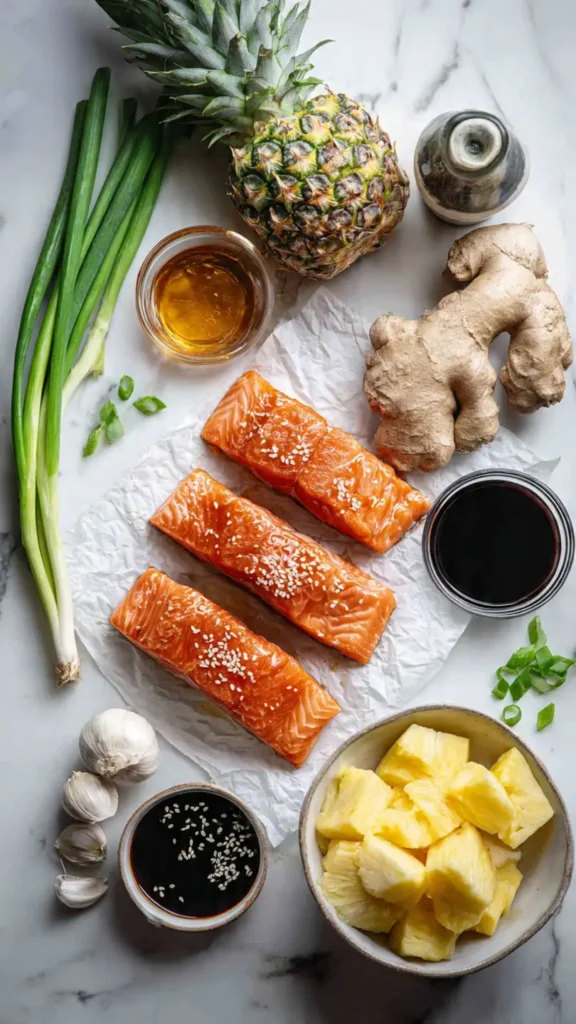
Essential Ingredients
- 4 salmon fillets (6 oz each, skin-on or skinless)
- 1 cup fresh pineapple, diced into small chunks
- 1/3 cup honey (raw honey works beautifully)
- 3 tablespoons soy sauce (low sodium if you’re watching salt)
- 2 tablespoons rice vinegar
- 2 cloves garlic, minced
- 1 tablespoon fresh ginger, grated
- 1 tablespoon olive oil or avocado oil
- 1 teaspoon sesame oil
- 1/2 teaspoon red pepper flakes (optional, but I love a little heat)
- 2 green onions, sliced for garnish
- Sesame seeds for topping
- Salt and black pepper to taste
Alternative Ingredients
Look, I get it. Sometimes you don’t have every single ingredient, and that’s totally fine. I’ve made this recipe with canned pineapple chunks when fresh wasn’t available (just drain them really well). If you’re out of rice vinegar, apple cider vinegar works in a pinch, though it’ll change the flavor profile slightly.
Don’t have fresh ginger? Ground ginger can substitute at about 1/2 teaspoon, but honestly, the fresh stuff makes a difference. I keep a chunk of ginger in my freezer and just grate it frozen when I need it. Game changer.
For the honey, any variety works, but I’ve found that using local raw honey adds a depth of flavor that regular honey doesn’t. Maple syrup can substitute if you’re avoiding honey, though you’ll want to reduce it to about 1/4 cup since it’s thinner.
If salmon isn’t your thing or it’s too pricey, this glaze is fantastic on chicken thighs or even thick cuts of mahi-mahi. I’ve also used it on tofu for my vegetarian friends, and they went absolutely wild for it.
Step-by-Step Directions
Prep the Salmon: Pat your salmon fillets completely dry with paper towels. This is crucial because moisture is the enemy of a good sear. Season both sides with salt and pepper. I usually let them sit at room temperature for about 15 minutes while I prep everything else.
Make the Glaze: In a small bowl, whisk together the honey, soy sauce, rice vinegar, minced garlic, grated ginger, sesame oil, and red pepper flakes if you’re using them. Set this aside. The garlic and ginger will start releasing their flavors into the liquid, which is exactly what you want.
Prepare the Pineapple: If you’re using fresh pineapple (which I highly recommend), cut it into small chunks, maybe about 1/2 inch each. They should be small enough to cook quickly but large enough to maintain some texture.
Heat Your Pan: This is where having a good non-stick pan or cast iron skillet really matters. Heat it over medium-high heat and add your olive oil. You want it hot but not smoking. I test it by flicking a tiny drop of water into the pan. If it sizzles immediately, you’re good to go.
Sear the Salmon: Place your salmon fillets in the hot pan, skin-side down if they have skin. Don’t move them. Seriously, leave them alone for about 4 minutes. I know it’s tempting to peek, but that’s how you get a beautiful golden crust. If the fillets have skin, it should be crispy and easily release from the pan when it’s ready.
Flip and Add Pineapple: Carefully flip the salmon and immediately add the pineapple chunks around the fillets (not on top). Let this cook for another 2-3 minutes. The pineapple will start to caramelize and release its juices.
Add the Glaze: Pour your honey mixture over the salmon and pineapple. Here’s where it gets exciting. The glaze will bubble up and start reducing immediately. Tilt the pan and use a spoon to baste the salmon with the glaze continuously. This should take about 2-3 minutes.
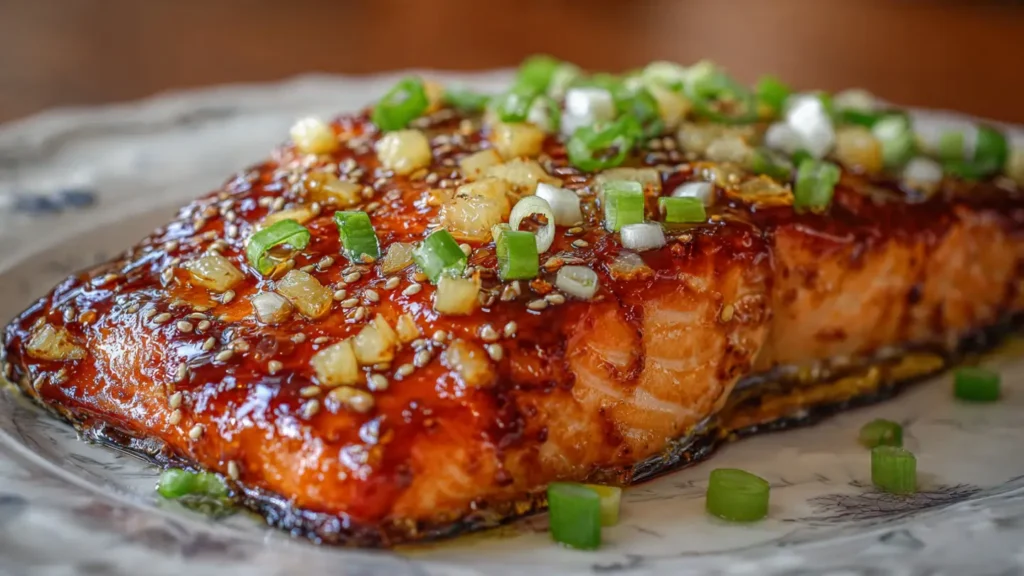
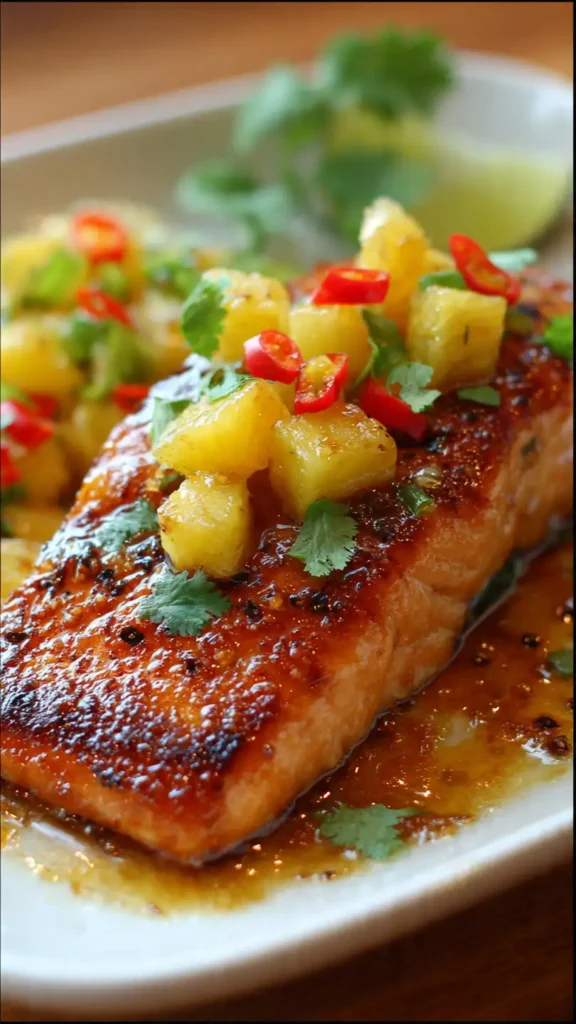
Check for Doneness: Your salmon is done when it flakes easily with a fork and reaches an internal temperature of 145°F. I use a digital meat thermometer because guessing is how you end up with dry, overcooked fish. The glaze should be thick and glossy, coating the salmon like a beautiful sticky jacket.
Rest and Serve: Remove the pan from heat and let the salmon rest for 2 minutes. This lets the juices redistribute. Transfer to plates, spoon that gorgeous caramelized pineapple and extra glaze on top, then garnish with sliced green onions and a sprinkle of sesame seeds.
Pro Tips
I’ve made this recipe probably close to fifty times now, and here’s what I’ve learned the hard way so you don’t have to:
Room Temperature Fish: Taking your salmon out of the fridge 15-20 minutes before cooking makes a huge difference in even cooking. Cold fish in a hot pan = uneven results.
Don’t Overcrowd: If you’re doubling the recipe, use two pans or cook in batches. Overcrowding drops the pan temperature and you’ll end up steaming instead of searing.
Glaze Thickness: If your glaze seems too thin after reducing, remove the salmon and pineapple, then let the sauce reduce for another minute or two. If it’s too thick and starting to burn, add a tablespoon of water or pineapple juice.
Skin Secrets: If you’re cooking skin-on salmon, make sure the skin is completely dry and season it with salt. Press down on the fillet with a spatula for the first 30 seconds to prevent curling. The skin should be crispy enough to eat (and it’s delicious).
Meal Prep Friendly: This works great for meal prep containers. I cook four fillets on Sunday and they last all week. Just store the glaze separately and warm it up when you’re ready to eat. The salmon reheats beautifully in a 300°F oven for about 8 minutes.
Air Fryer Option: If you’ve got an air fryer, you can absolutely make this there. Cook the salmon at 400°F for 8-10 minutes, make the glaze in a small saucepan with the pineapple, then pour it over when serving. It won’t have quite the same caramelization as the skillet method, but it’s a solid option when you want to avoid extra dishes.
FAQs
Can I use frozen salmon?
Absolutely, but thaw it completely first. Move it from the freezer to the fridge the night before. Never try to cook frozen salmon with this method because it will release too much moisture and ruin your sear.
How do I know when salmon is done?
The internal temperature should hit 145°F, but also look for the flesh to be opaque and flake easily with a fork. You can slightly undercook to around 140°F if you prefer it a little more tender in the center.
Can I make this glaze ahead?
Yes! Mix all the glaze ingredients up to 3 days ahead and store in the fridge. Just give it a good whisk before using because the honey might settle.
What if I don’t have a meat thermometer?
You can use the knife test. Insert a thin knife into the thickest part of the fillet and hold it there for 3 seconds. Pull it out and touch it to your lip. If it’s warm, the salmon is done. If it’s cool, keep cooking.
My glaze burned. What happened?
Your heat was too high. Honey burns quickly, so if you notice it starting to darken too fast, lower the heat immediately and add a splash of water to thin it out.
Is this recipe keto-friendly?
Not really, because of the honey and pineapple, but you could adapt it by using a sugar-free sweetener and reducing the pineapple. The flavor won’t be quite the same, but it will still be tasty.
Recipe Info Table
| Attribute | Details |
|---|---|
| Prep Time | 10 minutes |
| Cook Time | 15 minutes |
| Total Time | 25 minutes |
| Servings | 4 |
| Yield | 4 salmon fillets with glaze |
Why You’ll Love This Recipe
First off, it’s incredibly quick. From start to finish, you’re looking at 25 minutes, which is faster than most takeout. And speaking of takeout, this costs a fraction of what you’d pay at a restaurant for comparable quality.
The flavor combination is absolutely addictive. You get that sweet tropical vibe from the pineapple and honey, balanced perfectly with the savory notes from soy sauce and the slight tang from rice vinegar. The ginger and garlic add warmth without overpowering the delicate salmon.
It’s also super versatile for meal planning. I’ll cook a batch on Sunday and eat it all week in different ways: over rice bowls, in salads, with roasted vegetables, even cold on top of mixed greens. The leftovers are just as good as fresh.
Plus, it looks impressive. When you’re serving this to guests, they think you spent hours in the kitchen. Nobody needs to know it took less time than watching an episode of your favorite show.
What Makes This Recipe Unique
Most honey glazed salmon recipes are either too sweet or too salty. I’ve tasted probably dozens of variations, and they always seem to miss that balance. This version gets it right because the pineapple adds natural sweetness and acidity, which means you can use less honey and soy sauce.
The technique of adding the pineapple to the pan with the salmon is key. Instead of just making a sauce, you’re essentially quick-caramelizing the fruit, which intensifies its flavor and creates little pockets of concentrated sweetness throughout the dish.
Another thing that sets this apart is the sesame oil. A lot of recipes skip it, but that tiny amount adds such a beautiful nutty depth that ties everything together. It’s one of those ingredients where a little goes a long way.
Key Features
Quick Weeknight Dinner: 25 minutes from fridge to table
One-Pan Cooking: Minimal cleanup (your future self will thank you)
Restaurant-Quality: Tastes like you ordered from a fancy Hawaiian fusion spot
Naturally Gluten-Free Option: Use tamari instead of regular soy sauce
High in Omega-3s: Salmon is packed with heart-healthy fats
Adaptable: Works with different proteins and cooking methods
Meal Prep Champion: Stays delicious for up to 4 days in the fridge
Beginner-Friendly: Simple enough for new cooks, impressive enough for experienced ones
Nutrition Facts Table
Per serving (1 fillet with glaze and pineapple)
| Nutrient | Amount |
|---|---|
| Calories | 385 |
| Total Fat | 16g |
| Saturated Fat | 3g |
| Cholesterol | 95mg |
| Sodium | 640mg |
| Total Carbohydrates | 24g |
| Dietary Fiber | 1g |
| Sugars | 20g |
| Protein | 36g |
| Vitamin D | 115% DV |
| Calcium | 3% DV |
| Iron | 8% DV |
| Potassium | 12% DV |
Note: Nutrition facts are estimates based on standard ingredient measurements. Actual values may vary depending on specific brands and modifications.
You’ll Also Love
If this honey pineapple glazed salmon is hitting the spot, you’ll definitely want to try my Teriyaki Salmon Rice Bowls for another Asian-inspired take on this incredible fish. The flavors are similar but with a totally different texture profile.
My Mango Salsa Grilled Fish uses that same tropical fruit angle but with a fresher, lighter approach. Perfect for summer cookouts.
For something completely different but equally delicious, check out my Maple Dijon Baked Salmon. It has that sweet-savory thing going on but with fall flavors instead of tropical ones.
And if you’re really into the whole pineapple situation, my Hawaiian Chicken Skewers use a similar glaze technique but on the grill.
Conclusion
Look, I’ll be honest with you. When I first started making salmon at home, I was terrified of it. It seemed too fancy, too easy to mess up, too expensive to risk ruining. But this recipe changed all that for me. It’s forgiving, it’s delicious, and it makes you feel like a actual chef even if you’re just winging it after a long day.
The beauty of honey pineapple glazed salmon is that it’s equally at home on a Tuesday night served over rice with steamed broccoli as it is at a dinner party plated over coconut rice with grilled asparagus. It’s that rare recipe that scales up or down depending on what your life needs.
I hope you give this one a try. And when you do, drop the salmon in that hot cast iron skillet with confidence. Let it sizzle, let that glaze bubble up and get all glossy and gorgeous, and trust the process. You’ve got this.
Save this recipe, make it your own, and let me know how it turns out. I’m always curious to hear what variations people come up with. Some of my best recipe tweaks have come from readers who tried something different and reported back.
Happy cooking, and may your salmon always be perfectly cooked and your glaze never burn!
Linda